
Minnesota Water Pros blog
Leaving a Culligan Rental? A Twin Cities Homeowner's Guide to Renting vs. Owning a Water Softener
Published October 22, 2026 · 13 min read · Educational content only, not a water quality diagnosis.
In this guide
- What a softener rental includes, based on Culligan's own published description of its rental programs.
- A plain math comparison of monthly rent against a one-time installed price over one, three, five, and ten years.
- Why new homeowners in Eagan, Woodbury, Plymouth, and across the metro often inherit a rented unit without realizing it.
- A step by step plan for ending a rental and switching to an owned system without a gap in soft water.
- When renting genuinely makes more sense, and the questions to ask any company before you sign anything.
It usually starts with a line on a bank statement. You moved into a new house in Eagan or Woodbury, you unpacked the kitchen, and a month later a charge from a water treatment dealer shows up that you never signed up for. Or you have lived in your home for years, the rental has been running quietly in the basement the whole time, and one day you add up what you have paid and wonder whether it still makes sense. Either way, the question is the same: should you keep renting your water softener, or is it time to own one?
This guide answers that question with arithmetic rather than a sales pitch. We are a Twin Cities water treatment company, so we obviously sell systems people own, and we will be upfront about that. We will also be upfront about the cases where renting is a reasonable choice. Our goal is the same one behind everything we do: everyone deserves cleaner water, and nobody should pay more for it than they need to. By the end you will know what a rental includes, what it costs over time, how to end one cleanly, and how to decide what is right for your home.
What a Water Softener Rental Actually Includes
Culligan is the best known name in softener rentals, and it describes its own programs clearly. According to Minnesota Culligan's published rent, buy, and finance page, renting a softener or filtration system means affordable monthly payments with no long-term commitment, and routine maintenance and repair costs are included in the monthly payment. The same page notes that most Culligan dealers offer rental agreements, some also offer rent-to-own programs, and that rental options vary by dealer. That last point matters: Culligan locations are operated by local dealers, so the exact terms in your agreement are what count, not a national headline.
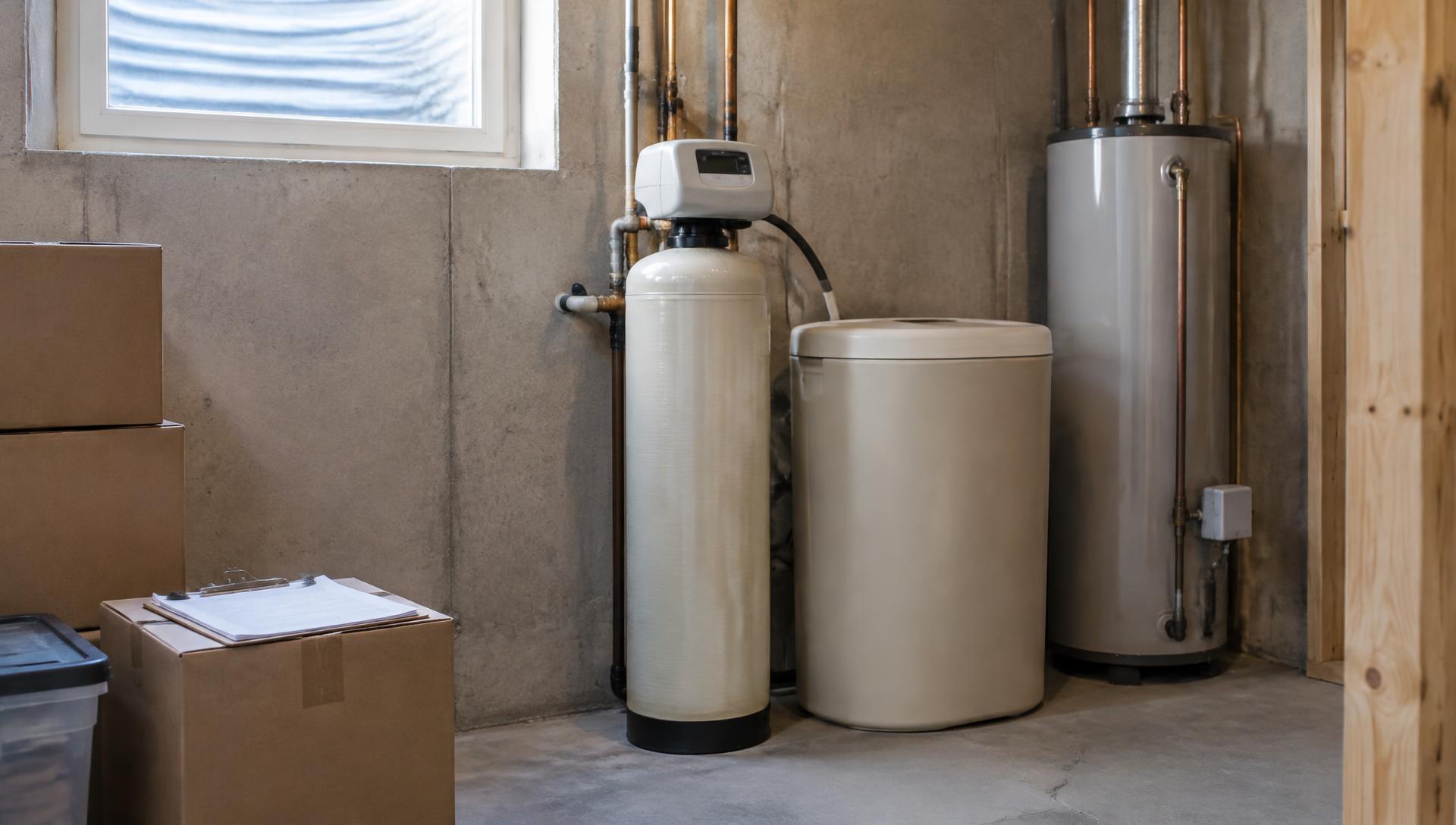
In practical terms, a rental usually means three things. First, the dealer owns the equipment sitting in your basement. Second, the dealer is responsible for keeping it working, which is the real value of the arrangement. Third, you pay every month for as long as the unit stays. Salt is a separate question. Some households buy their own salt and some add a delivery service, so check your statement to see whether salt is part of what you pay or a separate charge.
None of this is a trick. Renting is a legitimate product, and for some households it is the right one. The issue is simply that a monthly payment never ends on its own, and a payment that seems small in any single month can add up to a large number over the years you live in a home.
The Math: Renting vs. Owning Over Time
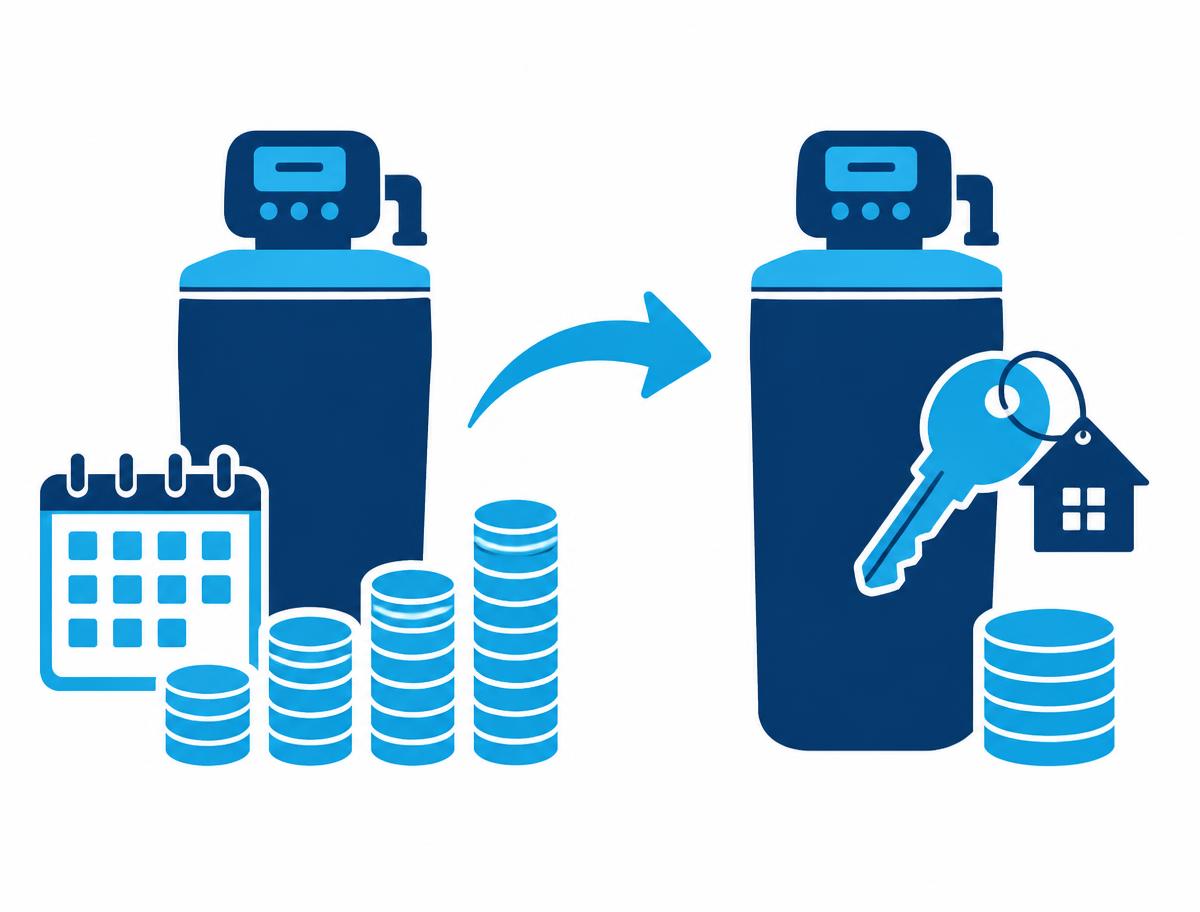
Rental prices differ by dealer, equipment, and agreement, so the right number to use is the one on your own statement. For a worked example, we will use a figure a new Eagan homeowner shared publicly on the r/TwinCities forum, where they wrote that they did not want to pay $58 a month to rent the unit that came with their new house. We are not claiming that is what every rental costs. It is one real, public data point, and the arithmetic below works the same way with your own number.
- 1 year of rent at $58 a month: $696.
- 3 years: $2,088.
- 5 years: $3,480.
- 10 years: $6,960.
- Our whole-home filtration and softening package, professionally installed: $2,999, paid once, including a kitchen reverse osmosis system and a lifetime warranty.
At $58 a month, cumulative rent passes $2,999 at roughly the 52nd month, a little over four years. After that point, every additional month of rent is money an owner does not spend. Over ten years, the difference in this example is close to $4,000. If your rental is cheaper, the crossover comes later; if it is more expensive, or if your plan also bundles bottled water or other services you would keep paying for, it comes sooner. Divide our installed price by your monthly rent and you have your own crossover month in a single step.
To be fair to renting, ownership is not free after installation. An owned softener needs salt, and over a long life it may need a part such as a valve component or eventually resin. Those costs are real, but they are typically modest, and with our systems the lifetime warranty addresses the equipment itself. Our interactive savings calculator lets you plug in your own household numbers, and our full water softener cost guide walks through salt, maintenance, and long-term ownership costs in detail.
There is one more thing the rental math leaves out: what you get. A rental is whatever equipment the dealer placed in the home, sometimes years before you arrived. When you buy, you choose the system for your water today. Every whole-home package we install combines filtration and softening and includes a reverse osmosis drinking water system at the kitchen sink, which many rental setups do not include at all. You can compare every option on our published pricing page and side by side on the compare systems page.
Why New Homeowners So Often Inherit a Rental
If you just bought a house, there is a decent chance the softener in the basement is not part of the sale. Rented equipment belongs to the dealer, not the seller, so it is not the seller's to transfer. In practice, the rental account often continues or gets transferred to the new occupant, and many buyers do not notice until a bill arrives. That is exactly the situation the Eagan homeowner on r/TwinCities described.
A few quick checks will tell you where you stand. Look for a dealer sticker or tag on the softener's control head or tank. Ask your real estate agent or the seller whether the system is owned or rented, and check whether the purchase paperwork lists the softener among included items. If the equipment is rented, call the dealer before you do anything else so you know whether the account is in your name, what the terms are, and how pickup works. Do not unplug, disconnect, or discard rented equipment on your own; it is the dealer's property and should go back to them according to your agreement.
This is also a natural moment to rethink the whole setup. The softener a previous owner chose was sized for their household and their priorities. Yours may be different: more people, more bathrooms, a new interest in drinking water quality, or a desire to stop paying monthly. Our Find Your Solution tool can narrow the options in about two minutes, and our guide to the signs of hard water helps you spot whether the current equipment is still doing its job.
What Twin Cities Water Data Shows for Common Rental Communities
Many of the homes where buyers inherit rentals are in the suburbs served by groundwater, where hardness is a common reason softeners were installed in the first place. Before you replace anything, it helps to know what your city's own water data shows. The Environmental Working Group (EWG) compiles utility testing results supplied by the Minnesota Department of Health in its Tap Water Database, and we reviewed the listings below on October 22, 2026.
- Eagan: EWG shows the system serving about 68,223 people from groundwater, with data from 2015 to 2023, and reports 18 contaminants detected, 10 of them above EWG's health guidelines. See our Eagan water guide for local context.
- Woodbury: EWG shows the system serving about 82,643 people from groundwater, with data from 2014 to 2024, and reports 26 contaminants detected, 12 of them above EWG's health guidelines. See our Woodbury water guide.
- Plymouth: EWG shows the system serving about 81,026 people from groundwater, with data from 2013 to 2023, and reports 26 contaminants detected, 13 of them above EWG's health guidelines. See our Plymouth water guide.
Context matters here. EWG's guidelines are its own health benchmarks and are often far stricter than federal legal limits, and many listed substances have no legal limit at all. For the most recent quarter EWG reports from the U.S. EPA (April to June 2024), each of these systems was in compliance with federal health-based drinking water standards. Utility data describes the public supply, not the water at your tap, so it is a starting point rather than a verdict on your home. A softener addresses hardness; if a specific listed substance matters to your household, the right move is equipment certified to reduce that substance, such as the reverse osmosis system included with our whole-home packages. Our water quality page has the Minneapolis and St. Paul snapshots as well.
How to End a Rental and Switch Without a Gap
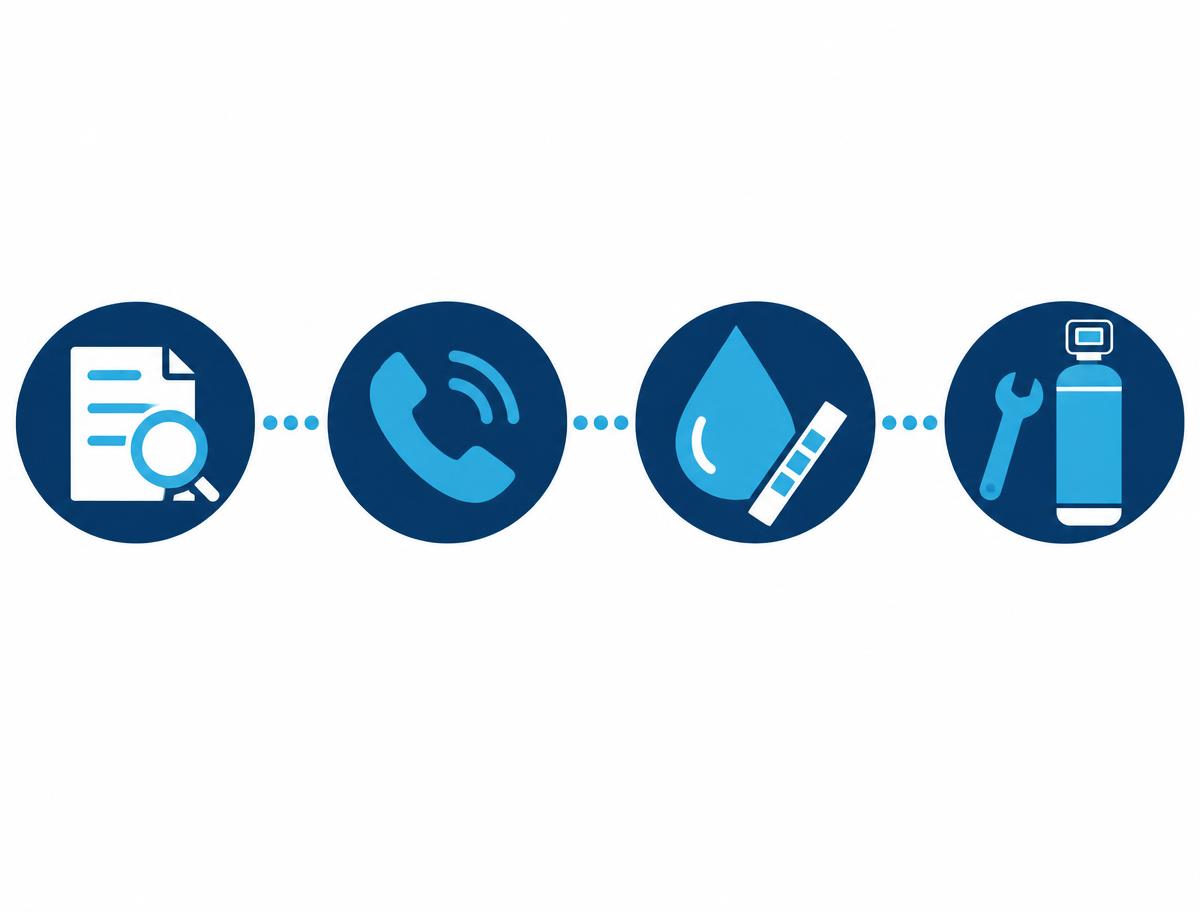
Switching is mostly a matter of sequencing. The goal is to avoid two problems: paying for two systems at once, and going days without treated water. Here is the order we recommend.
- Find your agreement or latest statement. Note the monthly amount, whether salt or other services are bundled, any notice period, and any fees for removal or early termination. If you inherited the rental, ask the dealer to send you the terms.
- Call the dealer and ask three questions: how much notice they need, whether there is any charge to end the rental or pick up the equipment, and what dates they can collect it. Ask whether any rent-to-own credit applies if you have been renting a long time.
- Know your water. City homes can use the utility's annual water quality report for a hardness figure. Well homes should test through an accredited laboratory, as our well water treatment guide explains.
- Choose and schedule your replacement so installation lands on or right after pickup day. A professional installer connects the new system to the existing plumbing loop and drain, so the change usually happens in a single visit.
- Confirm the final bill from the rental dealer and keep the pickup confirmation for your records.
When you work with us, we start with a free phone consultation about your water source, household size, and goals, then quote a specific system at our published price. If you have a written quote from another company for comparable equipment and installation, our best-price guarantee explains how we compare it.
When Renting Still Makes Sense
Owning is not automatically the right answer, and we would rather you make a good decision than a fast one. Renting can make sense in a few situations. If you expect to move within a year or two, cumulative rent may never reach the price of an installed system. If you rent your home and your landlord will not allow plumbing changes, a dealer rental may be the only practical option. And if you place a very high value on never thinking about the equipment at all, the included maintenance is a genuine convenience that some households are happy to pay for.
The question to ask yourself is simple: how long do you expect to stay, and what is your monthly rate? If the answer to the first question is longer than your crossover month, owning almost certainly costs less over the time you live there. If it is shorter, renting may be the better deal, and that is a perfectly reasonable conclusion.
What to Look for in an Owned System
If you decide to own, the next step is choosing well. A softener that is too small regenerates constantly and wastes salt; one that is too large may not regenerate often enough to keep the resin healthy. Proper sizing depends on your hardness, your household's daily water use, and your plumbing. Our guide to how a water softener works explains the mechanics, and our best water softener guide for Minnesota covers what separates a good system from a disappointing one.
You should also decide what problem you are really solving. A softener removes hardness minerals. It does not reduce chlorine taste, disinfection byproducts, or many other substances on the EWG lists above. That is why our whole-home packages pair filtration with softening and add a reverse osmosis tap for drinking water. If you would rather avoid salt entirely, our salt-free vs. traditional softener comparison explains honestly what salt-free conditioning does and does not do.
Here are our published installed prices for reference, all in US dollars for standard installations: whole-home filtration and softening starts at $2,999; dual-tank city water systems are $3,999; salt-free and dual-tank well systems are $4,499; and iron and sulfur treatment is $5,999. Every whole-home package includes professional installation, a walkthrough, a kitchen reverse osmosis system, and a lifetime warranty. Final configuration and price are confirmed during your consultation, and full details are on our warranty page.
Questions to Ask Any Company Before You Sign
Whether you keep renting, switch dealers, or buy from us, these questions protect you. Is the price you quoted the full installed price, including labor and parts? What exactly does the warranty cover, for how long, and is it in writing? Is drinking water treatment included, or extra? Is there a monthly fee of any kind after installation? Are there charges for service visits? Who owns the equipment, and what happens if you sell the house? A company that answers all of these plainly, in writing, is a company you can trust with your plumbing.
Be cautious of any quote that cannot be compared line by line. Prices hidden until a sales visit, monthly fees that appear after installation, and warranties described only verbally all make it harder to know what you are paying. We publish our prices online for exactly this reason: you should be able to do the math in this guide before anyone visits your home.
A Note for Real Estate Agents and Home Inspectors
If you help buyers through closings in Eagan, Woodbury, Plymouth, or anywhere in the metro, a rented softener is one of those small surprises that can sour the first month in a new home. A quick note in your buyer checklist, asking the seller whether the softener is owned or rented and who the dealer is, saves your clients a confusing bill. You are welcome to share this guide with buyers so they can make the rent or own decision with clear numbers. It does not require anyone to work with us; the arithmetic works the same with any company.
The Bottom Line
A softener rental is a convenience product with a monthly price, and an owned system is an investment with a one-time price. Neither is wrong. The right choice depends on your monthly rate, how long you plan to stay, and what your water actually needs. Take your statement, divide our installed price by your monthly rent, and compare the result with the number of years you expect to live in your home. If owning wins, end the rental in the order above so there is no gap in soft water.
If you would like help running the numbers for your home, start with a free phone consultation. We serve Minneapolis, St. Paul, and surrounding communities across the Twin Cities, and we will tell you plainly whether owning makes sense for you, even when the honest answer is to keep renting for now. Cleaner water should be within reach for every household, and a clear comparison is the first step toward getting it at a price that makes sense.
Sources and further reading
Reviewed October 22, 2026. Utility reports describe the public supply, not an individual household sample. Check the utility for current reports and notices. Images are illustrative, not photographs of a customer installation.
- Minnesota Culligan: Rent, Buy and Finance (reviewed October 22, 2026)
- Culligan: Payment and Financing Plans (reviewed October 22, 2026)
- r/TwinCities: new Eagan homeowner discussing a $58 per month softener rental
- EWG Tap Water Database: Eagan (reviewed October 22, 2026)
- EWG Tap Water Database: Woodbury (reviewed October 22, 2026)
- EWG Tap Water Database: Plymouth (reviewed October 22, 2026)
Frequently asked questions
Can I cancel a Culligan water softener rental?
Culligan describes its rentals as having no long-term commitment, but terms vary by local dealer, so check your own agreement. Call your dealer to ask how much notice they need, whether there is any charge to end the rental or collect the equipment, and which pickup dates are available.
Is it cheaper to rent or buy a water softener?
It depends on your monthly rate and how long you stay. At $58 a month, a rate one Eagan homeowner reported publicly, rent passes our $2,999 installed whole-home package at about 52 months and reaches $3,480 after five years. Divide the installed price by your own monthly rent to find your crossover point.
I bought a house with a rented softener. Do I have to keep it?
Rented equipment belongs to the dealer, not the seller, so it usually is not part of the sale. Contact the dealer to learn whether the account is in your name and what the terms are. You can typically choose to continue the rental or arrange for pickup and install your own system.
Can I remove a rented softener myself?
We recommend against it. The equipment is the dealer's property and should be returned according to your agreement. Schedule pickup with the dealer, and plan your replacement installation for the same day or shortly after so your home is never without treated water.
What does an owned softener cost after installation?
Mainly salt, plus occasional routine care over the system's life. Our whole-home systems include a lifetime warranty on the equipment. There is no monthly fee from us after installation, which is the main financial difference from renting.
When does renting make more sense than owning?
Renting can be reasonable if you expect to move within a year or two, if you rent your home and cannot change the plumbing, or if you strongly value included maintenance. If you expect to stay longer than your crossover month, owning usually costs less over that time.
More from the blog
Does a City-Softened Minneapolis Home Need Extra Water Treatment?
Minneapolis already softens its municipal water. Here is how to decide whether additional household treatment serves a real purpose.
Saint Paul Drinking-Water Taste: Kitchen Filter or Main-Line Treatment?
A kitchen taste preference and a whole-home treatment goal are different projects. Learn how to compare them in an existing Saint Paul home.
Bloomington Water Treatment for Houses and Condos: Know Your Plumbing
Bloomington's combined municipal supply is only part of the decision. Your plumbing boundary and maintenance authority determine which options fit.
Edina or Morningside? Plan the Right Water Treatment for Your Remodel
Edina's two water systems make address-level planning important. Learn how to connect your supply, household measurements, and kitchen remodel decisions without assuming every home needs the same equipment.
Talk through your water with a local pro
A free phone consultation starts with your water source and your goals. Published installed pricing, kitchen reverse osmosis included with every whole-home package, and a best-price guarantee.