
Minnesota Water Pros blog
Edina, Minnesota · Local service informationEdina or Morningside? Plan the Right Water Treatment for Your Remodel
Published October 22, 2026 · 13 min read · Educational content only, not a water quality diagnosis.
In this guide
- Confirm whether your address receives Edina groundwater or the treated Minneapolis supply serving Morningside before applying a neighbor's water-treatment advice.
- Separate drinking-water preferences from hardness management, then use measurements and documented equipment performance to decide which goals deserve investment.
- Plan the drinking faucet, countertop opening, refrigerator connection, cabinet layout, and maintenance access before finalizing kitchen drawings.
- Compare carbon filtration, reverse osmosis, and softening by their different jobs rather than expecting one technology to solve every concern.
- Budget for installation details, replacement parts, and ongoing care, with permission to defer equipment that does not address a clear household priority.
What EWG's Tap Water Database Shows for Edina
The Environmental Working Group (EWG) compiles utility testing results supplied by the Minnesota Department of Health. Its listing for the Edina water system (the city groundwater system; Morningside homes receive Minneapolis water, covered by EWG's Minneapolis listing), which EWG shows serving about 53,494 people from groundwater with data from 2013 to 2023, reports 30 contaminants detected, 11 of them at levels above EWG's health guidelines. The largest gaps EWG lists are Perfluorohexane sulfonate (PFHXS) (about 459 times the guideline), Radium, combined (-226 and -228) (about 62 times the guideline), and Haloacetic acids (HAA9) (about 26 times the guideline). Several of the listed items are disinfection byproducts, which form when the chlorine that keeps water safe in the pipes reacts with natural organic matter. We reviewed this listing on October 22, 2026, and you can read the full breakdown on [EWG's Edina page](https://www.ewg.org/tapwater/system.php?pws=MN1270011).
Context matters. EWG's guidelines are its own health benchmarks and are often far stricter than federal legal limits, and many of the listed substances have no legal limit at all. For the most recent quarter EWG reports from the U.S. EPA (April to June 2024), this system was in compliance with federal health-based drinking water standards. Utility data describes the public supply, not the water at your tap, so it is a starting point for a conversation rather than a verdict on your home. If any listed item matters to your household, match it to equipment certified to reduce that specific substance, and compare the Minneapolis and St. Paul snapshots on our water quality page.
Begin with Edina's two supplies, not a citywide equipment assumption
Edina's official water information describes two separate systems. Most of the city's service uses groundwater wells, while Morningside receives treated Minneapolis surface water. This distinction belongs at the beginning of a household treatment discussion because the source and upstream treatment are not interchangeable. It does not mean one neighborhood automatically needs a softener and another never does. It means a recommendation should begin with the supply serving the actual address, followed by measurements and the household's goals. A municipal boundary or an Edina mailing address alone is not a complete treatment specification.
Ask the utility to confirm the service arrangement if you are uncertain, and use the applicable current water report rather than a general metropolitan hardness chart. Minneapolis treatment includes softening, which makes assumptions borrowed from an untreated groundwater supply especially unhelpful for Morningside planning. Even then, a public report describes the utility supply, not every condition inside an individual building. Existing household equipment, interior plumbing, and the sampling point affect what a tap measurement means. The Edina community overview is a useful starting place for organizing the home-specific questions that follow.
Turn a kitchen remodel into a written water-use brief
Before choosing a treatment system, describe how the finished kitchen should work. Identify where people fill bottles, prepare coffee, rinse produce, and collect cooking water. Decide whether a separate drinking faucet is welcome on the countertop or whether visual simplicity is a higher priority. Note the refrigerator location and whether its dispenser and ice maker should share the same treatment. These are design choices with plumbing consequences. Writing them down early helps the designer, cabinet supplier, plumber, and treatment installer discuss the same project instead of solving different versions after materials arrive.
In an explicitly hypothetical Edina remodel, a household might want better drinking-water taste but have little interest in treating showers or laundry. A focused kitchen filter could be the first comparison, while a whole-home system would require a separate justification. Another hypothetical household might already have satisfactory drinking water but want to investigate repeated scale on fixtures. Its first useful purchase might be a hardness measurement rather than a kitchen system. Neither scenario describes a particular local customer. They show why a remodel provides an opportunity to prioritize, not an obligation to install every treatment category.
- Write the confirmed water supplier and the date of the utility information used for planning.
- List the exact kitchen outlets to serve, including any proposed refrigerator branch.
- Rank taste preferences, documented reduction goals, hardness concerns, available space, and maintenance effort.
- Identify decisions that must happen before countertop fabrication or cabinet installation.
- Keep an optional future treatment layout separate from equipment approved for immediate purchase.
Measure the right water before selecting equipment
A hardness result is most useful when its location and units are recorded. Ask whether the sample came from untreated incoming household water, an existing softener outlet, or a kitchen tap with its own filter. Report hardness in grains per gallon or milligrams per liter as calcium carbonate, and avoid comparing numbers without checking the units. Approximately 17.1 milligrams per liter as calcium carbonate equals one grain per gallon. A total dissolved solids reading is not a substitute for a hardness measurement, and neither number independently determines whether water is safe to drink.
For a specific substance of concern, choose an appropriate laboratory test and sampling procedure rather than treating taste, odor, or a handheld meter as a diagnosis. The utility report can help frame questions, but household plumbing questions may require different sampling. Tell the laboratory what you are trying to understand before collecting water. If an existing softener is involved, paired incoming and treated-water hardness results may be useful. Do not change valves or interrupt household service just to obtain a sample unless the arrangement is understood and the work can be performed appropriately.
Choose between a focused taste filter and reverse osmosis
Carbon filtration and reverse osmosis are not interchangeable labels for a better drinking tap. A carbon system may be considered for a documented taste-and-odor purpose, with media chosen for the actual supply and the manufacturer's specifications. Reverse osmosis uses a membrane and associated treatment stages to address particular dissolved substances within its documented capabilities. The selected model matters more than the category name. Compare the specific performance information, replacement requirements, operating conditions, and installation needs before deciding which approach fits. The carbon and reverse osmosis comparison explains that distinction in more detail.
Do not assume that any carbon cartridge or any reverse osmosis unit automatically provides a particular PFAS reduction. If PFAS is the stated concern, compare the exact system's independently verified claims for the substances involved, the rated capacity, and the conditions under which performance applies. The same discipline applies to other reduction claims. A product brochure that mentions a technology is not enough to establish a particular result in your kitchen. If the objective is simply a preferred taste, say so plainly instead of converting a preference into an unsupported statement about safety.

Reserve the faucet opening before the countertop is fabricated
A dedicated drinking faucet can be straightforward to plan and inconvenient to add late. Confirm the faucet's required opening, mounting thickness, clearance, and position against the sink, backsplash, main faucet, soap dispenser, and any other accessories. A drawing should show where the handle moves and where a bottle can stand under the outlet. The treatment faucet is not simply an extra dot on a countertop plan. Its mounting hardware and supply connection must also remain accessible from below after the sink, disposal, and cabinet fittings are installed.
Ask the countertop fabricator and plumber to confirm responsibilities before fabrication rather than assuming the treatment installer will drill any finished surface. Material, warranty, and site conditions can affect how an opening is made. If the design omits a separate faucet, verify that the selected alternative is actually compatible with the intended treatment system. Do not improvise a connection through a fixture that was not designed for it. A modest amount of early coordination can prevent a choice between damaging finished work and accepting a drinking-water location that the household does not enjoy using.
Draw the cabinet as working service space
Under-sink space should be measured after accounting for the sink bowl, disposal, trap, shutoff valves, pullout shelves, and stored household supplies. Record width, depth, height, and the path through the cabinet opening. A system that fits inside a cabinet may still be difficult to maintain if a filter housing cannot be removed or a tank cannot be reached. Ask for the service clearances required by the actual equipment. Consider whether future cartridge changes would require removing a shelf, disconnecting unrelated plumbing, or emptying the entire cabinet every time.
Tank and tankless reverse osmosis configurations make different demands on space, electrical access, and delivery planning. A tankless label does not mean the unit has no maintenance needs or installation constraints. Compare the dimensions and operating requirements of the products under consideration rather than assigning an entire category a convenient size. Where a basement or adjacent cabinet location is proposed, review tubing length, elevation, accessibility, and manufacturer limitations. The product overview can help organize the available categories, but the final fit depends on the selected model and an actual site assessment.
Treat the refrigerator connection as a separate design check
A refrigerator connection should be reviewed for pressure, supply volume, tubing routing, and compatibility with the appliance's instructions. Do not assume that a drinking-water system serving a nearby faucet will automatically operate an ice maker satisfactorily. Storage volume, membrane production, tubing resistance, and simultaneous use can matter, depending on the design. Ask how the proposed arrangement will behave when someone fills a large bottle while the refrigerator calls for water. If the appliance has its own filter, follow the manufacturer's guidance when discussing whether that filter remains installed or needs a compatible bypass.
In a hypothetical remodel with the refrigerator across the room, opening a wall may make a new route practical during construction but disruptive afterward. That does not mean every project should extend treatment to the refrigerator. The household may prefer to keep the appliance supply unchanged and use only a dedicated kitchen tap. Compare the value of matching ice and drinking-water treatment with the added plumbing, service points, and future troubleshooting. Label any concealed route and retain a simple diagram so a later appliance replacement does not begin with uncertainty about where the water originates.
Evaluate softening separately from the drinking tap
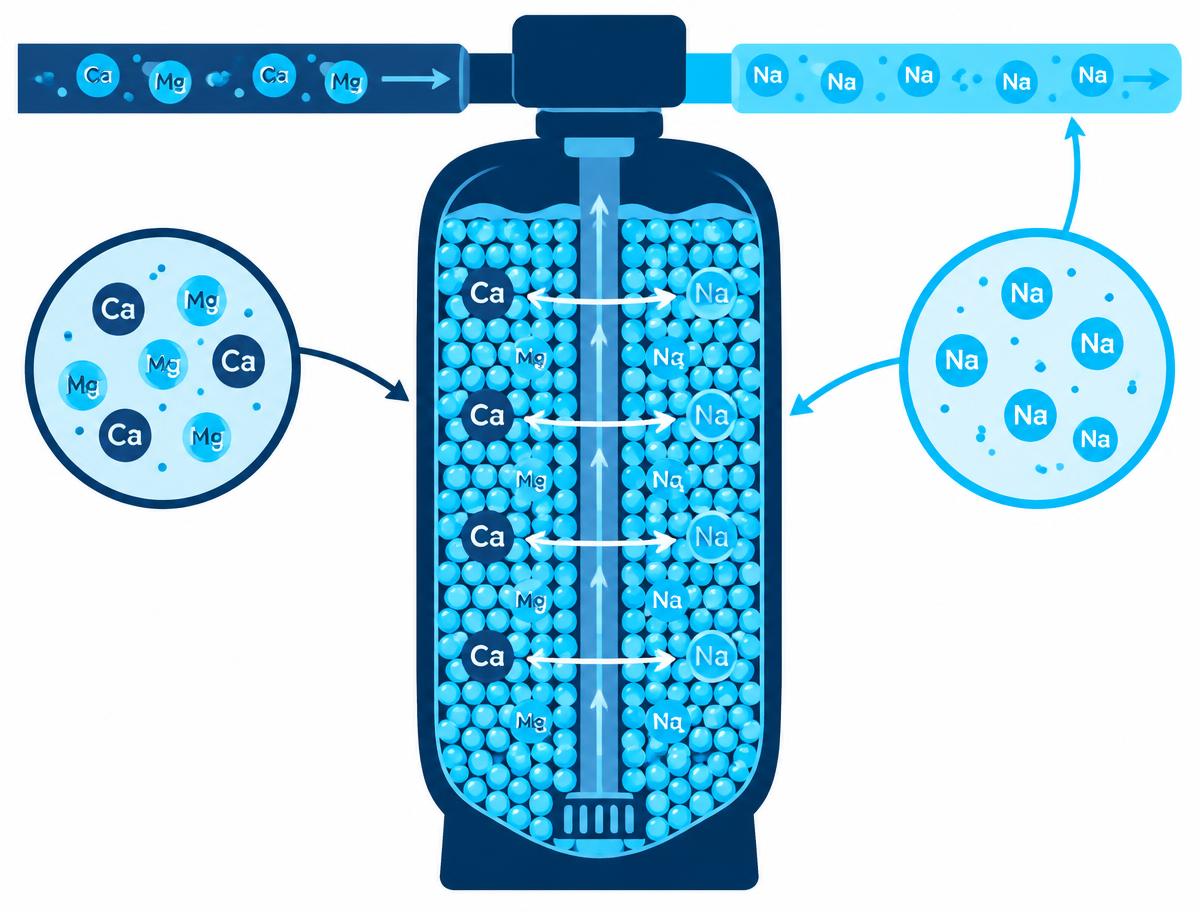
A conventional ion-exchange softener reduces hardness minerals and serves a different purpose from a kitchen drinking-water filter. Whether additional softening is worthwhile depends on measured incoming hardness, existing treatment, the household's preferences, and the fixtures supplied. This is particularly important in Edina because the two supply systems do not share an identical starting point. Do not use visible spots alone to specify a softener, and do not assume a softener is a general contaminant-removal system. The hard-water and soft-water guide provides background for interpreting this separate decision.
If softening is being considered, review the branches to be treated, the household's water demand, available drain arrangements, and ongoing salt handling. Ion exchange commonly adds sodium when sodium chloride is used for regeneration, so households with dietary questions should discuss their situation with an appropriate healthcare professional. A separate unsoftened drinking branch or another configuration may deserve review, but no single layout suits everyone. Minnesota health guidance also emphasizes appropriate operation and maintenance. The objective is useful hardness management with understood tradeoffs, not the lowest possible hardness number at every outlet regardless of need.
Coordinate installation, drainage, and responsibility before construction
Ask the installer to identify required plumbing connections, approved drain arrangements, applicable backflow or air-gap provisions, and any electrical needs. These details depend on the selected equipment and local requirements. A softener drain and a reverse osmosis drain are not interchangeable details that can be left to a vague note saying connect later. The installation plan should also identify accessible shutoffs and bypass arrangements, along with the effect of shutting off each system. Do not connect treatment discharge to an improvised drain route merely because it is physically nearby.
The remodeling team should agree on who supplies the faucet, who coordinates any required permit or inspection, who makes connections, and who performs startup. Scheduling matters because equipment installed before dusty work is finished may need protection, while equipment installed after cabinets are packed may be harder to access. Ask how the system will be flushed, checked for leaks, and introduced to the household. Keep model numbers, manuals, installation records, and service contact information together. A finished kitchen should include a usable maintenance plan, not just equipment hidden behind a cabinet door.
Budget around the complete project and preserve useful options
Use the current pricing information to begin the budget discussion instead of relying on an article's fixed dollar example. Ask the written proposal to separate equipment from installation-specific work, such as a longer refrigerator route, a difficult drain connection, or changes needed for access. Clarify what is included, what remains uncertain until inspection, and what could be deferred. Compare ongoing cartridge costs, membrane replacement considerations, salt, water used during operation, and anticipated service needs. A lower initial equipment price does not automatically produce the lowest ownership cost for the household.
A phased plan can be reasonable. During a remodel, a household might reserve an approved faucet opening or a viable cabinet location while postponing equipment until measurements and priorities are clear. Another might complete a drinking-tap installation now and leave whole-home treatment out of scope. Neither approach guarantees future compatibility, so document what has actually been prepared and what remains to be verified. Use the project contact page to organize a discussion around the supplier, measurements, kitchen drawings, and preferred outcomes. Do not interpret a submitted inquiry as a confirmed appointment or an equipment recommendation.
Build a maintenance routine the household can realistically follow
Maintenance requirements should influence the purchase, not arrive as a surprise afterward. Ask how replacement intervals are determined, which parts must be purchased, whether sanitizing procedures apply, and how the system is returned to service after work. Follow the manufacturer's instructions rather than a generic annual schedule. Actual replacement needs can depend on the model, water conditions, use, and rated capacity. Taste alone is not a reliable way to verify ongoing reduction performance. Keep a dated record of filter changes and any unusual observations so future service starts with evidence rather than recollection.
For softening, include salt checks, settings review, and appropriate hardness verification in the maintenance conversation. For a drinking system, include cartridge access, leak checks, and any storage-tank or membrane procedures specified by the manufacturer. Ask what to do after an extended absence, plumbing repair, or utility advisory, and follow official instructions when an advisory occurs. The best Edina remodel plan is not the one with the most treatment stages. It is the one that respects the correct supply, addresses an identified goal, remains accessible, and can be maintained without making the kitchen difficult to use.
Sources and further reading
Reviewed October 22, 2026. Utility reports describe the public supply, not an individual household sample. Check the utility for current reports and notices. Images are illustrative, not photographs of a customer installation.
Frequently asked questions
Does every Edina home receive the same water?
No. Edina describes two separate water systems: most service uses groundwater wells, while Morningside receives treated Minneapolis surface water. Confirm the arrangement at your address before using a neighbor's hardness result or treatment settings. The supply distinction helps frame the discussion, but household measurements and existing plumbing still matter. It is not a shortcut to declaring that an entire neighborhood needs or does not need additional treatment.
Should I choose a drinking-water system before ordering countertops?
Choose the intended layout early enough to verify faucet openings, mounting details, cabinet space, and any refrigerator connection before fabrication. The final equipment choice should still follow the household's goals and relevant measurements. If you are not ready to buy, discuss whether a documented future-ready arrangement is practical. Do not assume that any opening, faucet, or reserved cabinet space will accommodate every future product.
Can a softener replace an under-sink drinking-water filter?
Not as a general rule, because the systems do different jobs. A conventional softener reduces hardness minerals. A drinking-water filter or reverse osmosis system is selected for particular preferences or documented reduction goals. Decide whether you need either function separately. A softener should not be described as universal contaminant treatment, and a kitchen filter should not be expected to manage hardness throughout the home.
Is reverse osmosis automatically better than carbon filtration?
No. Better depends on the objective, the exact product's documented performance, available space, installation conditions, and maintenance expectations. Carbon may be a focused comparison for certain taste-and-odor goals. Reverse osmosis may fit particular dissolved-substance reduction goals. Neither category name alone proves a specific PFAS claim. Match the selected model and its verified capabilities to the concern rather than choosing by the number of treatment stages.
What should I bring to an Edina remodel consultation?
Bring the confirmed supplier, relevant utility information, any properly collected household test results, photographs, cabinet measurements, countertop drawings, and refrigerator specifications. Include a ranked list of goals and a realistic maintenance preference. Note any existing treatment and whether samples were taken before or after it. This information supports a more focused discussion without implying that photographs or a utility report can replace every required site check.
More from the blog
Does a City-Softened Minneapolis Home Need Extra Water Treatment?
Minneapolis already softens its municipal water. Here is how to decide whether additional household treatment serves a real purpose.
Saint Paul Drinking-Water Taste: Kitchen Filter or Main-Line Treatment?
A kitchen taste preference and a whole-home treatment goal are different projects. Learn how to compare them in an existing Saint Paul home.
Bloomington Water Treatment for Houses and Condos: Know Your Plumbing
Bloomington's combined municipal supply is only part of the decision. Your plumbing boundary and maintenance authority determine which options fit.
Plymouth Water Softeners: Size for Hardness and Busy Mornings
A useful Plymouth treatment plan separates the city's treatment work from household hardness goals, then checks both daily capacity and the fixtures that may run together.
Talk through your water with a local pro
A free phone consultation starts with your water source and your goals. Published installed pricing, kitchen reverse osmosis included with every whole-home package, and a best-price guarantee.