
Minnesota Water Pros blog
Well Water Treatment in Minnesota: Iron, Sulfur, and Hardness
Published October 15, 2026 · 11 min read · Educational content only, not a water quality diagnosis.

In this guide
- Why private wells are a different responsibility than city water, and why testing comes first.
- The four most common Minnesota well water problems: hardness, iron, manganese, and hydrogen sulfide.
- What each treatment stage does, and why the order of the stages matters.
- How treatment equipment is sized from your lab results, not from a sales script.
- What a complete well-water system costs, with published installed prices.
If your home draws from a private well, you already know the trade: no water bill, no utility, and no one watching your water quality but you. Thousands of homes in the communities and townships around the Twin Cities rely on private wells, and well water is a completely different situation than city water. A municipal utility treats and tests water for thousands of households at once and publishes the results every year. A private well is your responsibility alone, and no one tests it unless you do.
That responsibility comes with good news: the most common Minnesota well water problems are well understood and very treatable. This guide covers what is typically in local well water, how to test for it, what each treatment stage does, and how a complete system comes together. The short version: test first, then build the system your water actually needs, in the right order.
Why Well Water Is a Different Job
City water arrives at your home already treated, tested, and documented. Your utility disinfects it, monitors it, and publishes an annual Consumer Confidence Report you can read for your address. Well water arrives exactly as the aquifer provides it. That means whatever the ground contributes, minerals, sediment, gases, or bacteria, is yours to identify and manage. It also means your neighbor's test results tell you nothing certain about your own well, because aquifers vary over surprisingly short distances.
This is why every credible authority gives the same first advice, and it is not about equipment. The Minnesota Department of Health recommends that well owners test regularly through an accredited laboratory. A current lab report is the foundation everything else is built on: it tells you which problems you actually have, at what levels, and therefore which treatment stages make sense. A system chosen without test results is a guess, and guesses are how homeowners end up paying for equipment that does not match their water.
The Four Usual Suspects in Minnesota Wells
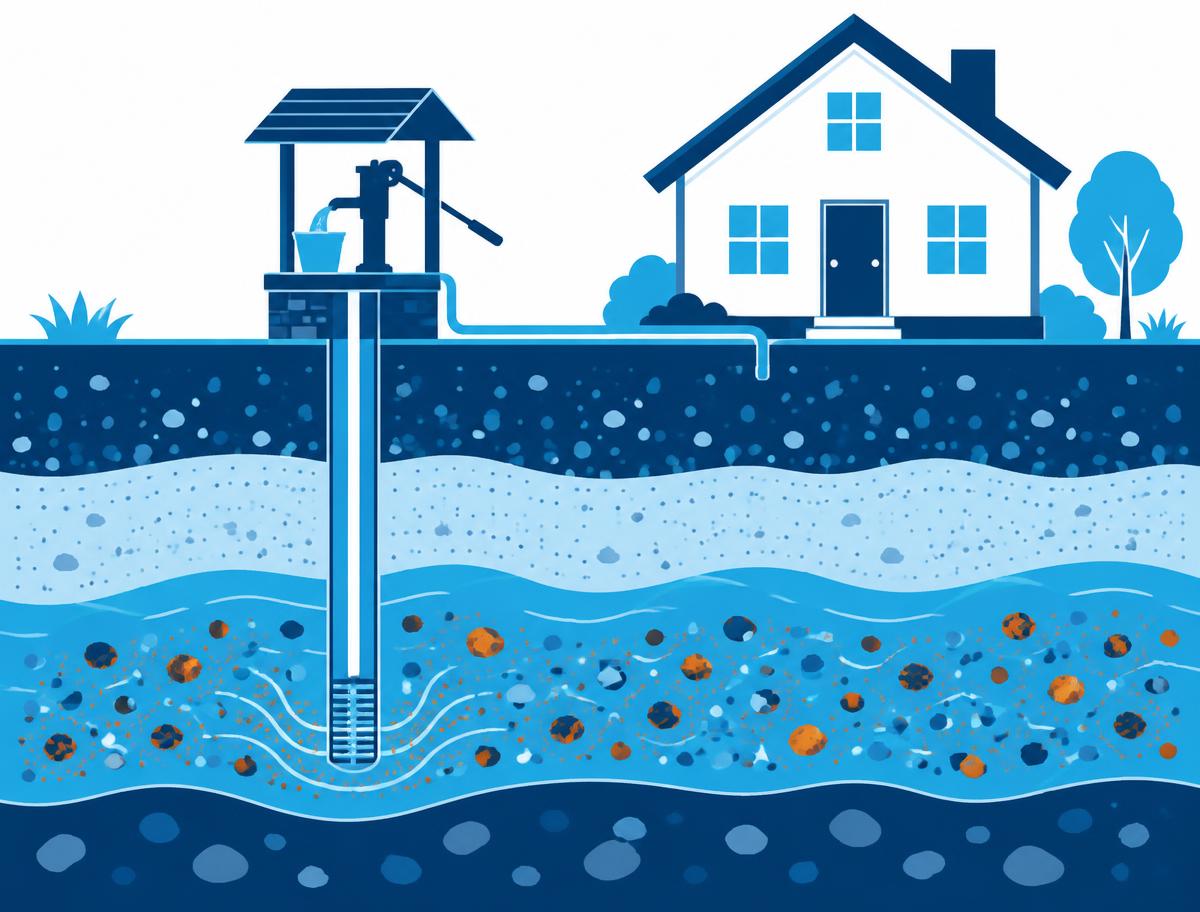
Hardness is the most common issue, just as it is on city water. Dissolved calcium and magnesium cause the scale, spots, and soap problems covered in our guide to the signs of hard water, and well water in Minnesota is often harder than the municipal supply. The fix is the same ion-exchange softening used in town, sized to your measured hardness.
Iron is the second usual suspect, and the one well owners notice first. Dissolved iron is invisible coming out of the tap, but it oxidizes on contact with air and leaves reddish or brown stains on fixtures, toilets, and laundry. At higher levels it can give water a metallic taste and encourage iron bacteria, which produce a slimy buildup in tanks and toilet cisterns. Manganese behaves similarly but leaves dark, almost black stains. Both are treatable, but the right approach depends on the concentration and the form, which is exactly what a lab report tells you.
Hydrogen sulfide is the third, and the most memorable: it is the gas behind the rotten egg odor some well owners know too well. It forms when sulfur-reducing bacteria interact with sulfates in the aquifer, and even low levels are noticeable because the human nose detects it at very small concentrations. The fourth is sediment, sand and silt drawn in with the water, which is less a health concern than a mechanical one: sediment wears out valves, clogs fixtures, and shortens the life of every treatment stage downstream if it is not caught first.
How a Well Treatment System Is Built
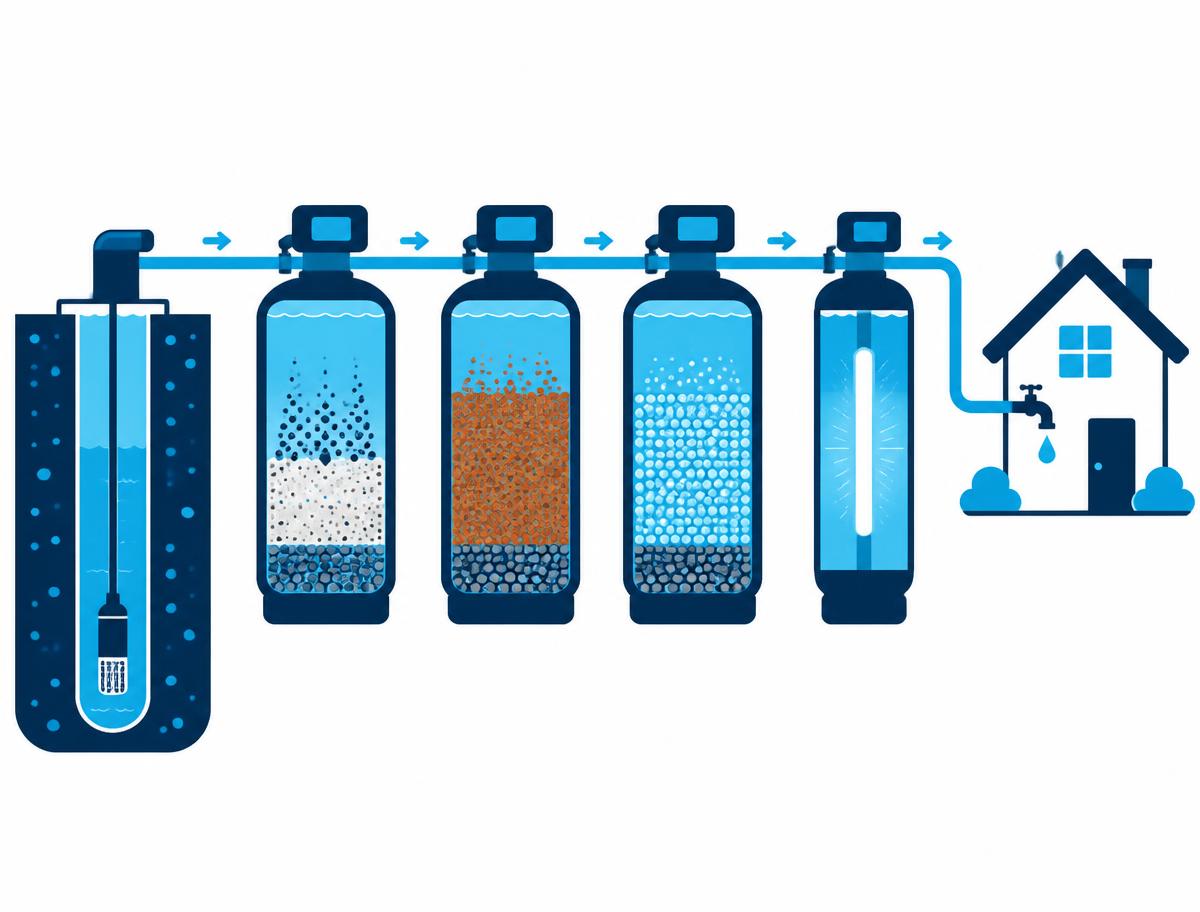
Well treatment works as a sequence, and the order matters because each stage protects the next. Sediment filtration comes first, catching sand and silt before they can clog or wear the equipment behind them. Iron and sulfur treatment comes next, because iron fouls softener resin and shortens its life if it is not removed upstream. Softening follows, handling hardness with resin that is now protected from iron. Disinfection, typically ultraviolet light, comes last when testing indicates bacteria, because UV works best on water that is already clear and free of the particles that can shield microbes.
Not every well needs every stage. A well with moderate hardness and no iron needs a softener, not a four-tank train. A well with heavy iron and sulfur needs dedicated treatment for those, whether or not softening is also warranted. This is the practical reason testing comes first: the lab report determines which stages earn their place in your basement and which would be money spent on a problem you do not have. Our iron and sulfur treatment system exists for the wells that need it, and our dual-tank well systems handle the hardness side.
Sizing From Evidence, Not Averages
Once the stages are chosen, each one is sized to your water and your household. A softener is sized from your hardness in grains per gallon and your daily water use. Iron treatment is sized from the iron concentration and your flow rate. UV systems are sized to your peak flow so every gallon gets full exposure. A system that cannot keep up with your household's peak demand will restrict pressure exactly when you need it most, like when two showers and a washing machine run at once. Professional sizing accounts for your lab results, your household size, your plumbing, and your usage patterns, all together.
It is worth saying plainly what this rules out: the same system recommended to every household, quoted before anyone asks about your water source or your test results. If a company recommends identical equipment to a city-water home in Edina and a well home outside the metro, that tells you something about how the recommendation was made.
What a Complete Well System Costs
We publish our installed prices so you can budget before anyone visits. Dual-tank well systems are $4,499 installed. Iron and sulfur treatment for wells is $5,999. Every whole-home package includes professional installation, a full walkthrough, and a kitchen reverse osmosis system at no additional cost, which matters for well homes because reverse osmosis at the kitchen tap adds a final level of refinement for the water your family drinks. Every system carries a lifetime warranty with the written terms provided during your consultation, and our best-price guarantee means we will beat a lower written quote for comparable equipment and professional installation.
Owning a Well Means Owning the Maintenance
The last piece of honest guidance: treatment equipment is not install-and-forget, and wells themselves need periodic attention. The Minnesota Department of Health recommends regular testing through an accredited laboratory, and it is worth retesting if your water's taste, odor, or staining changes, after flooding, or after any work on the well. Filters and media need replacement on schedule, salt needs refilling, and UV lamps have a service life. None of this is burdensome, but all of it belongs in the plan, and a good installer will walk you through the maintenance calendar before they leave. That walkthrough is part of every installation we do.
Testing Your Well: What to Ask For
A well test is only useful if it covers what treatment decisions depend on. At minimum, ask the laboratory for hardness, iron, manganese, pH, and total dissolved solids, since those four numbers drive most equipment choices. Add a bacteria test, which the Minnesota Department of Health recommends as part of routine well stewardship, and consider testing for hydrogen sulfide if you notice any odor, plus nitrate, which is a particular concern for households with infants. Accredited laboratories supply sample bottles and instructions, and following the collection steps carefully matters, because a contaminated sample produces a misleading result.
When the report comes back, keep it. Your results are the baseline for every future decision: they tell an installer exactly what to build, they let you verify that treatment is working when you retest afterward, and they give you a record to compare against if your water ever changes. A good installer will ask to see your results before recommending anything, and will explain which numbers drive which part of the recommendation. If the conversation starts with equipment instead of your report, steer it back to the report.
It is also worth testing after treatment is installed. A follow-up test confirms the system is doing what it was designed to do, and it gives you peace of mind that the investment is performing. Think of it the way you would think of any other home system: you would not install a furnace and never check whether the house warms up. Water treatment deserves the same verification, and the test that guided the purchase is the same test that proves the result.
Seasonal Changes and Your Well
Well water is not static. Spring snowmelt and heavy rains recharge aquifers and can change what your well draws, sometimes bringing more sediment or shifting mineral levels. Drought stretches can concentrate minerals. A well that tested clean three years ago may not test the same today, which is another reason regular testing matters more than a one-time check at installation. If your water suddenly tastes different, smells different, or starts staining again after years of good behavior, treat that as information: something changed, and a fresh test will tell you what.
Flooding deserves special mention. If floodwater ever reaches your wellhead, the Minnesota Department of Health recommends disinfection and testing before you drink the water again. The same applies after any well repair that opens the system. These situations are uncommon, but knowing the rule in advance is far better than learning it during a stressful week.
City Water and Well Water: One Goal, Two Paths
It is worth closing the loop with the city-water side of the metro. Whether your water comes from Minneapolis, St. Paul, a suburb, or your own well, the goal is identical: water that is clean, gentle on your home, and pleasant to drink. The path just differs. City homes start from a documented, treated supply and refine it. Well homes start from an untested, untreated supply and build treatment from evidence. Either way, the process that works is the same: know your water, match the equipment to it, and verify the result. The homes that end up happiest are rarely the ones that bought the most equipment. They are the ones that bought the right equipment, in the right order, for the water they actually have.
Buying a Home With a Well
If you are shopping for a home on well water, add water to your inspection checklist. Ask when the well was last tested and request the results. Look at the fixtures for staining, run the taps and note any odor, and ask about the age and service history of any treatment equipment in the basement. Treatment equipment is a good sign, not a red flag: it means a previous owner took the water seriously. What you want to know is whether it has been maintained, and a fresh test before closing tells you what you are actually buying. Many buyers negotiate treatment or testing into the purchase, and sellers who have kept records make that easy.
New well owners should also locate the wellhead, learn where the pressure tank and treatment equipment sit, and keep a folder with the well log, past test results, and equipment manuals. It sounds like paperwork, but the first time something changes with your water, that folder turns a mystery into a ten-minute diagnosis.
If you are on a well and wondering where to start, start with a test, then talk to us. A free phone consultation begins with your water source and your lab results, not a sales script, and our Find Your Solution tool can point you toward the right categories in the meantime. We serve well homes across the Twin Cities metro and surrounding communities. Your well is yours alone, and with the right evidence and the right sequence, its water can be excellent.
Frequently asked questions
How often should I test my well water in Minnesota?
The Minnesota Department of Health recommends that well owners test regularly through an accredited laboratory. Retest if the taste, odor, or staining of your water changes, after flooding, or after any work on the well. A current lab report is the foundation for any treatment decision.
What causes orange or brown stains from well water?
Reddish or brown stains usually come from iron, which is common in Minnesota groundwater. Dissolved iron is invisible at the tap but oxidizes on contact with air, staining fixtures and laundry. Manganese causes similar but darker stains. A lab test shows the concentration and form, which determines the right treatment.
Why does my well water smell like rotten eggs?
That odor is hydrogen sulfide, a gas that forms when sulfur-reducing bacteria interact with sulfates in the aquifer. The nose detects it at very low levels, so even small amounts are noticeable. It is treatable with dedicated filtration, and a test confirms the level before equipment is chosen.
Can a water softener handle iron in well water?
A softener can handle only small amounts of dissolved iron, and higher levels foul the resin and shorten its life. That is why well systems treat iron upstream of the softener. The right sequence is sediment filtration, then iron and sulfur treatment, then softening, with disinfection last when testing calls for it.
What does well water treatment cost in the Twin Cities?
With Minnesota Water Pros, dual-tank well systems are $4,499 installed and iron and sulfur treatment is $5,999. Every whole-home package includes professional installation, a walkthrough, and a kitchen reverse osmosis system at no extra cost. Final recommendations depend on your lab results, so testing comes first.
Do I need a UV system for my well?
Only if testing indicates bacteria. UV disinfection is highly effective, but it works best on water that is already clear, which is why it comes last in the treatment sequence. A current accredited lab test tells you whether disinfection belongs in your system at all.
More from the blog
Does a City-Softened Minneapolis Home Need Extra Water Treatment?
Minneapolis already softens its municipal water. Here is how to decide whether additional household treatment serves a real purpose.
Saint Paul Drinking-Water Taste: Kitchen Filter or Main-Line Treatment?
A kitchen taste preference and a whole-home treatment goal are different projects. Learn how to compare them in an existing Saint Paul home.
Bloomington Water Treatment for Houses and Condos: Know Your Plumbing
Bloomington's combined municipal supply is only part of the decision. Your plumbing boundary and maintenance authority determine which options fit.
Edina or Morningside? Plan the Right Water Treatment for Your Remodel
Edina's two water systems make address-level planning important. Learn how to connect your supply, household measurements, and kitchen remodel decisions without assuming every home needs the same equipment.
Talk through your water with a local pro
A free phone consultation starts with your water source and your goals. Published installed pricing, kitchen reverse osmosis included with every whole-home package, and a best-price guarantee.