
Minnesota Water Pros blog
St. Paul, Minnesota · Local service informationSaint Paul Drinking-Water Taste: Kitchen Filter or Main-Line Treatment?
Published October 22, 2026 · 13 min read · Educational content only, not a water quality diagnosis.

In this guide
- Trace a taste concern before attributing it to the regional supply.
- Compare kitchen carbon, kitchen RO, and main-line filtration as different tools.
- Existing homes require realistic plans for shutoffs, drains, clearance, and old connections.
- Performance documentation must name the relevant reduction rather than imply universal protection.
- A useful budget includes service access, replacement parts, and long-term responsibility.
What EWG's Tap Water Database Shows for Saint Paul
The Environmental Working Group (EWG) compiles utility testing results supplied by the Minnesota Department of Health. Its listing for the Saint Paul Regional Water Services water system, which EWG shows serving about 365,136 people from surface water with data from 2013 to 2024, reports 25 contaminants detected, 13 of them at levels above EWG's health guidelines. The largest gaps EWG lists are Haloacetic acids (HAA9) (about 456 times the guideline), Perfluorohexane sulfonate (PFHXS) (about 373 times the guideline), and Total trihalomethanes (TTHMs) (about 214 times the guideline). Several of the listed items are disinfection byproducts, which form when the chlorine that keeps water safe in the pipes reacts with natural organic matter. We reviewed this listing on October 22, 2026, and you can read the full breakdown on [EWG's Saint Paul page](https://www.ewg.org/tapwater/system.php?pws=MN1620026).
Context matters. EWG's guidelines are its own health benchmarks and are often far stricter than federal legal limits, and many of the listed substances have no legal limit at all. For the most recent quarter EWG reports from the U.S. EPA (April to June 2024), this system was in compliance with federal health-based drinking water standards. Utility data describes the public supply, not the water at your tap, so it is a starting point for a conversation rather than a verdict on your home. If any listed item matters to your household, match it to equipment certified to reduce that specific substance, and compare the Minneapolis and St. Paul snapshots on our water quality page.
Understand the regional source without blaming every taste on it
Saint Paul Regional Water Services describes source water from the Mississippi River being pumped through a chain of natural lakes north of Saint Paul. Its source-water protection information discusses historical nutrient-related taste-and-odor problems and watershed restoration intended to address them. That history explains why source management matters, but it does not establish the cause of a taste at your faucet today. Do not turn a description of past reservoir conditions into a claim that every current household has an algae problem. Use current utility information, current notices, and observations from your own plumbing when defining the question you want answered.
The utility report describes the public supply over its reporting period. Your kitchen experience may also reflect water temperature, time spent in household piping, a refrigerator cartridge, an old filter, or a particular fixture. None of those possibilities can be diagnosed from the city's name or the age of a neighborhood. Saint Paul's mix of established homes and newer residences makes installation access especially worth checking, but a historic appearance is not a laboratory result. Begin with the Saint Paul service-area overview and the current regional utility report. Keep systemwide treatment facts separate from any claim about a private service line, indoor piping, or the taste preferences of the people living there.
Build a taste map before building a treatment system
If there is no utility advisory or reason to suspect contamination, make a simple comparison using clean, odor-free glasses and cold water. Compare the kitchen with another cold tap, then compare a refrigerator dispenser if you use one. Record temperature, whether water stood unused, and whether the sample passed through existing treatment. Avoid comparing ice-cold refrigerator water with warm tap water and assuming the difference proves filtration performance. Chilling itself changes sensory perception. Also consider the glass, ice tray, bottle, coffee equipment, and sink surroundings. An odor noticed while standing over a drain may need a different investigation from an odor that follows water into a clean glass elsewhere.
Do not taste-test water that is suddenly discolored, has an unusual new chemical or sewage-like odor, or is subject to an advisory. Contact the utility and follow its instructions in those circumstances. A filter should not become an excuse to ignore a possible incident. For a routine preference concern, write down whether it is constant, intermittent, limited to hot water, or associated with one appliance. Hot-only symptoms can point the investigation toward the water heater or hot-water plumbing, while a refrigerator-only complaint deserves a look at that appliance and its filter. These patterns organize a conversation; they do not substitute for a professional diagnosis or appropriate testing.
Separate preference, hardness, and health questions
Three households can describe their water as bad while asking entirely different questions. One dislikes a disinfectant-associated taste in drinking water. Another sees mineral deposits on a shower door. A third wants information about a named contaminant mentioned in a notice. A taste-and-odor cartridge, a softener, and a specifically documented drinking-water treatment system are not interchangeable responses. Ask each person in the household which tasks matter: plain drinking water, coffee, cooking, showering, laundry, or equipment maintenance. If only drinking and cooking are involved, a kitchen option deserves a fair comparison before a main-line system is proposed.
Use measurements that match the question. A hardness test evaluates calcium and magnesium on its stated basis; it does not identify the cause of every taste. A total dissolved solids meter reports a different property and cannot establish that lead, PFAS, or bacteria are absent. For a particular health-related concern, review current utility and health guidance and use an appropriate accredited laboratory when household testing is warranted. Follow the laboratory's sampling instructions because collection methods affect interpretation. An annual public report and a household sample can both be useful while answering different questions. Neither should be represented as a complete diagnosis of every fixture in an existing home.
Option one: a focused kitchen carbon filter
Point-of-use carbon filtration can be a practical category to compare when the goal is a documented improvement in drinking-water taste or odor at one location. It can leave shower and laundry water unchanged and may require less installation work than a main-line project. The relevant details are not just cartridge size and purchase price. Check the exact reduction claim, rated capacity, service flow, compatible replacement parts, and the utility's treatment chemistry. Some media and configurations perform differently against different disinfectant-related concerns. Do not assume that any device containing carbon will behave identically or that a pleasant taste proves a health-related reduction.
Consider how your kitchen actually works. A filter may supply a separate faucet or another approved arrangement, depending on the design. Determine whether the household wants filtered water for a single glass at a time or for filling large cooking pots. Check the space needed to remove a cartridge, not merely to fit a housing. If a refrigerator already has a filter, confirm whether adding another stage is useful and compatible with the appliance's pressure requirements. Read the chlorine-in-tap-water article, then ask for the model-specific data. An uncomplicated, maintainable system can be preferable to several overlapping filters with unclear replacement responsibilities.
Option two: reverse osmosis for a dedicated drinking branch
RO is a different process, not simply a stronger label for carbon filtration. A membrane system commonly includes prefilters and other supporting stages and produces some reject water during operation. Its suitability depends on the particular dissolved-substance goal, documented claims, source conditions, and the household's acceptance of its maintenance and output characteristics. Do not infer that RO is required because the regional source includes river water, or that every membrane system has the same certified reductions. Review the reverse-osmosis-versus-carbon-filter guide as a category introduction, then compare specific units on equivalent requirements.
In an existing Saint Paul kitchen, installation logistics can decide whether a proposed RO configuration is practical. Measure the cabinet, identify drawers and waste bins, and locate the cold supply and an appropriate drain connection. Tank systems need usable storage space; some tankless systems require electricity and have different output characteristics. Check feed-pressure requirements, recovery time, noise expectations, faucet location, and tubing routes. If ice production matters, ask whether the exact refrigerator can operate with the proposed system and run length. Reject-water ratios and usable output should be discussed using the model's documented operating conditions rather than a generic claim that one design wastes no water.

Option three: filtration near the incoming line
Main-line or point-of-entry filtration is worth comparing when the desired change occurs at multiple fixtures or when a coordinated treatment stage makes more sense than many individual devices. It is not automatically the better choice for one person's preference about drinking water. A main-line system handles water used for many tasks that do not involve ingestion, so its required flow and capacity can be much larger. The actual design must reflect simultaneous demand, plumbing layout, pressure limits, and the specific media's documented function. More treated gallons do not inherently mean a more suitable outcome. The whole-house filter cost guide explains additional scope considerations worth bringing to an estimate.
Identify the place where incoming water can be treated before branches split, and determine which branches would remain outside that stage. In existing homes, additions or past remodeling may complicate the apparent layout. A utility room photograph cannot always reveal a separate branch to an upstairs kitchen, exterior tap, or apartment. Ask how bypass valves, isolation valves, pressure checks, service clearance, and future media replacement will work. Removing or reducing a disinfectant residual at the entry changes the conditions within downstream plumbing, so maintenance and stagnation deserve discussion. A main-line filter does not repair unsafe piping or guarantee the condition of every fixture after the treatment point.
Where a softener fits, and where it does not
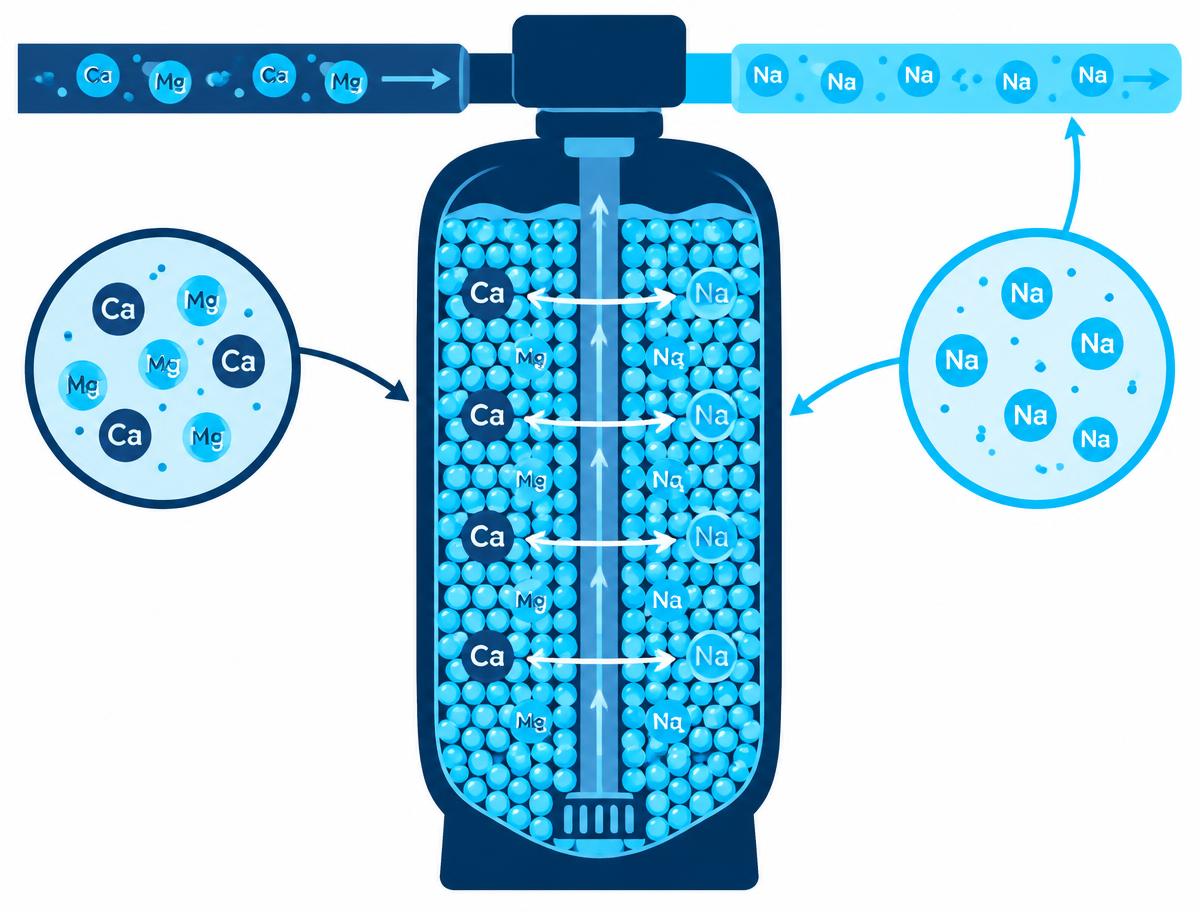
A softener is relevant to measured hardness, not a default answer to drinking-water taste. Conventional ion exchange reduces calcium and magnesium and typically requires salt replenishment and regeneration. The Minnesota Department of Health describes softening as a personal choice, with maintenance, sodium, environmental, and plumbing considerations. Check the current regional information and measure household hardness before deciding whether an existing softener is useful or a new one is justified. Do not infer a hardness value from Saint Paul's location or borrow one from a neighboring community. Category explanations can help you understand the equipment without making a universal recommendation for every home.
If the home already has a softener, map its outlet before interpreting kitchen samples. Some fixtures may bypass it, and hot water may have a different treatment history from cold water. A neglected controller, exhausted salt supply, or unfamiliar bypass position can complicate the picture, but those possibilities require inspection rather than guesswork. Photograph model labels and preserve existing settings until someone qualified has reviewed them. Ask how a proposed carbon or RO stage interacts with the existing equipment, including feed-water requirements and maintenance sequencing. A household may reasonably retain, repair, remove, or decline a softener depending on measurements and goals. Adding one is not a universal way to improve drinking-water taste.
Treat old plumbing as a planning issue, not a diagnosis
Saint Paul's established housing can make access, finish preservation, and shutoff condition important parts of a project. That does not mean every older home has the same pipe materials or water-quality concerns. Ask about the actual service-line information, indoor materials, and any prior plumbing work. If lead is a concern, follow utility and public-health guidance on testing and exposure reduction rather than assuming taste can detect it. A filter's location matters because substances can enter water downstream of an entry-point device. A main-line stage is not automatically equivalent to an appropriately selected point-of-use system for a substance associated with indoor plumbing.
An installation survey should identify corroded fittings, unreliable shutoffs, active leaks, tight stairs, finished ceilings, and the ability to reach equipment later. Clarify who handles permits when required and which qualified professional performs plumbing connections. If a countertop needs drilling, confirm material compatibility and responsibility before scheduling. Drain work must meet applicable plumbing requirements, including required separation or air-gap provisions. Ask whether service technicians can isolate equipment without shutting down the whole home for extended periods. A neat installation is one that can be maintained safely, not merely photographed cleanly on the day work ends. Scope these details before comparing quotes that may otherwise cover very different work.
Verify performance before accepting a reduction promise
Request the exact system model, replacement element identifiers, performance data sheet, and independent certification listing relevant to your goal. A product can have a certification for one function without being certified for every substance mentioned in a conversation. Check capacity, test flow, operating limits, and replacement instructions. If lead or PFAS reduction is a goal, verify the applicable named claim rather than infer it from the presence of carbon or an RO membrane. Conventional softening is not a universal PFAS treatment. No category description, stage count, or taste improvement should be presented as proof that a particular contaminant is absent.
For a health-related goal, ask how performance will be checked over time and what actions apply if an operating limit is exceeded. Laboratory sampling may be appropriate for some questions, but it should follow a defined plan with suitable methods and collection instructions. Do not use a cheap dissolved-solids pen as a pass-or-fail safety instrument. Keep public advisories separate from routine equipment maintenance: a maintained household filter does not give permission to disregard a boil-water instruction or other official notice. A trustworthy proposal states what a system is designed to do, what it does not address, and which conditions could limit its performance in your installation.
Budget for the existing house and the years after installation
Use the pricing page for current published guidance rather than treating a neighbor's invoice as your own estimate. Compare written proposals with the same boundaries: equipment, plumbing labor, permits if required, countertop work, drain connections, refrigerator tubing, startup, and any repair needed before installation. Include replacement cartridges, membranes or media, service visits, and operating water where relevant. Ask whether replacement parts are readily available and whether maintenance can be done without removing cabinetry. A low purchase price can be misleading if routine servicing is difficult, while a larger package can be poor value if most stages do not address your goal.
Plan a maintenance routine before the first cartridge is installed. Follow the manufacturer's replacement criteria, including rated capacity and time limits, and use any provided monitoring correctly. Keep a dated log of replacements, sanitation, leaks, and changes in flow. Inspect accessible connections and know the appropriate shutoff procedure. A sudden taste change should trigger investigation rather than an assumption that a filter always announces its exhaustion through flavor. Evaluate treatment with an agreed outcome, such as a preferred drinking-water taste or a documented reduction goal, not a promise of universal savings. Household use and equipment conditions vary too much for a blanket payback claim.
- Before installation, save model numbers, documented reduction claims, operating limits, and replacement instructions.
- At startup, confirm the treatment path, check connections, and record the agreed commissioning information.
- During ownership, log maintenance and investigate unexplained changes instead of relying on taste as a performance monitor.
Make the smallest defensible decision
A household satisfied with its water may reasonably add nothing. A household that dislikes only kitchen taste may compare a focused carbon system first. Another may prefer RO after reviewing its specific capabilities and tradeoffs. Main-line treatment belongs in the discussion when the desired outcome truly extends through the house and the plumbing can support a serviceable installation. These are alternatives to evaluate, not mandatory steps in an upgrade ladder. Review product categories, gather photographs and reports, and use the contact page for available contact details. Do not assume completing a form delivers a request or confirms an appointment.
Sources and further reading
Reviewed October 22, 2026. Utility reports describe the public supply, not an individual household sample. Check the utility for current reports and notices. Images are illustrative, not photographs of a customer installation.
- EWG Tap Water Database: Saint Paul Regional Water Services (reviewed October 22, 2026)
- Saint Paul Regional Water Services: Source Water Protection
- Saint Paul Regional Water Services: 2025 Water Quality Report, including results from 2024
- Minnesota Department of Health: Home Water Softening Frequently Asked Questions
Frequently asked questions
Should I start with a whole-home filter for drinking-water taste?
Not automatically. First determine whether the concern occurs beyond the kitchen and whether the proposed media has the relevant documented claim. A point-of-use system may address a focused preference with less extensive plumbing work. Main-line treatment should earn its place through a broader goal and a suitable installation plan.
Does Saint Paul's lake-connected source explain my current taste complaint?
Not by itself. The utility describes that source and historical watershed work, but today's household taste can involve temperature, indoor plumbing, an appliance, or existing treatment. Review current utility information and investigate the pattern at your fixtures without treating historical source information as a diagnosis.
Can a main-line filter handle concerns introduced by indoor plumbing?
Its location limits what it can address. Water passes through downstream piping and fixtures after entry-point treatment, so a household plumbing concern may require a different approach. Follow appropriate testing and public-health guidance, and evaluate the exact point-of-use reduction claim when that is relevant rather than assuming entry-point filtration covers everything.
How often should kitchen filters be replaced?
Follow the specific manufacturer's time and capacity limits, taking account of actual use and feed-water conditions. Different cartridges and membranes have different requirements. Keep a dated maintenance record and investigate unusual changes in taste or flow. Taste alone is not a reliable indicator that documented performance remains within its rated capacity.
What is the most useful first step in an existing home?
Map the concern and existing treatment, then collect the current utility report, relevant measurements, model labels, and photographs with dimensions. This supports a realistic comparison of kitchen and main-line options. Review current pricing guidance and available contact information without assuming a form submission has been received or a service visit confirmed.
More from the blog
Does a City-Softened Minneapolis Home Need Extra Water Treatment?
Minneapolis already softens its municipal water. Here is how to decide whether additional household treatment serves a real purpose.
Bloomington Water Treatment for Houses and Condos: Know Your Plumbing
Bloomington's combined municipal supply is only part of the decision. Your plumbing boundary and maintenance authority determine which options fit.
Edina or Morningside? Plan the Right Water Treatment for Your Remodel
Edina's two water systems make address-level planning important. Learn how to connect your supply, household measurements, and kitchen remodel decisions without assuming every home needs the same equipment.
Plymouth Water Softeners: Size for Hardness and Busy Mornings
A useful Plymouth treatment plan separates the city's treatment work from household hardness goals, then checks both daily capacity and the fixtures that may run together.
Talk through your water with a local pro
A free phone consultation starts with your water source and your goals. Published installed pricing, kitchen reverse osmosis included with every whole-home package, and a best-price guarantee.