
Minnesota Water Pros blog
Salt-Free Water Softener vs. Traditional: An Honest Comparison
Published August 20, 2026 · 11 min read · Educational content only, not a water quality diagnosis.
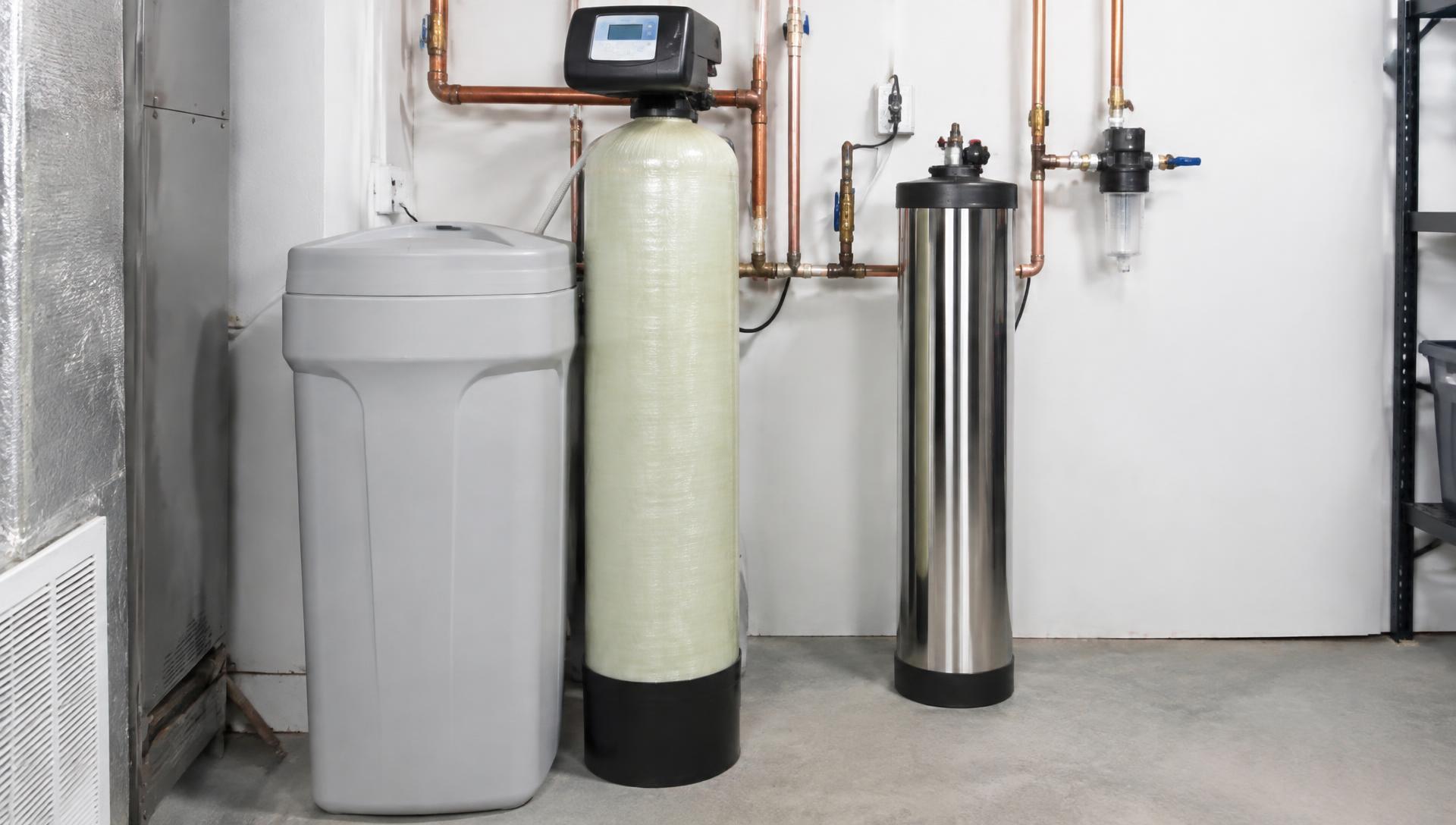
In this guide
- What salt-based ion exchange actually does, and why it is the only technology that truly softens water.
- What salt-free conditioners do instead, and why the water still tests hard afterward.
- A side-by-side comparison of results, maintenance, and cost.
- Which Minnesota households are a good fit for each approach.
- How to decide with your own water test rather than marketing claims.
Few products in home water treatment generate more confusion than the salt-free water softener. The name promises soft water without salt, without a drain line, and without maintenance, and it is easy to see the appeal. The problem is that the name describes something the technology does not do. Salt-free systems do not soften water at all, and understanding that single fact changes the entire comparison. This guide explains what each technology actually does, what results you can expect from each in a Minnesota home, and how to choose based on your water and your goals rather than on marketing language.
We sell and install both approaches, so we have no reason to tilt the table. What we have is a strong preference for honesty: the right system is the one that does what you actually want done. By the end of this guide you will know exactly which questions to ask, ours or anyone's, and how to verify the answer with a simple water test.
What a Traditional Softener Actually Does
A traditional softener removes hardness. Inside the mineral tank, thousands of tiny resin beads carry a negative charge and hold sodium ions. As hard water flows through, the calcium and magnesium ions, the minerals that make water hard, are more strongly attracted to the resin than sodium is. They trade places: hardness minerals stay on the beads, sodium enters the water, and what comes out is genuinely soft water. The process is called ion exchange, and we walk through it step by step in our guide to how a water softener works.
The key word is removal. After a properly sized and programmed softener, a hardness test reads at or near zero grains per gallon. The minerals are gone from the water, which is why every downstream benefit follows: soap lathers fully, scale stops forming in pipes and appliances, glassware dries clear, and skin and hair feel the difference. Periodically the softener flushes the accumulated minerals down the drain with a salt-water rinse, regenerates the resin with fresh sodium, and goes back to work. That regeneration cycle is why the system needs salt and a drain connection.
What a Salt-Free Conditioner Actually Does
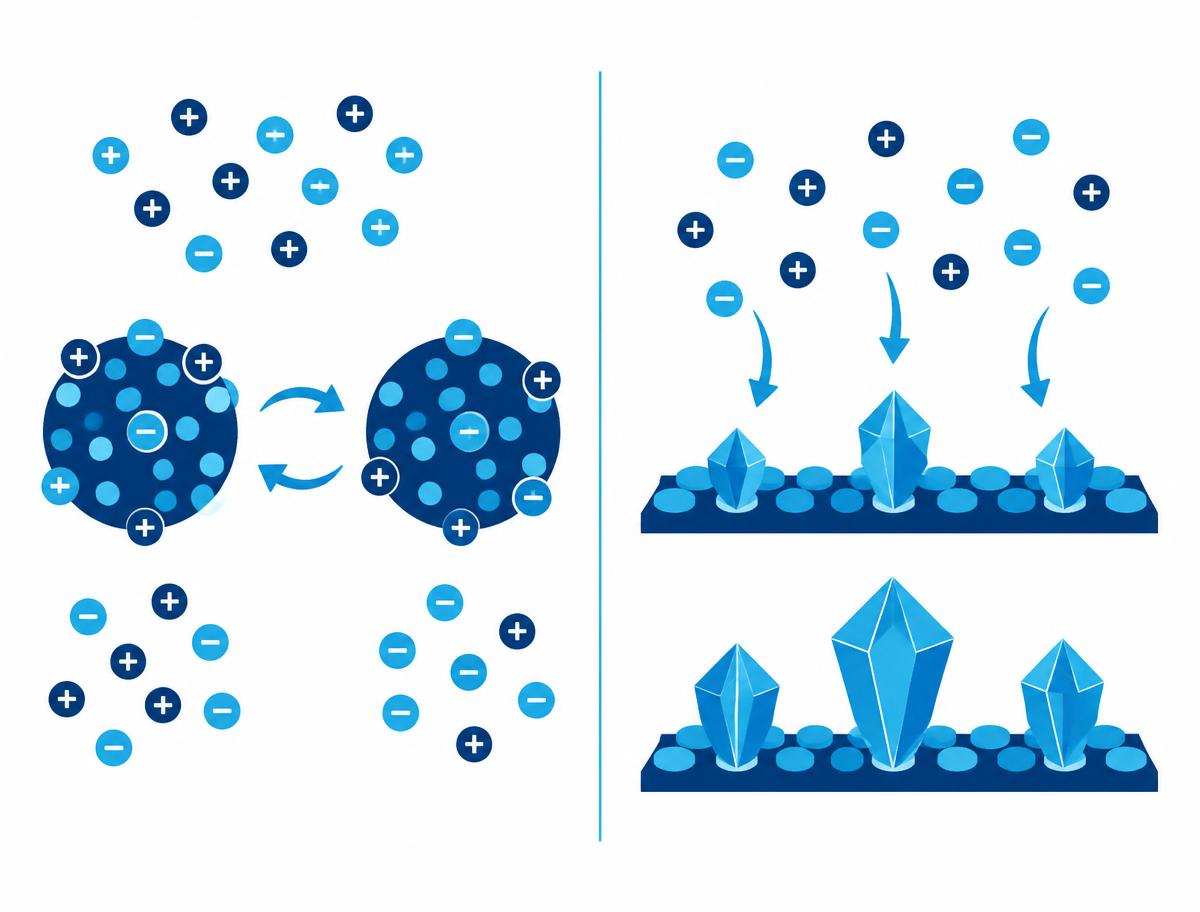
Salt-free systems use a different technology entirely, most commonly template assisted crystallization, often shortened to TAC. Instead of removing calcium and magnesium, the media inside a salt-free tank gives those minerals a surface to crystallize on. The minerals form microscopic crystals that stay suspended in the water and are less likely to stick to pipes, heating elements, and fixtures. The minerals are still in the water. They are just less sticky.
This is why the honest industry term is conditioner or descaler, not softener. If you test the water after a salt-free system, the hardness reading is unchanged, because nothing was removed. Soap will not lather the way it does with soft water. Laundry will not feel the same. Spots on glassware may be reduced but rarely disappear. What you do get is meaningful scale reduction, and for some households that is exactly the goal. The problem is not the technology; it is the name. A household that buys a salt-free system expecting soft water will be disappointed. A household that buys it expecting reduced scale with almost no upkeep will be pleased.
Side by Side: Results You Can Feel and Measure
The clearest way to compare is by outcome. On hardness removal, a traditional softener takes water to zero grains per gallon; a salt-free system leaves hardness untouched. On scale prevention, both help, with softening essentially eliminating new scale and conditioning substantially reducing it. On soap and detergent performance, only true soft water delivers the full lather and the reduced product usage. On skin and hair, only soft water changes the feel. On spotting, soft water eliminates it; conditioned water reduces it. On drinking-water sodium, softening adds a modest amount proportional to the hardness removed, while conditioning adds none.
Maintenance differs too, and this is the salt-free system's genuine advantage. A traditional softener needs salt refills every month or two, a periodic check for salt bridges, and a drain for regeneration. It also uses some water and a small amount of electricity for the regeneration cycle. A salt-free conditioner needs no salt, no drain, no electricity, and typically just a media replacement on a multi-year schedule. If your priority is the lowest possible upkeep and you can accept conditioned rather than soft water, salt-free earns its place.
What Each Option Costs
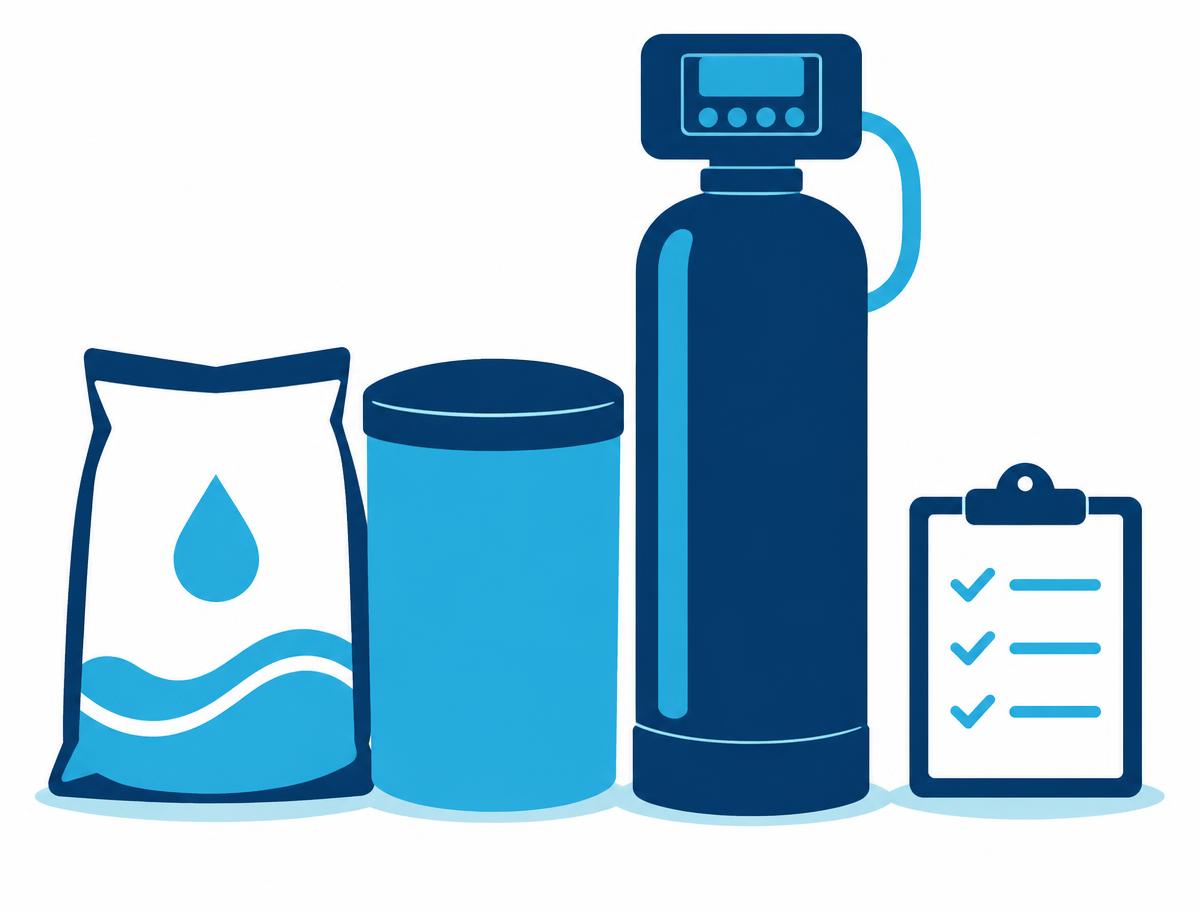
We publish our installed prices so you can compare with real numbers. Our salt-free and dual-tank well systems are $4,499 installed, and our dual-tank city systems are $3,999 installed, with whole-home filtration and softening packages starting at $2,999. Every whole-home package includes professional installation, a full walkthrough, and a kitchen reverse osmosis system at no additional cost, and every system carries a lifetime warranty with written terms provided during your consultation. Our best-price guarantee means we will beat a lower written quote for comparable equipment and professional installation.
Ongoing costs differ meaningfully. A salt-based softener's running costs are salt, a modest amount of regeneration water, and a trickle of electricity, typically a small monthly figure for most households. A salt-free system's running cost is essentially the periodic media replacement. Over a decade, the gap is real but not dramatic, and for most households the decision should turn on results rather than on a few dollars a month. If you want to model the savings side, our savings calculator lets you estimate what soft water saves on detergent, energy, and appliance wear using your own numbers.
Which One Fits a Minnesota Home
Minnesota water is hard. Municipal supplies across the Twin Cities metro run moderately to very hard, and private wells often run harder still, as covered in our guide to the signs of hard water. The harder the water, the more a household feels the difference between conditioned and truly soft. At moderate hardness, some households are satisfied with scale reduction alone. At the hardness levels common across the metro, most households that have lived with truly soft water do not want to go back, and most who choose salt-free expecting soft-water results end up wishing they had known the difference first.
Salt-free conditioning makes the most sense for households that want scale protection with near-zero maintenance, for situations where a drain connection is impractical, for homeowners who prefer not to add sodium to their water, and for some well applications where it pairs with other treatment stages. Traditional softening makes the most sense for households that want the full experience: the lather, the spotless glassware, the softer laundry, the protected water heater, and water that tests at zero hardness. Neither answer is wrong. The wrong outcome is buying one while expecting the other.
The Marketing Claims to Watch For
Because salt-free systems sell on convenience, the marketing around them often stretches past what the technology does. Watch for three patterns. The first is the word softener itself: any product that calls itself a salt-free water softener without explaining that the water still tests hard is leaning on the confusion this guide exists to clear up. The second is the promise of soft-water benefits, silky skin, better lather, spotless dishes, from a technology that leaves the minerals in the water. Those benefits come from mineral removal, and only ion exchange removes minerals. The third is the claim that salt-free systems are proven to eliminate scale completely. Conditioning reduces scale formation meaningfully, but results vary with water chemistry, temperature, and flow, and honest vendors say so.
Traditional softeners attract their own exaggerations, mostly in the other direction: claims that salt-based systems are wasteful, outdated, or harmful. The facts are quieter. Modern demand-initiated softeners regenerate only when needed, using far less salt and water than older timer models. The sodium added to softened water is modest and proportional to hardness. And the drain discharge from regeneration is a normal, permitted part of municipal wastewater across the Twin Cities metro. Both technologies are legitimate. The skill is matching the technology to the goal, and the red flag is any company that cannot explain both without flinching.
What About Hybrid and Specialty Setups
Some homes end up with both technologies working together. A well home might use salt-free conditioning to protect equipment in one part of the plumbing while a softener serves the household's bathrooms and kitchen. Some homeowners condition the water feeding an outdoor irrigation loop or a boiler while softening the domestic supply. These setups are less common, but they illustrate the real principle: these are tools, not tribes. Once you stop asking which technology wins and start asking which job needs doing at each point in the plumbing, the options get much more interesting, and the system gets much better matched to the house.
A Note on Well Water
Well homes face a version of this decision with extra stakes. Minnesota well water often runs harder than city water and frequently carries iron alongside the hardness. Iron changes the equation for both technologies: it fouls softener resin if it is not treated upstream, and it can coat salt-free media and reduce its effectiveness. This is why well systems are built as sequences, with iron treatment ahead of whatever handles hardness, and why a current accredited lab test matters more on a well than anywhere else. Our well water guide walks through the full sequence, and the same rule applies here as everywhere: the water test decides, not the brochure.
Whichever direction you go, verify the result after installation. For a softener, that verification is beautifully simple: a hardness test strip reads zero, and the soap test produces a mountain of lather. For a salt-free system, verification is subtler, because the water still tests hard by design. What you watch instead is the scale: fixtures and heating elements should stay noticeably cleaner over the following months. A company confident in either installation will welcome the follow-up test, because it is the proof that the system is doing its job.
How to Decide With Evidence, Not Marketing
Start with your water. City homes can check their utility's annual water quality report for the hardness number; our water quality page links the Minneapolis and St. Paul data. Well homes should test through an accredited laboratory, as we detail in our well water guide. Then name your priority honestly: if it is the full soft-water experience, choose ion exchange. If it is scale reduction with the least possible upkeep, salt-free is a legitimate choice. Finally, ask any company quoting you to put the expected results in writing. A company that sells both will tell you plainly which one does what.
One last thought on the decision itself: it is not permanent. Households that start with salt-free conditioning and later want true softening can add a softener, and households with a softener already own the technology that does the most. The expensive mistake is not choosing one over the other. It is choosing either one while expecting the other's results, which is exactly the mistake this guide exists to prevent. If you would like help working through it, a free phone consultation starts with your water source and your goals, and our Find Your Solution tool can narrow the options in about two minutes. We serve Minneapolis, St. Paul, and surrounding communities across the metro. The best system is the one that does what you actually want, and now you know exactly what each one does. Bring your water report, your hardness number, and your honest priorities to the conversation, and the right choice usually names itself within minutes. Whether that choice is ion exchange, salt-free conditioning, or a combination built around your plumbing, the goal is the same: water that works for your household, verified by a test strip instead of a promise.
Frequently asked questions
Do salt-free water softeners actually soften water?
No. Salt-free systems condition water rather than soften it. They use template assisted crystallization to change how hardness minerals crystallize so they stick less to surfaces, but the minerals remain in the water and a hardness test reads the same before and after. Only ion exchange, the technology in traditional salt-based softeners, actually removes hardness.
Is a salt-free system worth it in Minnesota?
It depends on your goal. Minnesota water is moderately to very hard, so households wanting the full soft-water experience, better lather, no spots, softer laundry, need true softening. Salt-free conditioning is a legitimate choice if your priority is scale reduction with almost no maintenance, no salt, no drain, and no added sodium.
Does a salt-free conditioner remove scale that already exists?
Conditioned water can gradually reduce existing scale over time because the crystallized minerals are less likely to keep building, but results vary and the process is slow. A traditional softener stops new scale completely and softened water also dissolves existing buildup gradually. Neither is an instant fix for years of accumulated scale.
How much maintenance does each type need?
A traditional softener needs salt refills every month or two, an occasional check for salt bridges, and a drain connection for regeneration. A salt-free conditioner needs no salt, no drain, and no electricity, with media replacement on a multi-year schedule. That low upkeep is the salt-free system's genuine advantage.
What does each option cost installed in the Twin Cities?
With Minnesota Water Pros, salt-free and dual-tank well systems are $4,499 installed, dual-tank city systems are $3,999, and whole-home filtration and softening packages start at $2,999. Every whole-home package includes professional installation, a walkthrough, and a kitchen reverse osmosis system at no extra cost, plus a lifetime warranty.
Can I drink the water from a salt-based softener?
Yes. Softening adds a modest amount of sodium proportional to the hardness removed, which is small compared to dietary sources. Households on low-sodium diets or anyone wanting extra refinement can drink from a reverse osmosis tap, which removes sodium along with a broad range of dissolved solids. Every whole-home package we install includes an RO system at the kitchen sink.
More from the blog
Does a City-Softened Minneapolis Home Need Extra Water Treatment?
Minneapolis already softens its municipal water. Here is how to decide whether additional household treatment serves a real purpose.
Saint Paul Drinking-Water Taste: Kitchen Filter or Main-Line Treatment?
A kitchen taste preference and a whole-home treatment goal are different projects. Learn how to compare them in an existing Saint Paul home.
Bloomington Water Treatment for Houses and Condos: Know Your Plumbing
Bloomington's combined municipal supply is only part of the decision. Your plumbing boundary and maintenance authority determine which options fit.
Edina or Morningside? Plan the Right Water Treatment for Your Remodel
Edina's two water systems make address-level planning important. Learn how to connect your supply, household measurements, and kitchen remodel decisions without assuming every home needs the same equipment.
Talk through your water with a local pro
A free phone consultation starts with your water source and your goals. Published installed pricing, kitchen reverse osmosis included with every whole-home package, and a best-price guarantee.