
Minnesota Water Pros blog
How to Reduce PFAS in Drinking Water: What EPA Research Says Works
Published October 23, 2026 · 13 min read · Educational content only, not a water quality diagnosis.
In this guide
- What PFAS are, and why ordinary water treatment does not remove them.
- How activated carbon, ion exchange resin, and reverse osmosis each reduce PFAS, according to EPA research.
- Why short-chain PFAS are harder for carbon, and why membranes handle them better.
- What EWG's Tap Water Database shows for PFAS in Minneapolis and Saint Paul utility water.
- How to choose a home system: certifications, point of use vs. point of entry, and maintenance.
PFAS have gone from a term most people had never heard to one of the most searched water questions in the country. The headlines can make the subject feel hopeless: chemicals that never break down, found in water across the United States, linked to health concerns, and hard to remove. The good news is that the removal part is better understood than most people realize. The U.S. Environmental Protection Agency has spent years testing treatment technologies at bench, pilot, and full scale, and its researchers have published clear findings on what works and what does not.
This guide walks through that research, based on the EPA Science Matters article "Reducing PFAS in Drinking Water with Treatment Technologies," and translates it for Twin Cities homeowners. We will cover what PFAS are, the three technologies EPA identified, how each one performs, what the current federal rules look like, what local utility data shows, and how to evaluate a home system honestly. As always, this is educational content, not a diagnosis of your water. If you want to see local utility data first, our Twin Cities water quality page summarizes it with sources.
What PFAS Are and Why They Persist
PFAS stands for per- and polyfluoroalkyl substances, a large family of man-made chemicals. As EPA describes them, they have been used for decades in consumer products to make them non-stick and water resistant, in firefighting foams, and in many industrial processes. The same chemistry that makes them useful, an extremely strong bond between carbon and fluorine, is what makes them persist in the environment. EPA notes that PFAS can bioaccumulate, meaning they build up over time in the bodies of people and animals. That persistence is where the nickname forever chemicals comes from.
PFAS also dissolve in water. EPA states directly that, combined with their chemical properties, this means traditional drinking water treatment technologies are not able to remove them. Conventional treatment at a city plant is built around coagulation, settling, filtration, and disinfection. Those steps are excellent at removing particles and killing pathogens, but dissolved PFAS molecules pass through them. Removing PFAS takes a process specifically chosen for the job, which is why EPA researchers studied dedicated technologies rather than assuming existing plants would handle it.
Two PFAS compounds get the most attention: perfluorooctanoic acid (PFOA) and perfluorooctane sulfonic acid (PFOS). They are the most studied members of the family, and they are the two with federal drinking water limits that EPA has proposed to keep. But the family includes many other compounds, and some of them, particularly the shorter-chain ones such as PFBA and PFBS, behave differently in treatment. That difference turns out to matter a lot when choosing equipment.
The Three Technologies EPA Found Effective
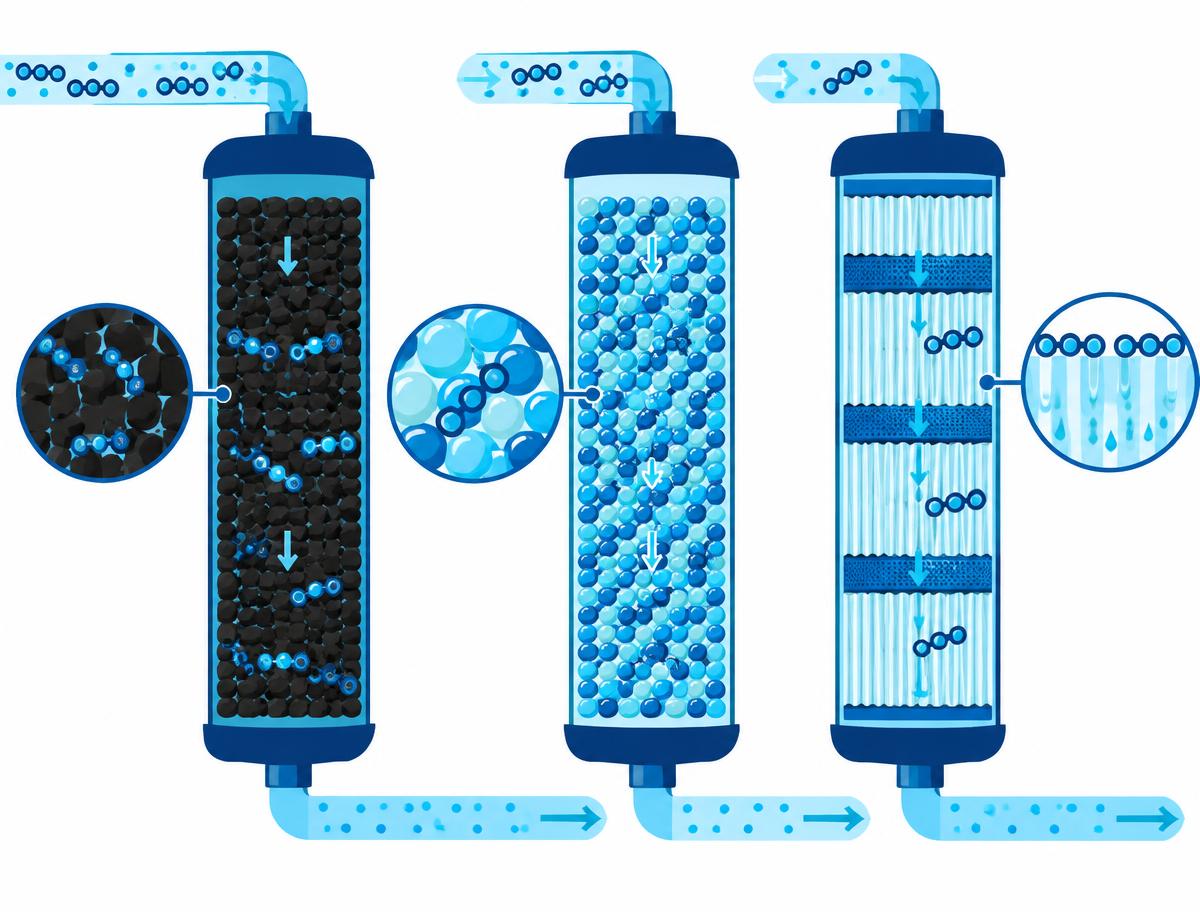
According to EPA, certain technologies have been found to remove PFAS from drinking water, especially PFOA and PFOS. Those technologies are activated carbon adsorption, ion exchange resins, and high-pressure membranes. EPA also notes that each can be used at different scales: in drinking water treatment facilities, in the water systems of hospitals or individual buildings, and in homes, either at the point of entry where water comes into the house or at the point of use, such as a kitchen sink or a shower. The same science applies whether the equipment is the size of a building or fits under your sink, though the details of sizing and maintenance change.
Activated Carbon: The Most Studied Option
EPA calls activated carbon the most studied treatment for PFAS removal. Carbon is already widely used in water treatment to adsorb natural organic compounds, taste and odor compounds, and synthetic organic chemicals. Adsorption is the process of a substance accumulating on the surface of a solid. Activated carbon works well because it is extremely porous, which gives it an enormous internal surface area for contaminants to stick to. Granular activated carbon, often shortened to GAC, is made from organic materials with high carbon content, such as wood, lignite, and coal.
EPA research found GAC effective at removing PFAS when water flows through a bed of it after particulates have already been removed. EPA researcher Thomas Speth explained that GAC can be 100 percent effective for a period of time, and that the length of that period depends on the type of carbon, the depth of the carbon bed, the flow rate of the water, the specific PFAS being removed, the temperature, and the amount and type of organic matter and other substances in the water. In plain terms, carbon works very well until its surface fills up, and how quickly that happens depends on the design and on what else is in the water competing for space.
There is an important limitation. EPA notes that GAC works well on longer-chain PFAS like PFOA and PFOS, but shorter-chain PFAS like PFBS and PFBA do not adsorb as well. Shorter molecules are less attracted to the carbon surface, so they break through sooner. For a homeowner, this means a carbon filter that performs well on PFOA and PFOS may not perform the same way on every PFAS compound, and that is worth knowing when you read your local data.
EPA also studied powdered activated carbon, or PAC, which is the same material ground into a fine powder. Because it is so fine, PAC cannot be used in a flow-through bed. It is added directly to water at a treatment plant and removed later with other particles. EPA found PAC less efficient and less economical than GAC for PFAS removal, with Speth noting that even at very high doses with the best carbon, PAC is unlikely to be as effective as GAC. This is mainly a treatment plant consideration, but it reinforces the broader point: how carbon is used matters as much as whether carbon is present.
This is where home buyers should be careful. A generic carbon pitcher or a basic sediment and carbon cartridge is not automatically a PFAS filter. Carbon products vary widely in carbon type, amount, contact time, and rated capacity. Our guide to reverse osmosis vs. carbon filtration explains the general strengths of each, and our chlorine in tap water guide covers the jobs carbon does best. For PFAS specifically, the exact product's tested performance is what counts.
Ion Exchange Resin: Tiny Magnets for PFAS
The second technology EPA studied is anion exchange resin. Ion exchange resins are small, highly porous polymer beads. There are two broad types. Cation exchange resins carry a negative charge and attract positively charged contaminants. Anion exchange resins carry a positive charge and attract negatively charged contaminants, which is what makes them useful for PFAS, since many PFAS compounds carry a negative charge in water. EPA compares the resins to tiny powerful magnets that pull contaminants out of the water as it passes.
If ion exchange sounds familiar, it is because a water softener also uses ion exchange. But a standard softener uses cation exchange resin to capture calcium and magnesium, the positively charged minerals that cause hardness. It is not designed for PFAS, and it should not be assumed to reduce them. Our explainer on how a water softener works covers the softening side of ion exchange in detail. PFAS treatment uses a different, specifically selected anion resin.
EPA found that, like GAC, anion exchange resin can remove 100 percent of PFAS for a time. The length of that time depends on the resin chosen, the bed depth, the flow rate, which PFAS need removing, and the background organic matter and other substances in the water. EPA research has also indicated that anion exchange resin can have a higher capacity for many PFAS than carbon, though resin is generally more expensive. As with carbon, the key word is time. The media eventually fills, and performance depends on replacing it before that happens.
Reverse Osmosis and Nanofiltration: High-Pressure Membranes
The third approach is high-pressure membranes, which include nanofiltration and reverse osmosis. EPA describes these as extremely effective at removing PFAS. Reverse osmosis membranes are tighter than nanofiltration membranes. EPA explains the practical difference: nanofiltration rejects hardness to a high degree but passes sodium chloride, while reverse osmosis rejects all salts to a high degree. That means nanofiltration can retain some minerals that reverse osmosis would remove.
The headline finding is that these membranes are typically more than 90 percent effective at removing a wide range of PFAS, including shorter-chain PFAS. That last part is what sets membranes apart. Where carbon struggles with short-chain compounds like PFBA and PFBS, a membrane works by physically rejecting dissolved molecules, so chain length matters much less. This is one reason reverse osmosis is often recommended when the goal is the broadest reasonable PFAS reduction for drinking water.
Membranes have a trade-off. EPA notes that at treatment plant scale, about 80 percent of the incoming water passes through the membrane as treated water, while about 20 percent is retained as a concentrated waste stream. For a city, treating or disposing of a high-strength PFAS waste stream at 20 percent of the flow is a serious challenge, which is one reason large utilities often lean toward carbon or resin. Home under-sink systems have their own ratio of treated water to drain water that varies by model and conditions, and the concentrate simply goes down the household drain. For a kitchen tap that supplies drinking and cooking water, that trade-off is usually manageable, which is why home reverse osmosis is so common.
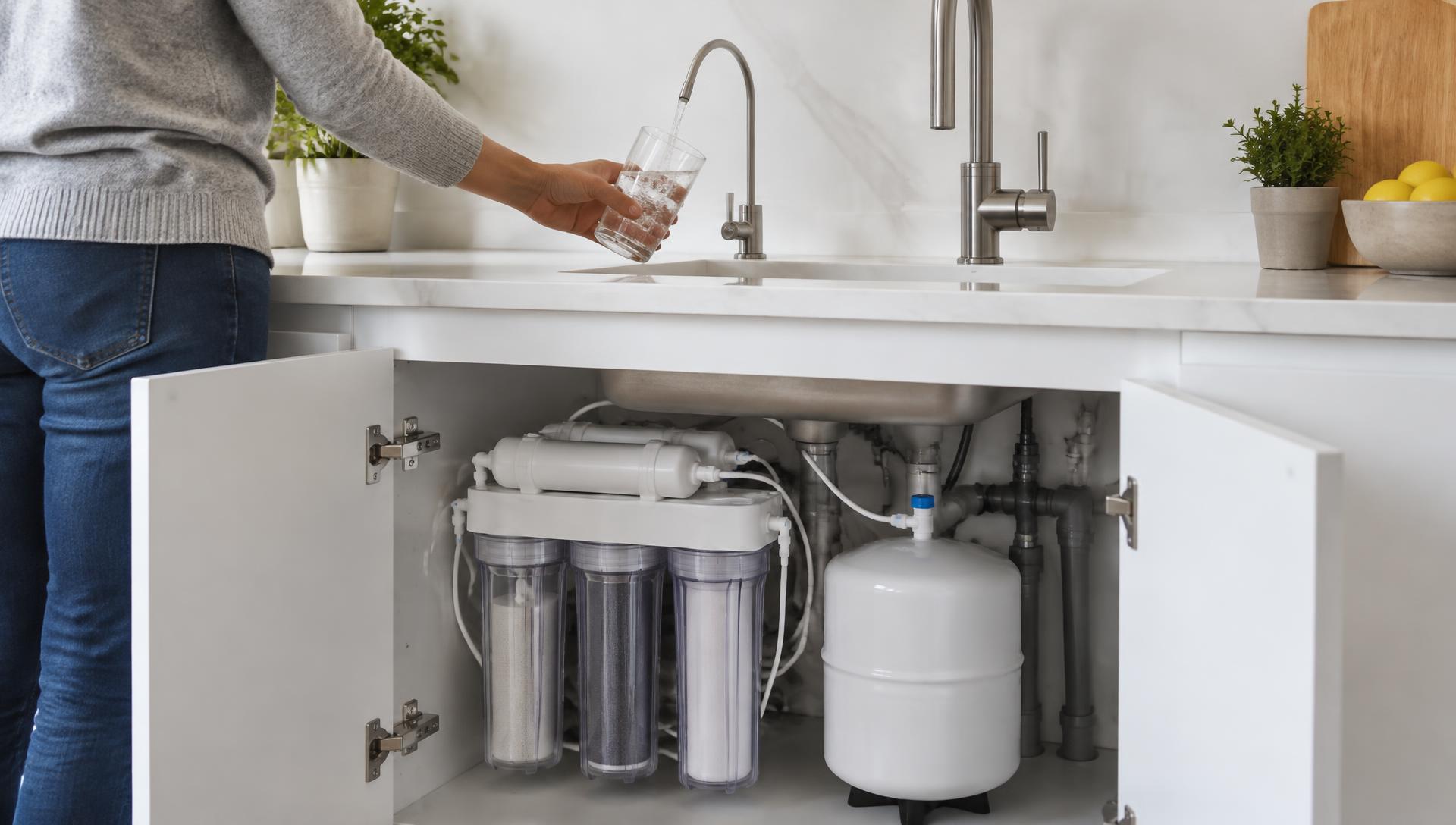
Reverse osmosis systems used at home also include carbon pre-filters and post-filters around the membrane, so a well-designed under-sink unit combines two of the three technologies EPA identified. The pre-filters protect the membrane from chlorine and sediment, and the membrane handles the dissolved compounds that carbon alone may miss. If you want to understand the hardware itself, our traditional tank reverse osmosis page walks through the stages.
Side by Side: How the Three Approaches Compare
- Granular activated carbon: most studied, can be 100 percent effective on PFOA and PFOS for a period of time, less effective on short-chain PFAS such as PFBA and PFBS, and performance depends heavily on carbon type, bed depth, and contact time.
- Anion exchange resin: can remove 100 percent of PFAS for a period of time, often higher capacity than carbon for many PFAS, generally more expensive, and different from the cation resin in a water softener.
- Reverse osmosis and nanofiltration: typically more than 90 percent effective across a wide range of PFAS including short-chain compounds, produce a concentrate stream that goes to drain, and reverse osmosis also removes most dissolved minerals.
- All three need maintenance: carbon and resin must be replaced before they are exhausted, and membranes and their pre-filters must be replaced on schedule to keep performing.
None of these is a magic answer, and none is effective forever without upkeep. The pattern across all of EPA's findings is that performance depends on design, on the specific PFAS involved, and on the other substances in the water. That is why a good recommendation starts with your actual water data instead of a product box.
Where the Federal Rules Stand
In April 2024, EPA finalized the first national drinking water standards for PFAS, including maximum contaminant levels of 4 parts per trillion each for PFOA and PFOS. On May 18, 2026, EPA announced a proposed rule to uphold those PFOA and PFOS limits while allowing public water systems to request two additional years, to April 2031, to comply. EPA also proposed rescinding the 2024 regulations for PFHxS, PFNA, HFPO-DA (commonly called GenX), and the hazard index mixture of those three plus PFBS. The comment period closed July 20, 2026, and these were proposals, so the final outcome may differ. Your utility and EPA's own pages are the best place to check the current status.
Two things follow for homeowners. First, legal limits apply to public water systems, not to what comes out of a specific home faucet, and they describe compliance deadlines rather than whether a utility already meets them. Second, a part per trillion is an extraordinarily small concentration, roughly one drop in an enormous volume of water. The fact that limits are set that low reflects how seriously regulators take long-term exposure, and it also explains why measurement and treatment for PFAS are specialized work.
What EWG Data Shows for Twin Cities Utility Water
EWG, the Environmental Working Group, compiles utility testing into its Tap Water Database. We reviewed the Minneapolis and Saint Paul Regional Water Services listings on October 23, 2026. For Saint Paul Regional Water Services (data from 2013 to 2024), EWG lists 25 contaminants detected, 13 above EWG health guidelines. Three of those above EWG guidelines are PFAS: PFOA at 0.617 parts per trillion against an EWG guideline of 0.09, PFHxS at 0.373 parts per trillion against an EWG guideline of 0.001, and PFNA at 0.0620 parts per trillion against an EWG guideline of 0.006. EWG also lists PFOS, PFBS, PFBA, PFHpA, PFHxA, and PFPeA among other detected substances.
For Minneapolis (data from 2015 to 2024), EWG lists 19 contaminants detected, 10 above EWG health guidelines. None of the ten above guidelines is a PFAS compound, but EWG lists three short-chain PFAS among other detected substances: PFBA, PFHxA, and PFPeA. Notice that these are the shorter-chain compounds that EPA research says carbon adsorbs less well, which makes the membrane discussion above directly relevant for anyone in Minneapolis who wants to reduce them.
Context matters for every one of these numbers. EWG's guidelines are its own health-based benchmarks and are far stricter than federal legal limits. The Saint Paul PFOA average EWG reports, 0.617 parts per trillion, is below the federal limit of 4 parts per trillion. Both utilities were in compliance with federal standards for the most recent quarter EWG reports (April to June 2024). And utility data describes the public supply, not a test of water from any particular home. These figures are a reason to understand your options, not a sign that your water is unsafe. Our community guides for Minneapolis and St. Paul go deeper on each system.
If you live elsewhere in the metro, your city's own EWG listing and annual Consumer Confidence Report will show what has been tested and detected. The Minnesota Department of Health also publishes PFAS information and health-based guidance for Minnesota water. Homes on private wells are not covered by utility testing at all, so the only way to know about PFAS in a well is to have it tested by an accredited laboratory. Our well water treatment guide covers well testing in more depth.
Point of Use vs. Point of Entry at Home
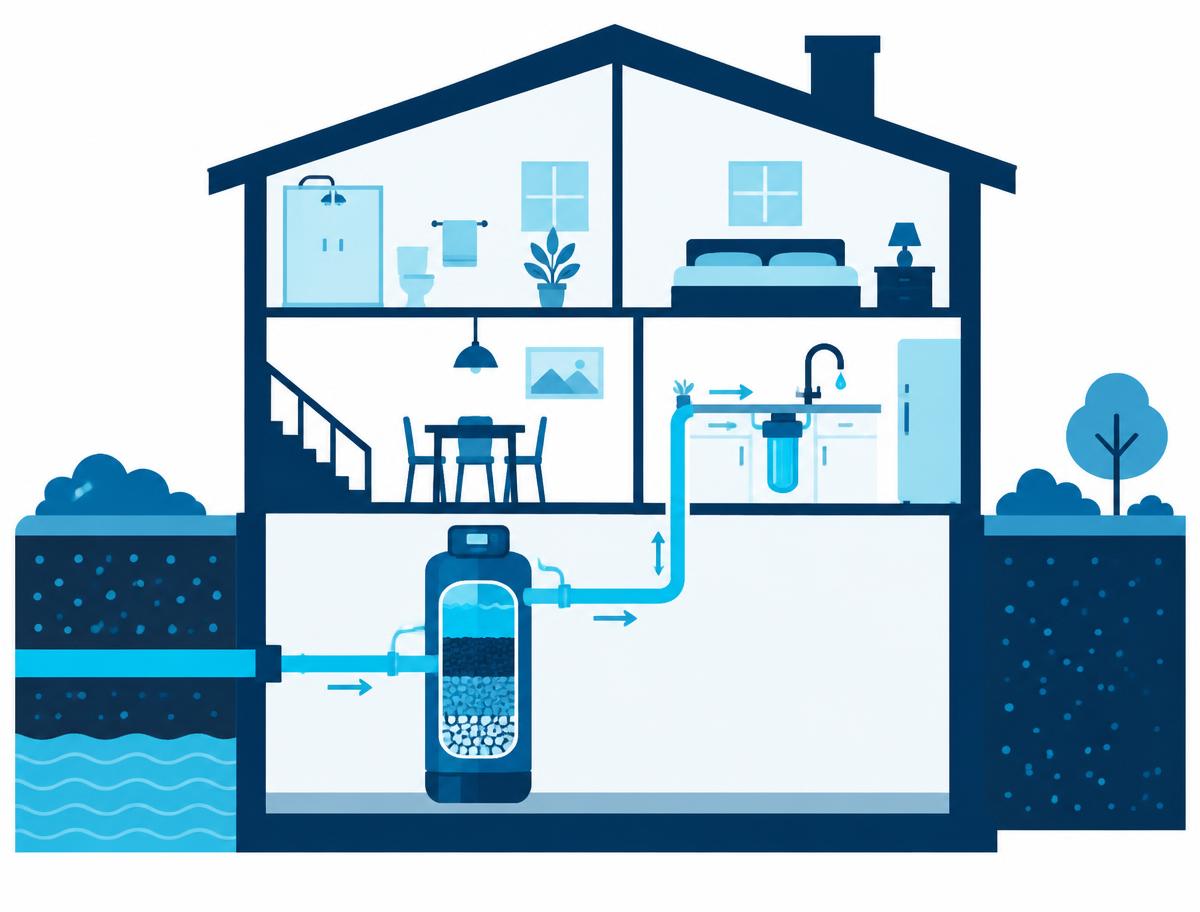
EPA's research mentions both point-of-entry and point-of-use treatment, and the choice comes down to what water you want treated. The most direct exposure pathway people think about is drinking and cooking water, which is why point-of-use treatment at the kitchen sink is the most common starting point. An under-sink reverse osmosis system treats the water you drink, cook with, fill ice trays with, and use for coffee, which is where membranes' broad PFAS performance matters most.
Point-of-entry treatment, such as a whole-home carbon system, treats every tap in the house, including showers and laundry. Whole-home carbon is widely chosen for chlorine taste and odor and for disinfection byproducts, and some households want broader treatment throughout. If PFAS reduction is part of the reason for a whole-home system, the specific media and its documented performance, capacity, and replacement interval need to be confirmed, because whole-home systems move much more water through the media than a kitchen filter does. Our whole-house water filter cost guide explains how sizing affects price.
Many Twin Cities homes end up with both: whole-home treatment for hardness and chlorine, plus reverse osmosis at the kitchen sink for drinking water. That combination is the reason every Minnesota Water Pros whole-home package includes a kitchen reverse osmosis system. You can compare packages on our pricing page and browse equipment on the products page.
How to Choose a Home PFAS Filter Honestly
EPA publishes a consumer fact sheet, "Reducing PFAS in Your Drinking Water with a Home Filter," that recommends choosing a filter certified to reduce PFAS. The certifications it points to are NSF/ANSI Standard 53, which covers health-related contaminants for filters such as carbon, and NSF/ANSI Standard 58, which covers reverse osmosis systems. A certification listing names the specific contaminants the product was tested to reduce, so check that PFOA and PFOS, or PFAS more broadly, appear on the listing for the exact model, not just the brand.
- Check the listing, not the label: look up the exact model in the certifier's database and confirm which PFAS reduction claims it carries.
- Match the technology to your data: if short-chain PFAS appear in your utility's results, reverse osmosis generally covers them better than carbon alone, based on EPA's findings.
- Respect capacity: carbon and resin work until they are full, so rated capacity in gallons and the replacement schedule matter as much as the initial result.
- Plan maintenance before you buy: know the cartridge or membrane replacement intervals and their cost, because an overdue filter stops protecting you without any visible sign.
- Know what a softener does not do: a standard water softener is not a PFAS treatment, even though it also uses ion exchange.
- Test if you are on a well: utility data does not cover private wells, and a certified lab test is the only way to know what is there.
We hold ourselves to the same standard when we recommend equipment. We will not tell you a product removes a specific contaminant unless its documentation supports that claim, and we will not tell you your water is unsafe based on a city report. What we will do is walk through your water source, your local data, and your goals, then explain which options fit and what they cost to own over time. Our approach page explains how we work.
Maintenance Is Where PFAS Protection Is Won or Lost
Every technology in EPA's research shares one feature: performance is excellent for a period of time. Carbon fills up. Resin fills up. Membranes and their pre-filters wear and foul. The research language, effective for a time depending on conditions, is the most practical takeaway for homeowners. A filter that was installed and forgotten five years ago may not be doing what it did on day one, and there is no taste or smell to warn you, because PFAS are not detectable by the senses.
The fix is simple discipline. Write down the replacement schedule when the system is installed. Set calendar reminders. Keep spare cartridges on hand. If the household uses more water than average, expect to replace media sooner than the generic interval. For reverse osmosis, replace pre-filters on time so chlorine and sediment do not shorten the membrane's life. These steps cost far less than the equipment, and they are what turn the research results into real protection in your kitchen.
Putting the Research to Work in Your Home
The EPA research on PFAS treatment is genuinely encouraging. The technologies exist, they are well studied, and they are available at a scale that fits under a kitchen sink. Activated carbon is the most studied and works very well on longer-chain compounds like PFOA and PFOS. Anion exchange resin offers high capacity. Reverse osmosis is typically more than 90 percent effective across a wide range of PFAS, including the short-chain compounds that show up in Twin Cities utility data. The best choice for your home depends on your water source, your local data, and whether you want treatment at one tap or every tap.
A sensible order of operations looks like this. Start with data: your utility's annual report and EWG listing if you are on city water, or a certified lab test if you are on a well. Decide what you want treated: drinking water only, or the whole house. Choose a technology that matches the compounds in your data, and confirm the exact model's certification for PFAS reduction. Then commit to the maintenance schedule from the first day. That approach is calm, evidence based, and effective, and it avoids both overreacting to headlines and ignoring a real question.
If you would like help working through it, a free phone consultation starts with your water source and your goals, with no pressure and no surprise fees. You can also use our Find Your Solution tool to narrow the options in about two minutes, or check whether your community is in our service area across Minneapolis, St. Paul, and the surrounding metro. Everyone deserves cleaner water, and understanding what the science says is the first step toward getting it.
Sources and further reading
Reviewed October 22, 2026. Utility reports describe the public supply, not an individual household sample. Check the utility for current reports and notices. Images are illustrative, not photographs of a customer installation.
- EPA Science Matters: Reducing PFAS in Drinking Water with Treatment Technologies
- EPA: Reducing PFAS in Your Drinking Water with a Home Filter (fact sheet)
- EPA: Proposed PFOA and PFOS Compliance Extension Rule
- EPA Drinking Water Treatability Database
- EWG Tap Water Database: Minneapolis (reviewed October 23, 2026)
- EWG Tap Water Database: Saint Paul Regional Water Services (reviewed October 23, 2026)
Frequently asked questions
What removes PFAS from drinking water?
EPA research identified three technologies that reduce PFAS: granular activated carbon, anion exchange resin, and high-pressure membranes such as reverse osmosis and nanofiltration. Carbon and resin can remove up to 100 percent of PFOA and PFOS for a period of time, and reverse osmosis is typically more than 90 percent effective across a wide range of PFAS, including short-chain compounds.
Does a regular carbon filter remove PFAS?
Not automatically. EPA found granular activated carbon effective on longer-chain PFAS like PFOA and PFOS when designed with enough carbon and contact time, but less effective on short-chain PFAS like PFBA and PFBS. Carbon products vary widely, so check whether the exact model is certified to reduce PFAS under NSF/ANSI Standard 53.
Does reverse osmosis remove PFAS?
EPA research shows high-pressure membranes such as reverse osmosis are typically more than 90 percent effective at removing a wide range of PFAS, including shorter-chain compounds. Look for a system certified under NSF/ANSI Standard 58 for PFAS reduction, and replace pre-filters and membranes on schedule to maintain performance.
Does a water softener remove PFAS?
No. A standard water softener uses cation exchange resin to remove hardness minerals like calcium and magnesium. PFAS treatment uses a different anion exchange resin selected for that purpose. A softener should not be assumed to reduce PFAS.
Are there PFAS in Minneapolis or St. Paul tap water?
EWG's Tap Water Database, reviewed October 23, 2026, lists several PFAS among substances detected in both utilities' testing. For Saint Paul Regional Water Services it lists PFOA, PFHxS, and PFNA above EWG guidelines, with PFOA averaging 0.617 parts per trillion, below the 4 parts per trillion federal limit. For Minneapolis it lists PFBA, PFHxA, and PFPeA as detected. EWG guidelines are stricter than legal limits, both utilities were in compliance for the most recent quarter EWG reports, and utility data is not a test of any individual home.
What are the federal PFAS limits for drinking water?
EPA's April 2024 rule set limits of 4 parts per trillion each for PFOA and PFOS. In May 2026 EPA proposed keeping those two limits while letting water systems request until 2031 to comply, and proposed rescinding the limits for PFHxS, PFNA, GenX, and a hazard index mixture. Those were proposals, so check EPA's website for the current status.
More from the blog
3M PFAS Lawsuit in Minnesota: What Twin Cities Homeowners Should Know
What the reported Minnesota lawsuit alleges, how 3M responded, and how Twin Cities homeowners can check water information without confusing a headline with a household test.
Does a City-Softened Minneapolis Home Need Extra Water Treatment?
Minneapolis already softens its municipal water. Here is how to decide whether additional household treatment serves a real purpose.
Saint Paul Drinking-Water Taste: Kitchen Filter or Main-Line Treatment?
A kitchen taste preference and a whole-home treatment goal are different projects. Learn how to compare them in an existing Saint Paul home.
Bloomington Water Treatment for Houses and Condos: Know Your Plumbing
Bloomington's combined municipal supply is only part of the decision. Your plumbing boundary and maintenance authority determine which options fit.
Talk through your water with a local pro
A free phone consultation starts with your water source and your goals. Published installed pricing, kitchen reverse osmosis included with every whole-home package, and a best-price guarantee.