
Minnesota Water Pros blog
3M PFAS Lawsuit in Minnesota: What Twin Cities Homeowners Should Know
Published October 23, 2026 · 16 min read · Educational content only, not a water quality diagnosis.

In this guide
- What FOX 9 reported about the MPCA allegations and 3M's response, with the original reporting date.
- Why environmental samples, historical utility data and household tests answer different questions.
- How EWG guidelines differ from legal limits and why the reporting period matters.
- What EPA says about carbon, specialized ion exchange and reverse osmosis.
- How to evaluate a specific filter, its certification claims, maintenance and installation scope.
Why this Minnesota PFAS story deserves a careful reading
A FOX 9 report published May 13, 2026, describes a new Minnesota Pollution Control Agency lawsuit against 3M over alleged PFAS pollution near its Cottage Grove facility. It is an important local story, especially for readers who follow east-metro water issues. But a lawsuit about environmental releases is not the same thing as a laboratory result from your kitchen faucet. Understanding that difference helps you take useful steps without jumping from a troubling headline to an unsupported conclusion about your home.
This guide is an original homeowner explainer based on that reporting, not a reproduction of the news article. We reviewed the source on October 23, 2026. Our description of the litigation reflects what FOX 9 reported in May, not a claim that we have verified its latest court status. We also explain how to read utility information, what EWG can and cannot tell you, and where PFAS treatment technologies fit into a sensible household decision. For a technology-focused companion, read our EPA PFAS treatment guide.
The practical question is not simply whether PFAS have appeared in Minnesota news. It is which water system supplies your address, what its available testing says, whether current official guidance applies to you, and what evidence supports any treatment you are considering. Those questions remain useful whether you live in Woodbury, Minneapolis, Saint Paul, or another Twin Cities community. They also help distinguish a drinking-water goal from concerns about groundwater cleanup or the health of a river.
What FOX 9 reported about the 3M lawsuit
According to FOX 9, the MPCA filed the lawsuit on May 1, 2026. The agency alleged ongoing contamination of groundwater and surface water, including industrial and stormwater discharges to the Mississippi River near the company's Cottage Grove facility. FOX 9 reported allegations that required cleanup under a 2022 order had not been completed and that groundwater extraction was insufficient. These descriptions are the agency's allegations as presented in the reporting, not independent findings made by Minnesota Water Pros or a court ruling described in this guide.
The report also described the state's request for civil penalties, increased cleanup efforts, and compensation for harm to wildlife and natural resources. Those requests concern environmental accountability and remediation. They do not tell an individual homeowner what is coming out of a particular faucet. A lawsuit can contain measurements from groundwater, a facility, stormwater, or environmental sampling locations. Each setting matters. A number from one of those locations should never be relabeled as a drinking-water measurement for a neighborhood or an entire city.
We deliberately do not use the article's largest reported concentration as a household risk comparison. Without the sample location, sample type, individual compounds, date, and applicable benchmark, a dramatic number can mislead more than it informs. The responsible takeaway is that the MPCA raised specific environmental allegations requiring a legal and technical response. The next step for a household is still to find evidence tied to its own water supply, rather than assume that every location mentioned in the news shares the same exposure.
What the article says about 3M's response
FOX 9 also reported 3M's position. In its court filing, the company argued that some contamination was associated with testing firefighting foam for the U.S. military under Department of Defense requirements. The report said 3M maintained that it had warned the federal government about PFAS risks and sought to move the case from state to federal court based on its government-contractor role. These are the company's litigation arguments, not conclusions this article adopts about responsibility or liability.
The company also told FOX 9 that it had completed its planned exit from PFAS manufacturing at the end of 2025. That statement addresses manufacturing activity. It does not, by itself, answer questions about previously released chemicals, cleanup performance, or present drinking-water conditions. Likewise, a request to change courts is a procedural position, not a determination that the underlying allegations are true or false. Keeping those categories separate prevents a news summary from becoming an accidental legal judgment.
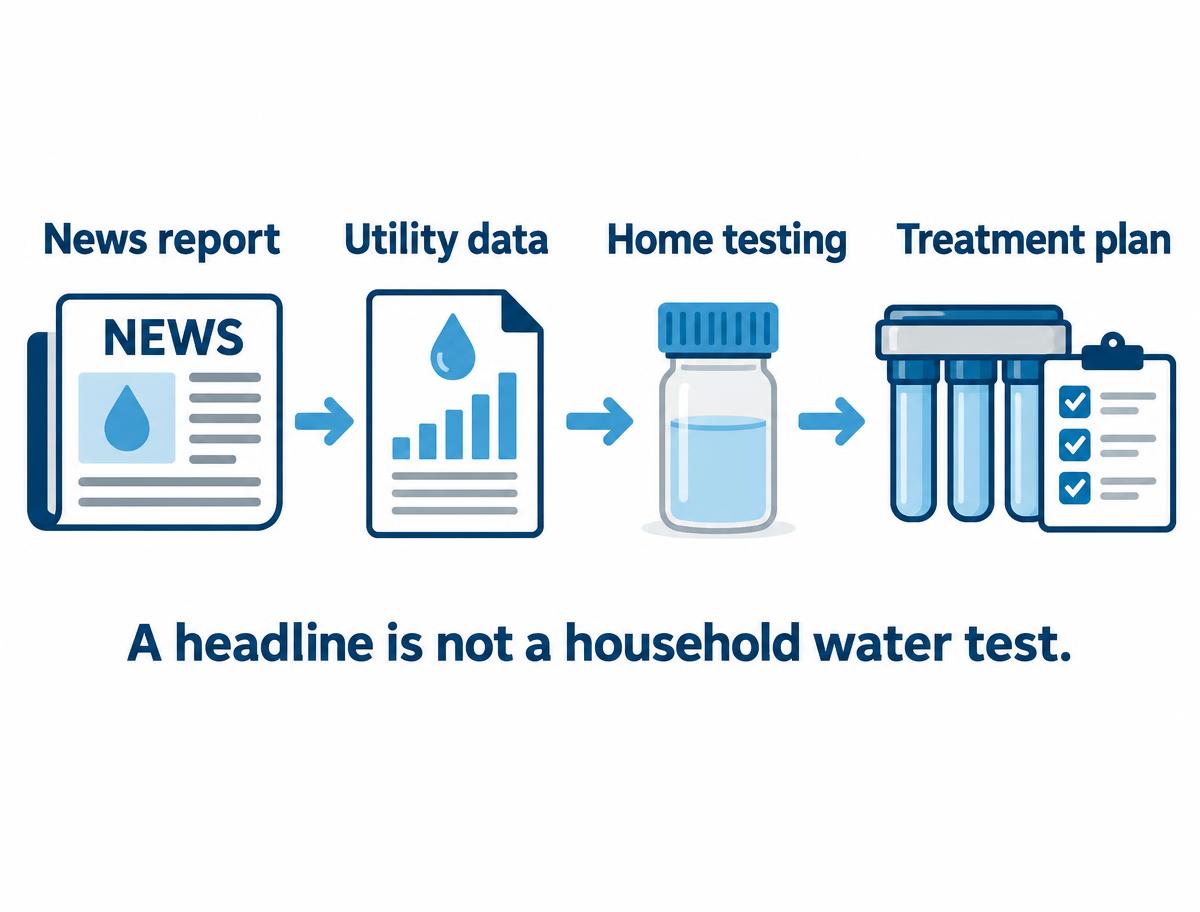
As of this guide's October 23 publication, we have not independently checked the court docket for subsequent decisions, changes to the claims, or a resolution. Readers looking for current litigation developments should consult later reporting and the relevant court records. This guide does not offer legal advice, assess anyone's eligibility for compensation, or predict an outcome. Its purpose is to help Minnesota homeowners understand the water questions raised by the story while representing both the allegations and the reported response fairly.
Environmental cleanup and household treatment solve different problems
The FOX 9 article places the new lawsuit alongside Minnesota's earlier settlement with 3M. Minnesota's official settlement site dates that $850 million agreement to February 20, 2018, and identifies drinking-water and natural-resource projects in the east metro as its purposes. The first funding priority is a clean, sustainable drinking-water supply; the second concerns natural resources. It is important not to collapse an earlier settlement, a later enforcement dispute, and a homeowner's purchasing decision into one story. They address related concerns but involve different responsibilities, evidence, and decisions.
Environmental cleanup can address pollution at its source or in affected groundwater and other natural resources. Public drinking-water projects can address municipal supply infrastructure. Household treatment operates at a much smaller scale, treating water entering a building or going to a designated drinking tap. Installing a filter in a kitchen does not clean up a river, resolve an industrial discharge allegation, or substitute for a public agency's remediation work. Conversely, a regional cleanup project does not automatically tell you which filter is appropriate for your home.
For an east-metro household, the useful approach is to follow official information about public projects while separately reviewing the water supplied to its address. If an agency or utility has issued a specific notice, follow that notice rather than generalized advice from a sales page. Do not assume a settlement creates a universal reimbursement entitlement or that every resident must buy equipment. Eligibility, project scope, and any assistance should be confirmed directly with the responsible public program using its current requirements.
What PFAS are, without the alarmist shortcuts
PFAS stands for per- and polyfluoroalkyl substances, a large group of synthetic chemicals. EPA describes uses in products and industrial processes that rely on resistance to water, oil, heat, or sticking. The familiar phrase forever chemicals refers to the persistence of many of these substances in the environment. It is a shorthand, not the name of a single chemical or a laboratory test. Different PFAS can have different properties, health evidence, and treatment behavior.
A report that mentions PFAS should therefore prompt a more specific question: which compounds were measured? PFOA and PFOS are commonly discussed examples, but a test may include other compounds as well. A result for one does not establish the concentration of all the others. In the same way, performance demonstrated for two compounds does not prove that a filter removes every substance in this broad family. Compound-specific information is more useful than broad promises to eliminate forever chemicals.
Health concerns belong in an evidence-based discussion, but a news article or a filter installer cannot diagnose an individual's health. For questions about medical conditions or personal exposure history, use a qualified health professional and public-health guidance. For water decisions, focus on source information, relevant testing, and documented treatment performance. The local water quality page provides a starting point for reading public utility data, with clear distinctions between a utility snapshot and a household sample.
Find your water source before choosing a filter
Begin by confirming whether your home receives municipal water or uses a private well. A city name alone may not identify the exact supplier for every address. Your water bill, utility customer service, or property records can help establish the source. For municipal water, ask for the latest available water quality report and any specific PFAS testing or treatment updates. Record the report's year and whether the results describe untreated source water or finished water supplied to customers.
For private wells, a municipal report is not a substitute for a test of your well. Ask the relevant public agency about local PFAS guidance and work with a laboratory qualified for the testing you need. Describe your concern when arranging the test so the laboratory can explain the relevant panel, collection requirements, and reporting limits. A generic water test or a simple hardness strip does not automatically include PFAS. Follow the laboratory's instructions rather than improvising a sample collection method.
Our Woodbury service information and Woodbury water treatment guide offer local planning context. They do not replace the utility's current notices or expand a map of confirmed contamination. For homeowners elsewhere, the same process applies: identify the supplier, locate dated results, and keep the sample context attached to every number. That approach is more reliable than choosing equipment solely because your city appeared in a regional headline.
How EWG fits into the evidence, and where it stops
EWG's Tap Water Database organizes utility testing into system profiles and compares results with its own health guidelines. We checked search-indexed information from EWG's Woodbury listing, system MN1820025, while preparing this guide; direct page access was restricted. The indexed profile identifies a 2014 to 2024 reporting period. We do not reproduce contaminant totals from the excerpt because a current direct inspection is needed to reconcile them with earlier snapshots. EWG data is historical context, not a live sensor at your house or a certification that every tap has the listed concentration today.
EWG's health guidelines are distinct from federal legal limits and may be stricter. A substance exceeding an EWG guideline is not automatically a violation of a legal drinking-water standard. Some database entries also concern substances without a federal maximum contaminant level. A careful reading keeps the compound name, units, reporting years, guideline, and legal-limit context together. A count of detected contaminants or a multiple above a guideline cannot, by itself, determine which treatment an individual household needs.
When reviewing the database, ask whether the values represent an average over several years, whether newer utility information is available, and whether treatment changed during or after that period. Do not treat a historical profile as proof that a current municipal treatment project has failed. Similarly, do not interpret a nondetection as a guarantee that every possible PFAS was tested. Use the database as a source of structured questions, then compare it with current official information and, where appropriate, a household laboratory report.
Reading a water report without losing the context
A useful report gives more than a chemical name and a number. Look for the sampling date, location, units, detection or reporting limit, and what was actually measured. Very small PFAS concentrations are often expressed in parts per trillion or nanograms per liter. Other contaminants may appear in parts per billion. Do not compare the digits without checking the units. A large-looking number in one unit can be a different concentration from a smaller-looking number in another.
Separate measurements from interpretations. The laboratory reports what it measured under a defined method. A regulator may apply a legal standard or advisory. EWG may compare a historical value with its own guideline. An equipment manufacturer may describe performance under a certification test. These are different types of evidence. The strongest household decision connects them explicitly instead of treating any one of them as a universal answer about safety, exposure, or the perfect filter.
Keep copies of the reports you use. If you later discuss treatment, having the original document prevents misunderstandings about whether a figure came from untreated groundwater, municipal finished water, or a post-filter sample. It also lets you ask a precise question: does the selected model have documented reduction performance for this compound under conditions relevant to this water? That is a much stronger question than asking whether a brand's products are generally good for PFAS.
What EPA research says about PFAS treatment
EPA's Science Matters article on PFAS drinking-water treatment describes activated carbon adsorption, ion exchange resins, and high-pressure membranes such as reverse osmosis. These approaches work through different mechanisms. Activated carbon provides surfaces on which certain compounds can adsorb. Specialized ion exchange resin captures targeted substances through interactions with the resin. Reverse osmosis uses a membrane separation process. None of those descriptions means that all products within a category have equivalent capacity or documented household performance.
EPA explains that carbon performance depends on factors such as the type and depth of carbon, flow rate, the compounds present, temperature, and other substances in the water. Longer-chain PFAS such as PFOA and PFOS can behave differently from shorter-chain compounds. A carbon filter can lose effective capacity as it is used, so replacement planning matters. Ordinary chlorine taste-and-odor claims are not automatically PFAS reduction claims. Read the exact performance information rather than infer capability from the word carbon.
Specialized PFAS ion exchange is also not the same thing as the ordinary resin in a hardness softener. Reverse osmosis can be worth exploring for a dedicated drinking-water tap, but the exact model, its documented claims, installation conditions, and maintenance remain important. Our reverse osmosis versus carbon guide compares the categories. Use it alongside the EPA source, not as a substitute for the certification listing and instructions for the equipment you are actually considering.
Match the treatment location to the goal
Point-of-use treatment handles water at a selected outlet, often a kitchen drinking-water faucet. Point-of-entry treatment handles water coming into the home. Those locations serve different purposes, affect different volumes of water, and have different installation requirements. If your immediate goal concerns drinking and cooking water, discuss which outlets your household actually uses. If your goal includes a broader set of uses, ask what evidence supports the proposed whole-home design rather than assume bigger is necessarily better.
Hardness, chlorine taste, sediment, and PFAS are separate treatment questions. A softener selected to reduce calcium and magnesium is not a demonstrated PFAS treatment merely because both processes involve resin. A sediment filter can catch particles without addressing dissolved chemicals. A system that improves taste can still lack a particular contaminant-reduction claim. Keeping the goals separate makes it easier to compare proposals and avoids purchasing a combination that solves the wrong problem.
The product catalog and system comparison can help you understand the categories available from Minnesota Water Pros. Neither a catalog photo nor a general component-certification statement establishes a specific system-level PFAS claim. Before using any product to address PFAS, request evidence for the exact model and claimed compounds. If that evidence is unavailable or does not match your concern, do not substitute a verbal promise for it.
Questions to ask before committing to equipment
Ask for the precise system model, the relevant third-party certification or test documentation, the compounds covered, the rated capacity, and the required operating conditions. Review the certification listing itself rather than rely only on a logo in a brochure. A claim about NSF-certified components is not necessarily a certification of the assembled system for PFAS reduction. Also ask what the certification does not cover so you do not assume that one targeted claim includes every contaminant in a utility report.
Discuss maintenance before installation. Find out which cartridges or media require replacement, the manufacturer's schedule, any capacity limits, and how household use affects that schedule. Ask who performs the work and what recurring costs are expected. A filter is not a one-time purchase that remains effective indefinitely. A maintenance plan should be understandable enough that you can follow it without guessing whether a change in taste signals the need for replacement.
Review installation scope and written warranty terms separately from performance claims. Our pricing page gives published package information, while the warranty page explains how to approach the written terms. A warranty describes commitments about a product or service; it is not a laboratory result proving PFAS reduction at your faucet. Compare like-for-like proposals using the same water source, goals, treatment stages, and installation requirements rather than only comparing the headline price.
A practical next step for Twin Cities homeowners
If the FOX 9 story made you uneasy, turn that concern into a short evidence checklist. Confirm your source. Read the newest official information available for it. Use EWG for historical context with the correct system identifier and years attached. Follow any specific agency advice. Where testing is appropriate, arrange it before choosing targeted treatment. Then request model-specific performance information and a realistic maintenance plan. This sequence keeps a regional story from becoming a rushed purchasing decision.
For a conversation with Minnesota Water Pros, bring the reports you have, describe whether your goal is drinking water, taste, hardness, or another documented concern, and explain which outlets matter to your household. You can request a consultation or use Find Your Solution to organize your questions. Our role is to help compare suitable options, not determine legal responsibility, diagnose a medical condition, or certify household water quality without the evidence required to do so.
The central lesson is straightforward: take Minnesota PFAS reporting seriously, but keep its evidence in the right category. The MPCA's allegations and 3M's reported response belong to the legal story. Utility testing belongs to the public-supply story. A household sample and documented equipment performance belong to your treatment decision. Cleaner-water planning becomes more useful, and more affordable to evaluate, when those pieces are connected carefully instead of replaced by frightening headlines or blanket promises.
Sources and further reading
Reviewed October 23, 2026. Utility reports describe the public supply, not an individual household sample. Check the utility for current reports and notices. Images are illustrative, not photographs of a customer installation.
- Minnesota 3M PFAS Settlement: agreement and project priorities
- FOX 9: 3M faces new lawsuit over forever chemicals pollution in Minnesota (May 13, 2026; reviewed October 23, 2026)
- Minnesota Pollution Control Agency: PFAS information
- EWG Tap Water Database: Woodbury (2014 to 2024; search-indexed profile reviewed October 23, 2026; direct access restricted)
- EPA Science Matters: Reducing PFAS in Drinking Water with Treatment Technologies
Frequently asked questions
Does the 3M lawsuit mean my Minnesota tap water has unsafe PFAS levels?
No household conclusion follows from the lawsuit alone. FOX 9 describes allegations about environmental contamination. Your water source, current official information and appropriate testing are the relevant evidence for a household question. Follow any specific advice issued by your utility or public-health agency.
Is this a report of the latest outcome in the 3M case?
No. This guide reviews the FOX 9 article dated May 13, 2026. It describes the allegations and response reported then. We have not independently verified subsequent court developments or a final outcome as of our October 23 publication.
Can I use EWG data instead of testing my private well?
A utility profile does not test your private well. EWG provides historical utility information and its own guideline comparisons. Ask the relevant agency and a qualified laboratory about testing appropriate to your well and concern.
Does a normal water softener reduce PFAS?
Do not assume so. Ordinary hardness softening is different from the specialized ion exchange resin used for PFAS treatment. Require evidence for the exact model and specific compounds before treating a product as a PFAS solution.
What PFAS treatment methods does EPA describe?
EPA describes activated carbon adsorption, ion exchange resins and high-pressure membranes such as reverse osmosis. Performance depends on the compounds, system design, water conditions and maintenance. A category name alone is not a certified reduction claim for a specific product.
Does a component certification prove the whole system reduces PFAS?
Not automatically. Check the exact assembled system, the certification listing, the named reduction claims and the required operating conditions. Do not expand a component claim into a household performance guarantee.
More from the blog
How to Reduce PFAS in Drinking Water: What EPA Research Says Works
PFAS are often called forever chemicals because they resist breaking down. EPA researchers have tested which treatment technologies actually reduce them. Here is what that research found, what it means at home, and what Twin Cities utility data shows.
Does a City-Softened Minneapolis Home Need Extra Water Treatment?
Minneapolis already softens its municipal water. Here is how to decide whether additional household treatment serves a real purpose.
Saint Paul Drinking-Water Taste: Kitchen Filter or Main-Line Treatment?
A kitchen taste preference and a whole-home treatment goal are different projects. Learn how to compare them in an existing Saint Paul home.
Bloomington Water Treatment for Houses and Condos: Know Your Plumbing
Bloomington's combined municipal supply is only part of the decision. Your plumbing boundary and maintenance authority determine which options fit.
Talk through your water with a local pro
A free phone consultation starts with your water source and your goals. Published installed pricing, kitchen reverse osmosis included with every whole-home package, and a best-price guarantee.