
Minnesota Water Pros blog
Chlorine in Tap Water: Why It Is There and How to Remove It
Published July 9, 2026 · 10 min read · Educational content only, not a water quality diagnosis.
In this guide
- Why chlorine is added to city water, and the job it does on the way to your tap.
- What chlorine means for taste, odor, skin, hair, and laundry.
- The difference between disinfecting water and wanting chlorine in your glass.
- How activated carbon removes chlorine, and what it does not remove.
- Point-of-use vs. whole-home options, and what they cost.
If your tap water ever smells faintly like a swimming pool, you have already met chlorine. It is one of the most common reasons Twin Cities homeowners start asking about water treatment, and one of the most misunderstood. Chlorine is not a contaminant that snuck into your water. It is a disinfectant your utility adds deliberately, and it plays a real role in keeping city water safe. The question worth asking is not whether chlorine should be in the water supply. It is whether it still needs to be in your glass, your shower, and your laundry once the water has safely arrived.
This guide covers why chlorine is there, what it does and does not affect, and how to remove it at whatever scale fits your home. As always, we will stay with what the evidence supports and point you to your utility's own published data along the way.
Why Your Utility Adds Chlorine
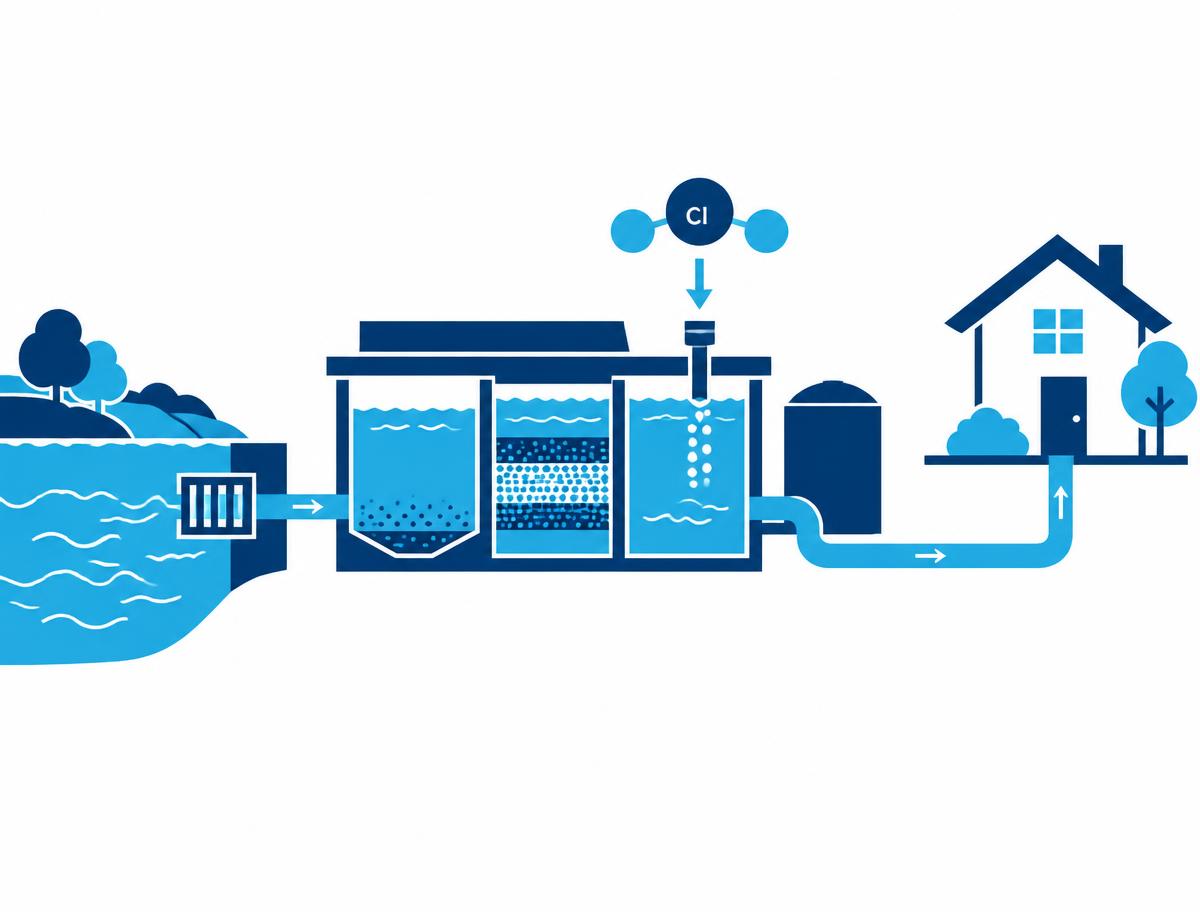
City water has a long journey. Water drawn from rivers or wells is treated at a plant, then travels through miles of distribution pipes, storage tanks, and water towers before it reaches your faucet. Along the way, any bacteria that entered the system could multiply, and that is the problem chlorine solves. It is added at the treatment plant in carefully controlled amounts, and a small residual level is maintained deliberately so the water remains disinfected all the way to your tap. That residual is what you sometimes smell.
This is genuinely valuable public health infrastructure, and it is worth saying clearly: chlorination is one of the reasons waterborne illness is rare in the United States. Minneapolis and St. Paul both publish annual water quality reports showing their disinfectant levels and testing results, and our water quality page links that data directly. Nothing in this guide suggests your utility's water is unsafe. The case for removing chlorine at home is about taste, comfort, and preference, not about fear.
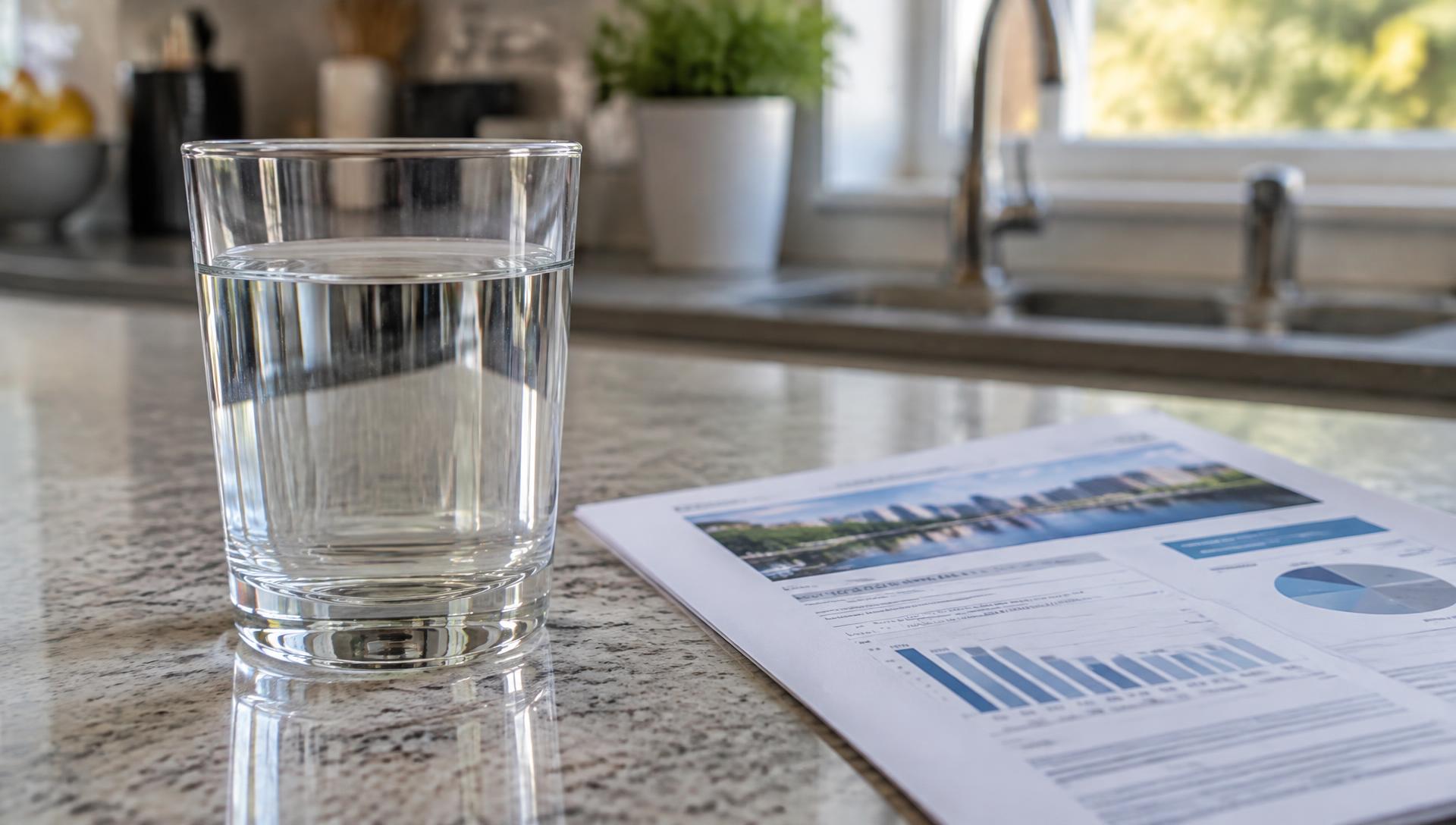
There is one more piece of the chlorine story worth knowing. When chlorine meets natural organic matter in source water, it forms disinfection byproducts such as total trihalomethanes (TTHMs) and haloacetic acids. EWG, the Environmental Working Group, compiles utility testing for these. Its Minneapolis listing, reviewed October 22, 2026, shows TTHMs at 16.7 parts per billion against a federal legal limit of 80 and an EWG guideline of 0.15, and its Saint Paul Regional Water Services listing shows TTHMs at about 214 times EWG guideline. Both systems were in compliance with federal standards for the most recent quarter EWG reports. EWG guidelines are stricter benchmarks than legal limits, so this is context for choosing a filter, not a sign that the water is unsafe. Carbon filtration certified for these byproducts can reduce them along with the chlorine taste.
What Chlorine Does Once It Arrives
By the time water reaches your home, chlorine's job is done. What remains is the residual, and that residual has effects most homeowners recognize immediately. The first is taste and odor: the faint pool character in a glass of water, in coffee, tea, and ice, and in anything cooked in tap water. Some people barely notice it; others cannot stand it, and sensitivity varies widely. If your family buys bottled water or a pitcher filter mainly because of taste, chlorine is usually what you are tasting.
The second effect is on skin and hair. Chlorine strips natural oils, which is why skin can feel tight and dry after showering and hair can feel brittle or look dull, especially in Minnesota winters when the air is already pulling moisture from everything. People with sensitive skin or color-treated hair often notice the most. The third effect is quieter: chlorine is hard on rubber and some plastics, so over years it contributes to wear on appliance seals, washers, and supply lines. None of these effects make the water dangerous. They make it less pleasant and slightly harder on your home than it needs to be.
How Activated Carbon Removes Chlorine
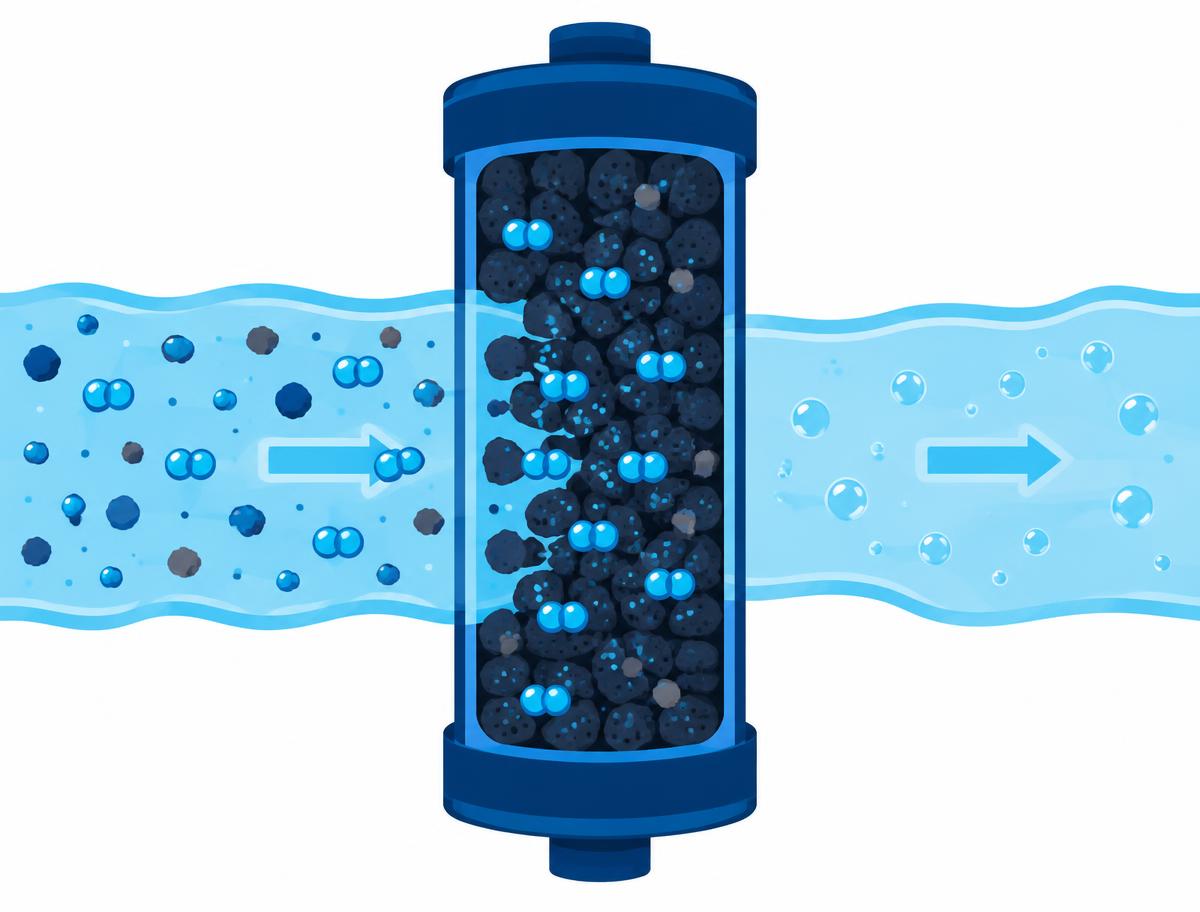
The standard technology for chlorine removal is activated carbon, and it works by adsorption rather than straining. Carbon is treated to create an enormous internal surface area, a single gram can have the surface area of a basketball court, and chlorine molecules bond to that surface as water flows past. The result is water that tastes and smells clean, with the disinfectant residual removed at the point where you actually use the water.
Two practical notes. First, carbon is consumable: the surface eventually fills up, which is why carbon filters and media need replacement on a schedule, and why a good installer explains that schedule during your walkthrough. Second, carbon has a specific job. It excels at chlorine, tastes, and odors, but it does not soften water, and it is not the tool for dissolved minerals or the broader range of contaminants that reverse osmosis addresses. Matching the technology to the goal is the whole game, which is why our water solutions page is organized by problem rather than by product.
One Tap or Every Tap
Chlorine removal comes in two scales. Point-of-use carbon filters, pitchers, faucet units, and under-sink systems, treat water at a single location. They are inexpensive and genuinely improve drinking water taste. What they cannot do is help your shower, your laundry, or your appliances, because they only touch one tap. If your concern is only drinking water, a point-of-use option may be all you need. If the dry skin, the shower smell, and the appliance wear are part of why you are reading this, the problem lives at every tap, and so should the solution.
Whole-home carbon filtration treats water at the point of entry, so every tap, shower, and appliance gets dechlorinated water. In the Twin Cities, whole-home carbon is most often paired with softening, because city water here is both chlorinated and hard, and the two systems together handle both. The pairing has a bonus: removing chlorine upstream protects the softener's resin, which chlorine gradually degrades, so the softener lasts longer. Our whole-home filtration and softening packages start at $2,999 installed, with published prices you can check before anyone visits, and every whole-home package includes a kitchen reverse osmosis system at no additional cost for the most refined drinking water.
Everyday Ways to Reduce Chlorine Without Equipment
Before spending anything, it is worth knowing the free options, because they genuinely work for some purposes. Chlorine dissipates on its own: a pitcher of tap water left uncovered in the refrigerator loses much of its chlorine within a day, which is why some people find yesterday's water tastes better. Boiling drives chlorine off quickly, which is why pasta water rarely tastes of it. These tricks help for drinking and cooking water, but they do nothing for the shower, the laundry, or the ice maker, and they require planning ahead. For most households they are a bridge, not a solution.
The shower deserves special attention because it is where most chlorine exposure happens for many families. Warm water releases chlorine into the air and opens skin pores, and a ten-minute shower is a very different exposure than a glass of water. Showerhead carbon filters exist and help somewhat, but their small cartridges exhaust quickly under shower flow rates and need frequent replacement. If the shower is the concern, whole-home carbon is the durable answer, because it removes the chlorine before the water reaches any fixture at all.
Chlorine, Your Appliances, and Your Plumbing
The slowest effect of chlorine is the one nobody notices until a repair bill arrives. Chlorine degrades rubber and some plastics over time, and your home is full of both: faucet washers, toilet flappers, dishwasher and washing machine seals, and the gaskets inside valves. The effect is gradual, measured in years, and it never announces itself as chlorine's fault. It simply shows up as appliances and fixtures that seem to wear out a little faster than they should. Removing chlorine at the point of entry will not make a flapper immortal, but it removes one steady source of wear from every rubber part your water touches.
Chlorine and the Things You Cook and Brew
The kitchen is where chlorine's taste does the most quiet damage, because water is an ingredient in far more than drinking glasses. Coffee and tea are mostly water, and chlorine's sharpness flattens the flavors you paid for in the beans and leaves. Bread bakers know that chlorine can slow yeast. Pasta, rice, and soups all absorb the water they cook in. Ice cubes freeze whatever was in the water, then melt it into your drink. Homebrewers treat chlorine as a known off-flavor and remove it as a first step. None of this is dramatic, but it is cumulative: when the water improves, everything made with it improves a little, and coffee is usually where people notice first.
Sensitive Skin, Kids, and Pets
Households with sensitive skin tend to find this topic before anyone else does. Children, anyone prone to eczema or dry skin, and people with color-treated hair often feel the difference between chlorinated and dechlorinated shower water within days. Pet owners sometimes notice it too, particularly with dogs bathed frequently at home. We are careful not to overpromise here: removing chlorine is not a medical treatment, and skin conditions have many causes. What we can say plainly is that chlorine strips natural oils, that removing it removes that stripping, and that families who make the switch consistently describe the shower as the change they feel first.
What About Chloramine?
Some utilities use chloramine, a compound of chlorine and ammonia, instead of chlorine alone, because it stays stable longer in the pipes. It does the same disinfecting job, but it is harder to remove: standard carbon filters reduce it slowly, and effective removal needs catalytic carbon or longer contact time. Your utility's annual report states which disinfectant it uses, and it is worth checking before you buy equipment, because a filter chosen for chlorine may underperform on chloramine. This is one more reason we start every recommendation with your actual water supply rather than a generic product list.
Making the Decision
If chlorine taste or shower dryness is bothering your household, the path is simple. Check your utility's water quality report to see the disinfectant and levels for your address. Decide whether the concern is drinking water alone or the whole house. Then look at options with real prices in hand. A free phone consultation starts with your water source and what you are noticing, and our Find Your Solution tool narrows the options in about two minutes. We serve Minneapolis, St. Paul, and surrounding communities across the metro.
It is also worth placing chlorine in the broader picture of your water. City water in the Twin Cities is chlorinated and hard, and the two issues have different solutions: carbon for the chlorine, ion exchange for the hardness. That is why whole-home packages pair them, and why the pairing protects itself, since removing chlorine upstream extends the softener resin's life. If you are weighing one upgrade, the combined system usually costs less than buying the pieces separately later, and every whole-home package includes the kitchen reverse osmosis system that handles what neither carbon nor softening touches. Chlorine earned its place in the journey to your home. It just does not need to stay for the shower. Removing it is one of the simplest, most proven upgrades in home water treatment, and for most families it is the one they notice first, in the glass, in the coffee, and on their skin within the first week. Start with your utility's report, decide whether one tap or every tap is the goal, and choose equipment matched to the disinfectant your utility actually uses. The technology is mature, the results are immediate, and the only regret we hear is from households that lived with the pool taste for years before making the call. If that sounds familiar, the next step is genuinely easy: pull up your utility's water quality report, note the disinfectant and the levels, and bring both to a conversation with us. Fifteen minutes later you will know exactly what removing chlorine looks like for your home, what it costs, and how soon the water in every glass and every shower changes for the better.
Sources and further reading
Reviewed October 22, 2026. Utility reports describe the public supply, not an individual household sample. Check the utility for current reports and notices. Images are illustrative, not photographs of a customer installation.
Frequently asked questions
Is chlorine in tap water safe to drink?
Yes. Utilities add chlorine in carefully controlled amounts to disinfect water and keep it safe as it travels through distribution pipes, and the residual levels are regulated and published in your utility's annual water quality report. Chlorination is a key reason waterborne illness is rare in the United States. Removing it at home is about taste, odor, and comfort, not safety.
Why does my tap water smell like a swimming pool?
That smell is the chlorine residual your utility maintains to keep water disinfected all the way to your tap. The strength can vary with distance from the treatment plant, season, and demand. If the smell bothers you, activated carbon filtration removes it effectively, and letting a glass of water sit also allows some chlorine to dissipate.
Does chlorine dry out skin and hair?
Chlorine strips natural oils, which can leave skin feeling tight and dry after showering and hair feeling brittle or dull. The effect is most noticeable in winter, when cold dry air already pulls moisture from skin, and for people with sensitive skin or color-treated hair. Whole-home carbon filtration removes chlorine from every tap, including the shower.
Will a pitcher filter remove chlorine?
Yes, pitcher and faucet filters use activated carbon and genuinely improve the taste and odor of drinking water at one tap. What they cannot do is treat your shower, laundry, or appliances. If your concern goes beyond drinking water, a whole-home carbon system treats every tap at the point of entry.
What is the difference between chlorine and chloramine?
Chloramine is chlorine bonded with ammonia, used by some utilities because it stays stable longer in distribution pipes. It disinfects the same way but is harder to remove: standard carbon reduces it slowly, and effective removal needs catalytic carbon or longer contact time. Your utility's annual report states which disinfectant it uses.
What does whole-home chlorine removal cost in the Twin Cities?
With Minnesota Water Pros, whole-home filtration and softening packages start at $2,999 installed, pairing carbon filtration with softening since Twin Cities water is typically both chlorinated and hard. Every whole-home package includes professional installation, a walkthrough, and a kitchen reverse osmosis system at no extra cost, backed by a lifetime warranty.
More from the blog
Does a City-Softened Minneapolis Home Need Extra Water Treatment?
Minneapolis already softens its municipal water. Here is how to decide whether additional household treatment serves a real purpose.
Saint Paul Drinking-Water Taste: Kitchen Filter or Main-Line Treatment?
A kitchen taste preference and a whole-home treatment goal are different projects. Learn how to compare them in an existing Saint Paul home.
Bloomington Water Treatment for Houses and Condos: Know Your Plumbing
Bloomington's combined municipal supply is only part of the decision. Your plumbing boundary and maintenance authority determine which options fit.
Edina or Morningside? Plan the Right Water Treatment for Your Remodel
Edina's two water systems make address-level planning important. Learn how to connect your supply, household measurements, and kitchen remodel decisions without assuming every home needs the same equipment.
Talk through your water with a local pro
A free phone consultation starts with your water source and your goals. Published installed pricing, kitchen reverse osmosis included with every whole-home package, and a best-price guarantee.