
Minnesota Water Pros blog
Whole House Water Filter Cost: What Twin Cities Homeowners Actually Pay
Published July 23, 2026 · 11 min read · Educational content only, not a water quality diagnosis.
In this guide
- What a whole house filter actually is, and what it does and does not do.
- The five factors that drive the price more than the equipment itself.
- Real installed prices in the Twin Cities, published upfront.
- The ongoing costs to budget for: media, filters, salt, and service.
- How to compare quotes fairly and spot a price that is low for the wrong reasons.
Search for whole house water filter cost and you will find numbers ranging from a few hundred dollars to well over ten thousand, which is a range so wide it answers nothing. The confusion comes from a simple fact: the phrase covers everything from a single cartridge housing you can buy at a hardware store to a multi-stage treatment system designed around a specific home's water. This guide untangles what you are actually paying for, what installed systems cost in the Twin Cities with real published numbers, and how to compare quotes so the lowest price is not the most expensive mistake.
We publish our prices, which is still unusual in this industry, so you will see real numbers throughout this guide rather than vague ranges. Where a figure depends on your home, we will say exactly what it depends on.
What a Whole House Filter Actually Is
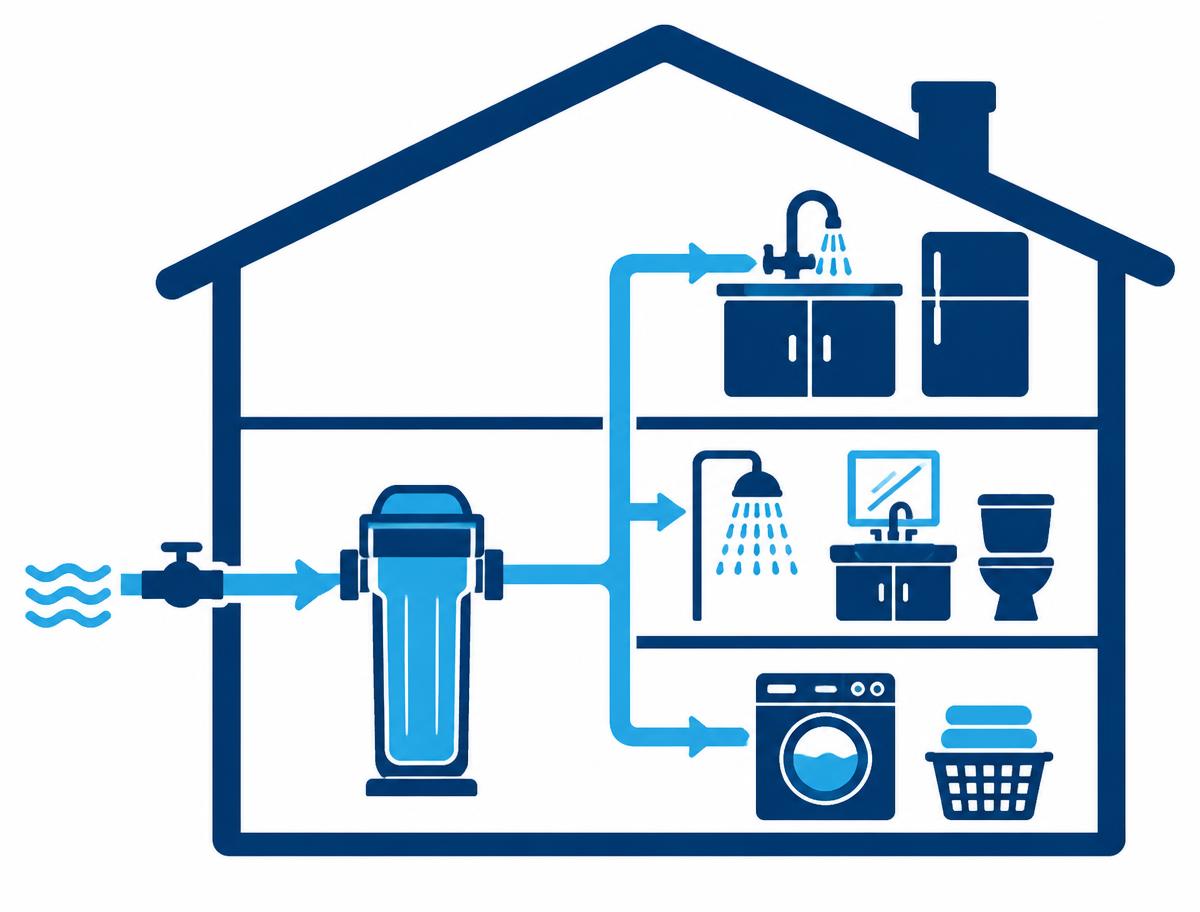
A whole house filter, also called a point-of-entry system, treats water where the main line enters your home, before it branches to any tap, shower, or appliance. That is what separates it from point-of-use options like pitcher filters, faucet attachments, and under-sink units, which treat water at a single location. The distinction matters for cost because the two categories solve different problems. A pitcher improves the taste of drinking water. A whole-home system protects every pipe, fixture, water heater, dishwasher, and washing machine in the house, and changes the water in every shower.
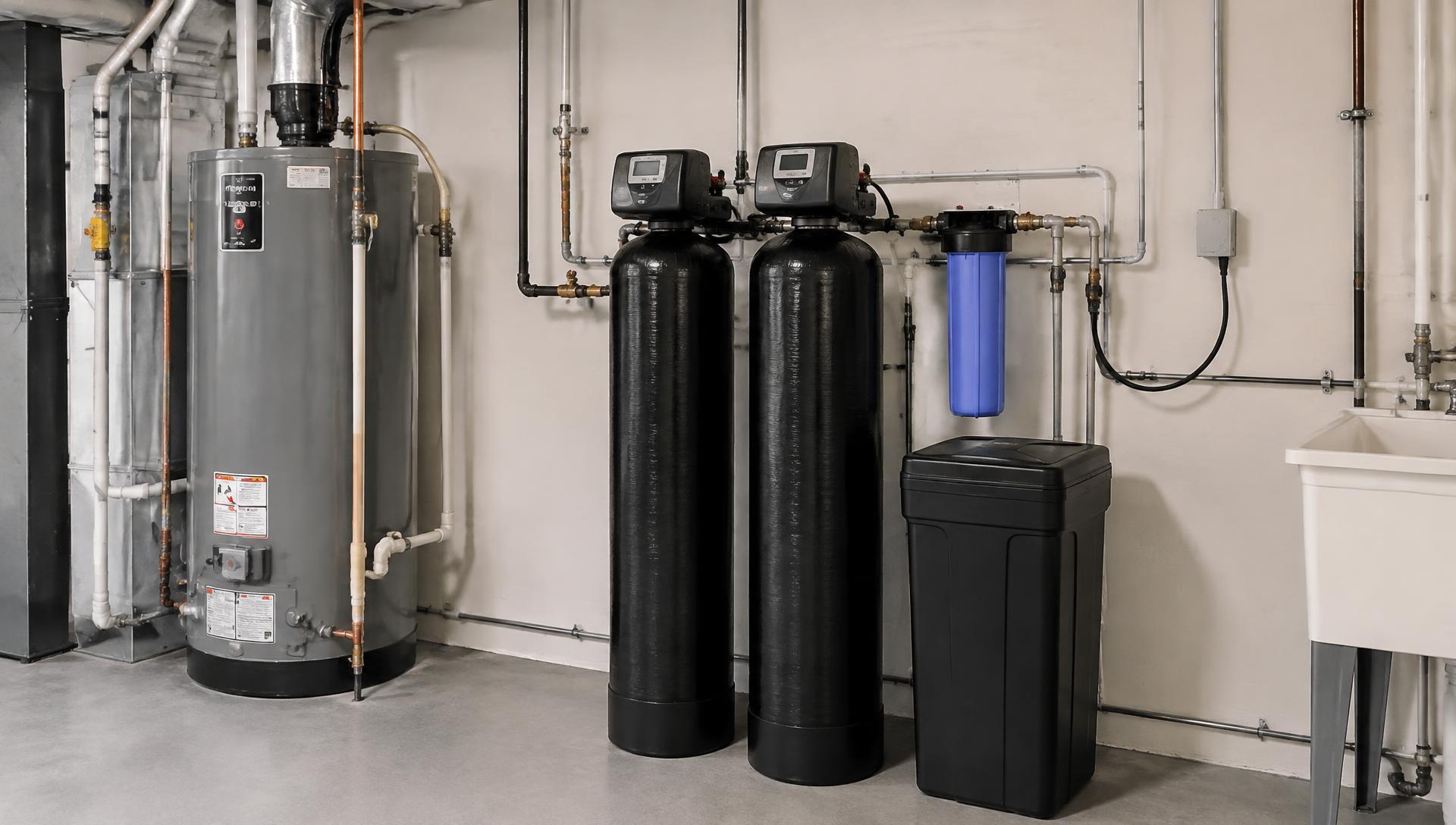
Within whole-home systems, the price spread comes from what the system is built to treat. A basic sediment filter catches sand and silt and costs the least. A carbon system removes chlorine, tastes, and odors. A softener removes hardness minerals. Iron and sulfur systems handle the problems common in Minnesota well water. Many homes need more than one of these, which is why complete systems are built as sequences, and why the honest answer to what does it cost is always: it depends on your water. Our water solutions page maps each problem to its treatment.
The Five Factors That Drive the Price
The first factor is your water source. City water arrives treated and documented, so city systems focus on hardness, chlorine, and refinement. Well water arrives exactly as the aquifer provides it, and Minnesota wells commonly need sediment, iron, sulfur, and hardness treatment in sequence, as covered in our well water guide. More problems means more stages, and more stages means more cost. The second factor is what the test shows: a home with moderate hardness needs less than a home with very hard water plus iron plus odor.
The third factor is capacity. Systems are sized to your household's water use and plumbing, and a correctly sized system costs more than an undersized one but regenerates less often, uses less salt and water, and lasts longer. The fourth is installation complexity: where the main line enters, whether a drain and outlet are nearby, and the condition of your plumbing all affect labor. The fifth is what the quote includes. Equipment-only prices and installed prices are not the same product, and a quote that excludes installation, programming, haul-away, or warranty support is lower for a reason.
Real Installed Prices in the Twin Cities
Here are our actual published installed prices, because we believe you should be able to budget before anyone visits. Whole-home filtration and softening packages start at $2,999 installed. Dual-tank city systems are $3,999. Salt-free and dual-tank well systems are $4,499. Iron and sulfur treatment for wells is $5,999. Standalone reverse osmosis for drinking water starts at $799, and our HW800 tankless RO is $999. Every whole-home package includes professional installation, a full walkthrough, and a kitchen reverse osmosis system at no additional cost.
Two things protect those numbers. Every system carries a lifetime warranty, with the written terms provided during your consultation. And our best-price guarantee means that if you receive a lower written quote for comparable equipment and professional installation, we will beat it. The word comparable matters: a quote for a smaller, single-tank system without installation is not comparable to a dual-tank installed system, and any honest comparison has to match equipment, capacity, installation, and warranty line by line. Our guide to water softener costs goes deeper on the softening side specifically.
The Ongoing Costs to Budget For
The purchase price is most of the money, but not all of it, and a trustworthy company will walk you through the running costs before you buy. Softeners need salt, typically a modest monthly expense, plus a small amount of regeneration water and electricity. Carbon media and sediment filters need replacement on a schedule measured in years for tanks and months for cartridges. Reverse osmosis systems need periodic filter and membrane changes. None of these costs are large, but all of them belong in your budget, and all of them should be explained during the walkthrough after installation.
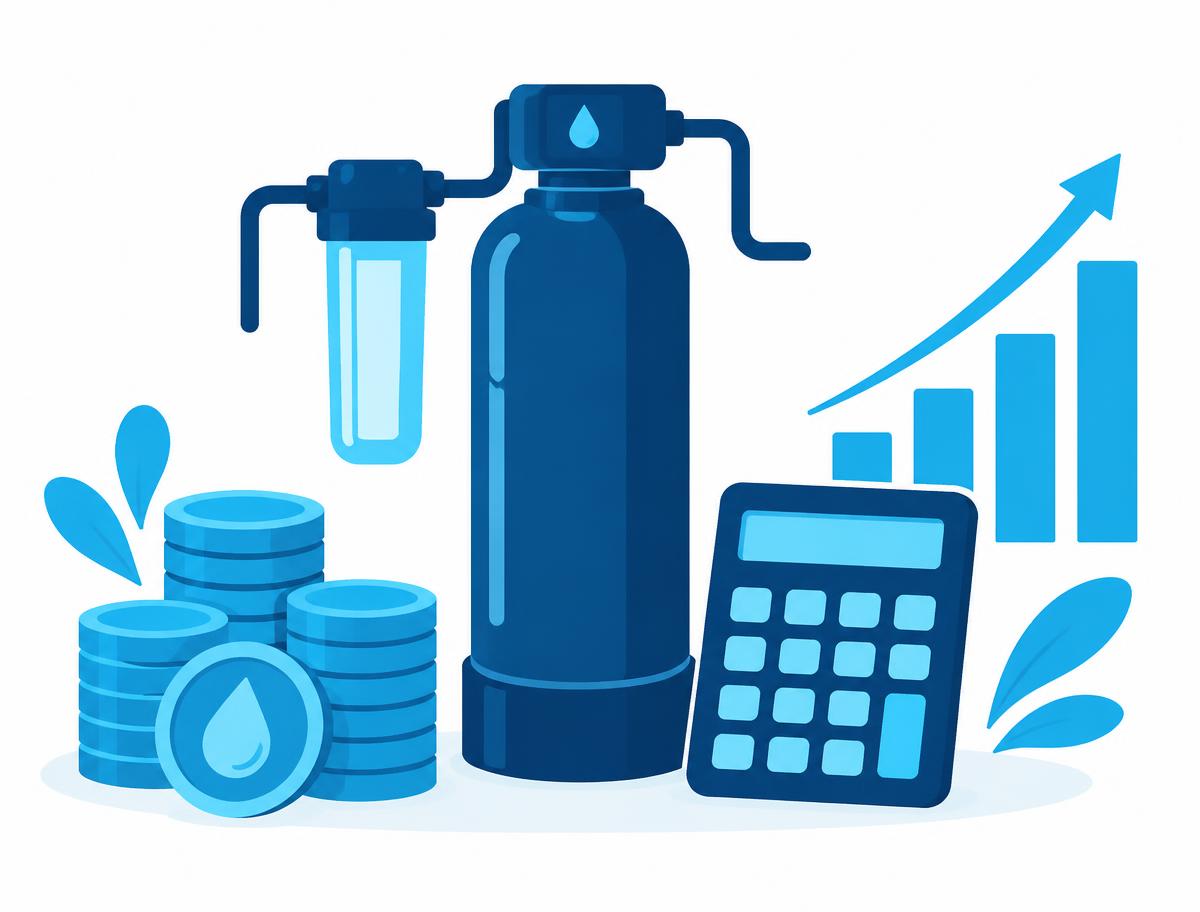
Set against those running costs is what the system saves. Soft water cuts soap and detergent use substantially, ends descaling products, lets water heaters run at full efficiency, and extends the working life of every water-using appliance in the house. Families that switch from bottled water to reverse osmosis often save the most of all. Our savings calculator lets you estimate your own household's numbers, and for most Twin Cities homes the ongoing savings offset a meaningful share of the running costs.
Financing, Timing, and the Affordability Question
A whole-home system is a real investment, and we believe cleaner water should be within reach for every household, not just the ones with cash on hand. That belief is why we publish prices, why our packages bundle the reverse osmosis system at no additional cost, and why our best-price guarantee exists. If the upfront number is the obstacle, say so during your consultation. Financing options and scheduling flexibility come up in these conversations regularly, and the right plan is the one that fits your budget as well as your water.
Timing matters less than people expect. Installation schedules fill faster in spring and early summer, so planning ahead helps, but there is no wrong season to treat your water. What there is, is a cost to waiting: every month on untreated hard water is another month of scale in the water heater, extra detergent in the wash, and bottled water in the cart. When homeowners tell us they wish they had done it sooner, it is rarely about the equipment. It is about the years of workarounds they paid for first.
Renters, Condos, and Smaller Spaces
Not every reader owns a house with a basement mechanical room, and the cost picture changes with the situation. Renters generally cannot modify plumbing, which makes point-of-use options, an under-sink reverse osmosis system or a quality carbon filter, the practical path, with the landlord's permission where required. Condo and townhome owners should check association rules before any point-of-entry work, since the main line may be shared or restricted. Smaller homes with modest water use can often choose smaller-capacity systems, which cost less than the largest residential units. The principle holds everywhere: match the system to the water and the household, not to a showroom.
New Construction, Remodels, and the Best Time to Install
The cheapest time to install a whole-home system is when the plumbing is already open. If you are building a home or finishing a basement, ask the builder to rough in a softener loop: a short section of plumbing with a drain and an outlet near the main line, ready for equipment. The loop costs very little during construction and saves meaningful labor later, because the installer connects to prepared plumbing instead of cutting into finished work. Many Twin Cities builders offer the loop as a standard option, and it is one of the highest-value line items a new homeowner can add.
Existing homes are rarely a problem either. Most Twin Cities basements have the main line, a floor drain, and power within reasonable distance of each other, and a professional installation typically takes a few hours. The walkthrough afterward matters as much as the plumbing: you should know how to read the valve display, when to add salt, what the regeneration cycle sounds like, and who to call with questions. That walkthrough is part of every installation we do, because a system you understand is a system you will actually maintain.
What the Warranty Is Really Worth
Warranties deserve a place in any cost comparison, because they are where cheap systems get expensive. A budget unit with a one-year warranty that fails in year three is not cheaper than a quality system with a lifetime warranty. It is a down payment on a replacement. Read the terms: what parts are covered, whether labor is included, whether the warranty survives a change of ownership, and who performs the service. Our systems carry a lifetime warranty with written terms provided during your consultation, and we service what we install, which is what makes a warranty worth more than the paper it is printed on.
How to Compare Quotes Fairly
When quotes differ, and they will, compare them line by line rather than bottom line to bottom line. Match the equipment: same stages, same capacity, same valve quality. Match the installation: does the price include labor, materials, programming, and haul-away of old equipment? Match the warranty: what is covered, for how long, and who services it locally? And match the company: will they answer the phone in year six? A quote that wins on price but loses on capacity, installation, or warranty is not a better deal. It is a smaller product.
Be cautious of two patterns. The first is the quote that arrives before anyone asks about your water: a recommendation made without knowing your source, your hardness, or your household is a guess wearing a price tag. The second is the today-only discount, which exists to stop you from doing exactly the comparison that would protect you. Reputable companies hold their prices, because their prices were honest to begin with.
Getting a Real Number for Your Home
The path to a real number is short. Start with your water: city homes can check their utility's annual report, and our water quality page links the Minneapolis and St. Paul data; well homes should test through an accredited laboratory. Then talk to us. A free phone consultation starts with your water source and what you are noticing, and because our prices are published, the number you hear on the phone is the number on the quote. Our Find Your Solution tool can point you toward the right system category in about two minutes first.
A final word on the numbers themselves: whatever quote you collect, from us or anyone, make sure it survives being written down. A real quote lists the equipment by name, the capacity, the installation scope, and the warranty terms, and it is still valid next week. A number given only verbally, or only valid today, is not a price. It is pressure. We serve Minneapolis, St. Paul, and surrounding communities across the metro, and we built this company on a simple belief: everyone deserves cleaner water, and honest pricing is part of that. You should know what a system costs before anyone rings your doorbell. Now you do. And when you are ready for the next step, it is a short one: a conversation about your water, a written quote with real line items, and a system matched to what your household actually needs. No pressure, no today-only pricing, and no surprises after the install. That is what the cost of clean water should look like, and it is the standard we hold ourselves to on every single job.
Frequently asked questions
How much does a whole house water filter cost installed?
In the Twin Cities, most installed whole-home systems run between about $3,000 and $6,000 depending on what the water needs. With Minnesota Water Pros, whole-home filtration and softening packages start at $2,999 installed, dual-tank city systems are $3,999, and iron and sulfur treatment for wells is $5,999. Every whole-home package includes installation, a walkthrough, and a kitchen reverse osmosis system at no extra cost.
Why do whole house filter quotes vary so much?
Because the phrase covers very different products. A single sediment cartridge and a multi-stage treatment system are both called whole house filters. Quotes also differ on capacity, whether installation and programming are included, and warranty terms. Compare quotes line by line on equipment, installation, and warranty rather than on the bottom line alone.
Is a whole house filter worth the cost?
For most homes with hard or chlorinated water, yes. A whole-home system protects every pipe, fixture, and appliance, improves every shower, and cuts spending on soap, detergent, descalers, and often bottled water. The savings calculator on our pricing page lets you estimate your household's own numbers before deciding.
What are the ongoing costs of a whole house system?
Softeners need salt every month or two plus a little regeneration water and electricity. Carbon media and sediment filters need replacement on schedules measured in years and months respectively. Reverse osmosis systems need periodic filter and membrane changes. A good installer explains the full maintenance calendar during the walkthrough.
Does a whole house filter remove hardness?
Only if it includes a softener. Carbon filtration removes chlorine, tastes, and odors but does not remove hardness minerals. Softening requires ion exchange, which is why many Twin Cities homes pair the two. Our whole-home packages combine filtration and softening for exactly this reason.
How do I avoid overpaying for a water treatment system?
Insist on a written quote that lists equipment, capacity, installation, and warranty separately. Be wary of recommendations made before anyone asks about your water, and of today-only discounts. Compare like for like, and use our published prices and best-price guarantee as a benchmark for what installed systems should cost.
More from the blog
Does a City-Softened Minneapolis Home Need Extra Water Treatment?
Minneapolis already softens its municipal water. Here is how to decide whether additional household treatment serves a real purpose.
Saint Paul Drinking-Water Taste: Kitchen Filter or Main-Line Treatment?
A kitchen taste preference and a whole-home treatment goal are different projects. Learn how to compare them in an existing Saint Paul home.
Bloomington Water Treatment for Houses and Condos: Know Your Plumbing
Bloomington's combined municipal supply is only part of the decision. Your plumbing boundary and maintenance authority determine which options fit.
Edina or Morningside? Plan the Right Water Treatment for Your Remodel
Edina's two water systems make address-level planning important. Learn how to connect your supply, household measurements, and kitchen remodel decisions without assuming every home needs the same equipment.
Talk through your water with a local pro
A free phone consultation starts with your water source and your goals. Published installed pricing, kitchen reverse osmosis included with every whole-home package, and a best-price guarantee.