
Minnesota Water Pros blog
Why Licensed Plumbers Matter for Water Treatment Installation in the Twin Cities
Published October 23, 2026 · 16 min read · Educational content only, not a water quality diagnosis.
In this guide
- Minnesota Water Pros uses only licensed plumbers for equipment installation.
- Minnesota plumbing and water-conditioning credentials authorize different scopes; contractor and individual credentials are separate questions.
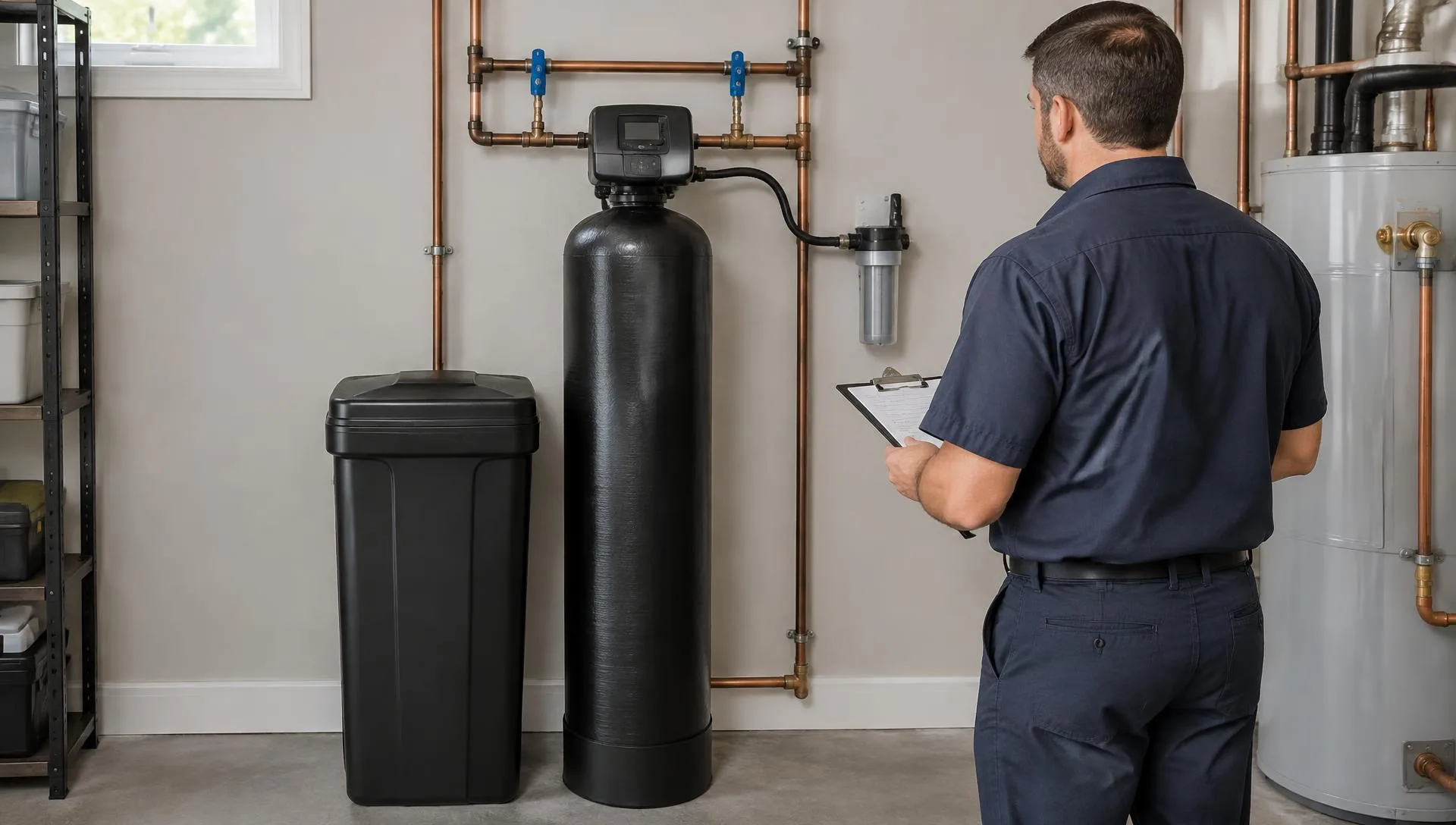
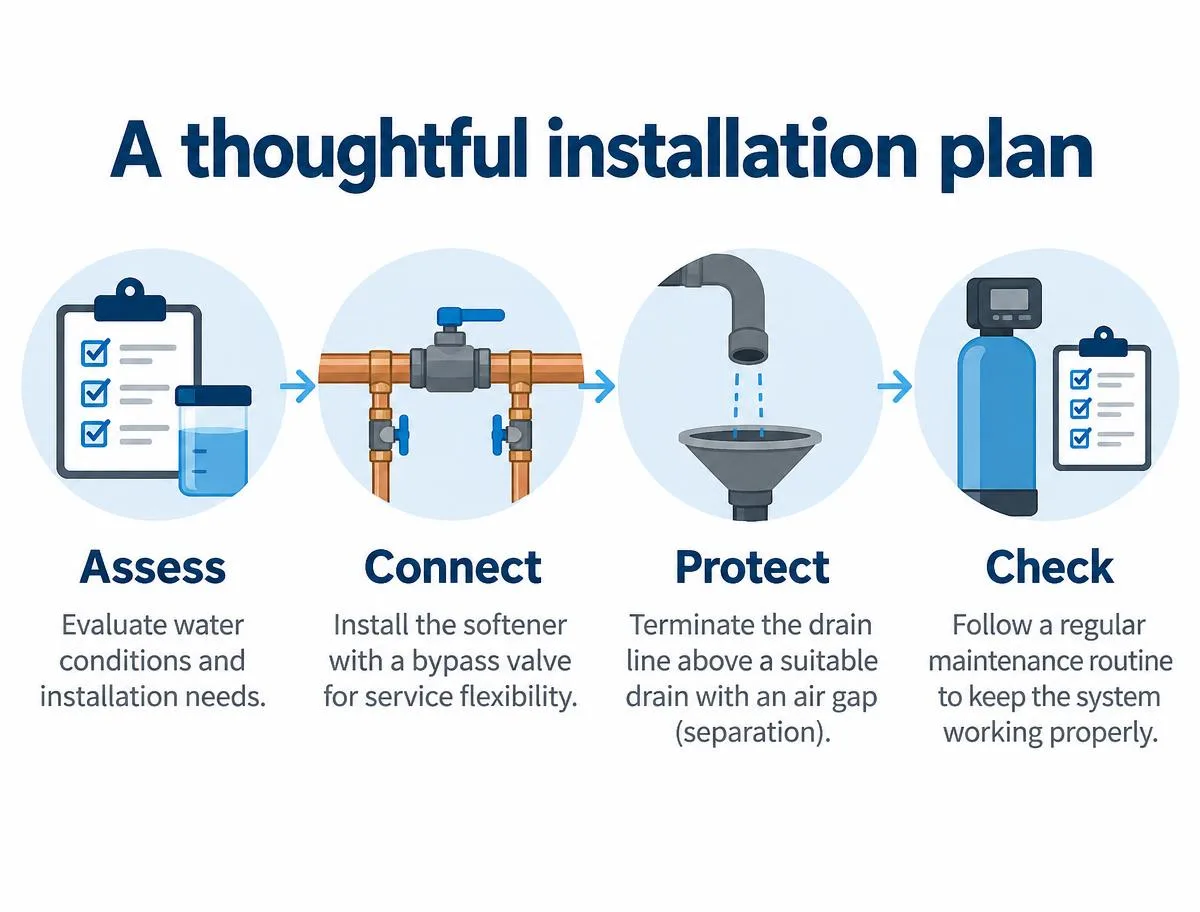
- A thoughtful installation reviews connections, drainage, bypass access, manufacturer instructions, and applicable permits or inspections.
- EWG utility listings provide historical water context, not household test results or a diagnosis.
- Compare the full installed scope, then learn the controls and maintenance responsibilities before the job is complete.
Why the installer matters as much as the equipment
A water softener or filter is not just a box delivered to your house. It becomes part of a pressurized plumbing system that supplies your kitchen, bathrooms, laundry room, and appliances. Choosing suitable equipment is important, but the way that equipment connects to the house also deserves careful attention. A professional installation considers the existing pipes, available space, operating pressure, drainage, service access, and manufacturer instructions together. Those details can be easy to overlook when the shopping conversation focuses only on the tank size or the advertised price.
For Twin Cities homeowners, the useful question is not simply whether someone can make water flow through a new tank. It is whether the installation has been planned for your actual home and whether the person doing the work holds the appropriate credentials. Minnesota Water Pros uses only licensed plumbers to install our water-treatment equipment. That is our company policy, not a claim that every legally permitted water-conditioning job in Minnesota must be performed by a plumber. Understanding that distinction helps you compare providers without confusing a business commitment with a universal legal requirement.
Our commitment: licensed plumbers only
We believe everyone deserves access to cleaner, better water, and affordability should not mean treating installation as an afterthought. Our licensed-plumber-only policy is part of how we approach the equipment connection itself. It means homeowners can ask about the plumbing work with the same seriousness they bring to product selection. Before approving a project, ask who will perform the installation, what credentials apply, and how the work will be coordinated. A clear answer is more useful than a general promise that a company has experienced people.
A license does not automatically prove that a particular filter is appropriate for your water, nor does it eliminate every possibility of a leak or service issue. Equipment selection still needs evidence, and workmanship still needs attention. We do not present licensing as a guarantee of perfect results or make up license numbers to create reassurance. The practical benefit is that the plumbing work is assigned to licensed professionals rather than being treated as an incidental task that any salesperson or delivery person can complete. Ask for the applicable individual and contractor credentials before scheduling work.
Minnesota plumbing and water-conditioning licenses are different
Minnesota's Department of Labor and Industry describes a separate licensing path for water-conditioning professionals. Its guidance says state-licensed plumbers may perform water-conditioning work without obtaining an additional water-conditioning license. State law also allows appropriately licensed water-conditioning professionals to perform work within their authorized scope. That is why a responsible homeowner guide should not suggest that every non-plumber installer is automatically operating illegally. The relevant questions are the person's license, the contractor's authorization, the scope of the project, and any limitations that apply to the work.
The contractor credential and the individual installer's credential are not interchangeable. Minnesota's water-conditioning statute distinguishes the authorization to offer installation or servicing from the license needed for the hands-on work. A business name on a quote therefore does not answer every licensing question. When comparing companies, ask for information about both the contractor and the person doing the installation, then consult current DLI guidance if anything is unclear. This article is educational, not a legal determination about your project. Minnesota Water Pros' own policy remains straightforward: we use only licensed plumbers for our equipment installations.
Start with your water source, not a sales pitch
Good plumbing cannot turn the wrong treatment technology into the right one. Before choosing equipment, identify whether your home receives public utility water or uses a private well, then define the concern you want to address. Hardness, chlorine taste, sediment, iron staining, and a specific laboratory result are different starting points. A professional installation plan should follow a treatment decision supported by those facts. Our system comparison explains why softening, whole-home filtration, and drinking-water treatment are different categories rather than interchangeable names for the same equipment.
For city water, begin with the utility serving your address and its current water-quality report. For private wells, use current testing appropriate to the concern, preferably through a qualified laboratory, rather than borrowing the results from a nearby city's public supply. If you are uncertain about the starting point, our well-water treatment guide and local water-quality page can help frame the questions. Neither a visible stain nor an online utility listing establishes the safety of the water coming out of your own faucet today. Treatment should be matched to evidence, not fear.
What we checked in EWG's local water data
For this guide, we checked EWG's Tap Water Database listings for Minneapolis and Saint Paul Regional Water Services. The Minneapolis listing covers a reporting period of 2015 to 2024, while the Saint Paul listing covers 2013 to 2024. These historical compilations provide context for understanding the public water supply; they are not new measurements taken at your home in 2026. The source links appear at the end of this article so you can review the utility identity and reporting window rather than relying on an untraceable claim about local water.
EWG health guidelines are not federal legal limits and can be stricter than those limits. A substance appearing above an EWG guideline does not, by itself, mean a utility violated a drinking-water regulation. Different substances can also have different testing windows within a listing. This installation guide does not use historical contaminant counts to claim you need a particular product. Instead, the lesson is that an installer needs to understand the treatment goal. A licensed plumber can connect a system appropriately, but a softener should not be presented as a universal solution for every chemical listed in a utility report.
Look at the entire plumbing layout before connecting anything
A suitable equipment location needs more than an empty spot on the basement floor. The installation plan should identify how water enters the home, where treatment will connect, which fixtures are intended to receive treated water, and how existing shutoffs can be used. An older Minneapolis home with several plumbing changes may have a different layout from a newer home in Eagan or Woodbury. The age of the house alone does not tell you whether the connection is simple. A review of the actual plumbing is more useful than assumptions based on a neighborhood.
Ask whether the proposal includes a usable bypass arrangement and enough access to operate valves and service equipment. Depending on the system, a bypass can let water go around the treatment unit while it is being maintained. Its exact configuration should follow the selected equipment and applicable requirements. Do not assume every outdoor faucet, kitchen cold-water line, or other branch should be treated identically. Those choices should be discussed before the installation rather than discovered afterward. The objective is an intentional layout that matches your household preferences and allows someone to understand the system during future service.
Drain connections and backflow protection deserve attention
Some treatment equipment, including regenerating softeners and many reverse osmosis systems, produces a wastewater stream that needs an appropriate discharge arrangement. The fact that a drain is nearby does not establish that any hose can be attached to it. Minnesota DLI's water-conditioning scope guidance specifically discusses the distinction between connections with an air gap and direct connections to soil or waste piping. That is a reminder to treat drainage as a plumbing issue, not simply a place to tuck away a tube after the equipment has been positioned.
An air gap is a physical separation used in specified applications to help keep a waste connection from becoming a direct path back into the water system. The required arrangement depends on the equipment, applicable code, and the installation authority. This guide does not prescribe dimensions or provide a do-it-yourself drain design. Ask the installer to explain the discharge route and how the applicable protection requirements will be met. A clear explanation before work starts is especially valuable when a proposed location is far from a suitable drain or involves modifications to existing waste piping.
Capacity, pressure, and service access affect everyday use
A treatment unit can occupy very little floor space while still needing room for service. Filters may need clearance for cartridge changes, softener controls need access, and cabinets should not block the only route to a shutoff valve. Think about how the equipment will be maintained after the installation crew leaves. A location that looks tidy in a photograph can become frustrating if every routine change requires moving heavy objects or reaching behind another appliance. Review manufacturer service clearances rather than assuming the visible footprint represents all of the space needed.
Equipment also has operating limits and flow characteristics. The right discussion includes household demand, measured conditions where relevant, the selected system's requirements, and the effect of any existing plumbing restrictions. A licensed plumber can evaluate the connection, but a larger tank is not automatically a better treatment choice. Our water-softener selection guide explains why sizing involves more than the number printed on a sales sheet. Do not accept promises of unlimited flow, zero pressure change, or guaranteed savings without evidence that applies to the actual equipment and your home.
Permits and inspections: ask before the appointment
Minnesota DLI explains that new plumbing systems and altered portions of existing plumbing systems must be inspected and tested. It also identifies who may apply for plumbing inspection permits in the work it oversees. However, the authority responsible for a particular residential project can depend on location and scope. Homeowners should not assume that every equipment replacement has exactly the same process or that an installer can declare a permit unnecessary without considering the proposed work. Ask which authority applies and who will confirm the requirements before the appointment is booked.
Get the responsibilities in writing when permits or inspections are part of the project. Useful questions include who applies, whether the quoted scope includes the associated work, what access is required for an inspection, and who addresses any requested corrections. This is not a promise that a particular fee is included in every package or that a specific city will approve a plan. It is a way to avoid uncertainty. If the project changes after an initial quote, revisit the permit and inspection discussion instead of assuming the original answer still covers additional plumbing modifications.
Under-sink reverse osmosis still needs a thoughtful connection
A drinking-water system under the kitchen sink may look less involved than a whole-home tank, but it still connects to water and, for many systems, a drain. The cabinet might already contain a disposal, dishwasher connection, stored supplies, or other plumbing. A professional plan considers those existing conditions, the dedicated drinking-water faucet, filter replacement space, and the manufacturer's installation instructions. The reverse osmosis versus carbon guide can help you separate the treatment decision from the connection details so that neither part is overlooked.
Ask how you will reach the shutoff, how tubing will be protected from ordinary cabinet use, and what routine maintenance the selected system needs. A clean installation is not just one where the door closes. It should also be understandable and serviceable. If the countertop or sink needs a change for a faucet, clarify that scope before scheduling. Do not treat a generated product photo or an article illustration as proof that the equipment will fit your cabinet. Your installer needs to review the real space and the selected model, not a generic example.
Startup and the homeowner walkthrough are part of the plan
Once the physical connections are complete, the selected system may require flushing, startup steps, programming, or other checks described by its manufacturer. Those steps vary by equipment. A softener's settings should reflect the intended operation rather than simply copying a setting from another home. Ask what checks will be performed, how the equipment will be put into service, and what information you will receive afterward. Professional installation should not be understood as only attaching pipes and leaving the homeowner to figure out the rest through trial and error.
Minnesota Water Pros' approved whole-home packages include professional installation and a walkthrough. Use that walkthrough to locate the shutoffs and bypass, understand basic controls, review routine upkeep, and learn what to do if you notice a leak or another problem. Keep the model information, manuals, and written warranty terms together. A brief explanation is useful, but written manufacturer instructions remain important after the visit. Licensing supports the plumbing side of the work; it does not replace the homeowner's need to understand filter changes, salt management where applicable, and the limits of the treatment selected.
Compare installed scope, not just the equipment price
Two quotes can describe a similar tank while covering very different work. One may assume an existing prepared connection, while another accounts for a different pipe route or drain arrangement. Compare the water source, treatment stages, capacity, installation scope, and service responsibilities instead of judging the number in isolation. Our system planning information is a starting point for evaluating approved packages, with final configuration and pricing confirmed through consultation. This article does not invent a universal installation fee, a permit allowance, or a claim that professional labor always produces a specific financial return.
Affordability means understanding what you are paying for, not automatically selecting the lowest equipment-only offer. Ask what could change the scope and whether changes will be discussed before additional work is approved. Read the written warranty guidance and ask which terms apply to the selected system. A warranty should not be assumed to cover every installation condition, maintenance issue, or plumbing problem unless the written terms say so. The licensed-plumber policy is a separate commitment about who installs the equipment, not a substitute for reviewing your quote and system-specific paperwork carefully.
A practical checklist for choosing your installer
Before you approve a water softener, whole-home filter, or drinking-water system, request a plain-language description of the proposed work. You should be able to explain why that technology was chosen, where it will connect, who will install it, and how the job will be checked. If one of those answers is missing, pause and ask rather than filling the gap with an assumption. A company that discusses limitations clearly is giving you more useful information than one that promises every water problem disappears once a tank is delivered.
Keep your questions focused on the actual project: What individual license applies? What contractor authorization applies? Who confirms permit and inspection requirements? How are the drain connection and service access handled? What manufacturer startup steps are included? Which maintenance tasks become your responsibility? What happens if existing plumbing changes the scope? These questions are suitable whether you choose Minnesota Water Pros or another provider. They help you judge the installation process rather than a slogan. Avoid assuming a certification for a filter component proves a person's plumbing qualifications; equipment certification and professional licensing answer different questions.
What to prepare before installation day
Make the proposed work area accessible and tell the installer about known issues, such as a shutoff that does not operate, a previous leak, or a drain that has caused problems. Do not attempt plumbing modifications simply to make the appointment easier. Share the information you already have, including the water source, any recent laboratory results, and details about the equipment being replaced. Ask how long water may be unavailable during the work and how the schedule will be coordinated. The answer should come from the specific installation plan, not a generic time estimate in a blog.
If the home contains rented equipment, confirm ownership and removal responsibilities before anyone disconnects it. Our guide to leaving a Culligan rental explains why rental paperwork deserves attention before a replacement is scheduled. For any brand, a professional installation appointment is not permission to dispose of property you do not own. Similarly, if another contractor is doing related work, coordinate the sequence so that the treatment installation does not rely on an unfinished connection. Preparation helps the plumber assess the actual job without being surprised by information that was already available.
Cleaner-water planning should be clear, not intimidating
The purpose of choosing a licensed professional is not to frighten homeowners away from asking questions. It is to bring the right skills to a job that becomes part of the home's plumbing. A well-considered project combines a supported treatment goal, suitable equipment, authorized work, a practical connection, and understandable upkeep. None of those steps should be replaced by an unsupported claim that the water is unsafe or that one system can solve every concern. The best starting point remains your water source, your preferences, and evidence that actually relates to the home.
Minnesota Water Pros serves the Twin Cities and surrounding communities, and our equipment installation policy is licensed plumbers only. You can review our products, check the service-area directory, or request a consultation to discuss the water source and the planned installation. We believe everyone deserves access to cleaner water, paired with straightforward information and transparent installed pricing. Ask us about both the treatment choice and the plumbing work. You should understand what is proposed, what remains to be confirmed, and how to care for the equipment after it becomes part of your home.
Sources and further reading
Reviewed October 23, 2026. Utility reports describe the public supply, not an individual household sample. Check the utility for current reports and notices. Images are illustrative, not photographs of a customer installation.
- Minnesota DLI: Water conditioning license basics
- Minnesota Statutes section 326B.55: Water conditioning licenses (2024 published edition)
- Minnesota DLI: Apply for a plumbing inspection permit
- Minnesota DLI: Plumbing inspections
- EWG: Minneapolis, reporting period 2015 to 2024
- EWG: Saint Paul Regional Water Services, reporting period 2013 to 2024
Frequently asked questions
Does Minnesota Water Pros use licensed plumbers?
Yes. Minnesota Water Pros uses only licensed plumbers to install its water-treatment equipment. Ask about the applicable installer and contractor credentials for your project before scheduling; this article does not publish an invented license number or claim additional credentials.
Does every Minnesota water softener installation legally require a plumber?
No. Minnesota also has a water-conditioning licensing track for defined work. DLI guidance and state law distinguish individual and contractor authorizations and the scope allowed. Our licensed-plumber-only policy is a company commitment, not a statement that all other appropriately licensed installers are unlawful.
Should I ask about permits for a water filter installation?
Yes. Ask who confirms requirements with the applicable authority for the actual scope. DLI says new plumbing systems and altered portions must be inspected and tested. Do not assume every replacement follows the same process or that permit responsibilities are automatically included in a quote.
Why does a water softener drain connection matter?
A regenerating softener discharges wastewater. The discharge arrangement and applicable protection against a direct waste connection need to be considered, following the equipment instructions and governing requirements. Ask the installer to explain the drain route rather than treating a nearby drain as automatically suitable.
Does a licensed installation prove my water is safe?
No. Licensing addresses professional authorization, not the safety of a particular household sample or the performance of every treatment technology. Select equipment using your water source, current reports or appropriate testing, and documented treatment capabilities. EWG utility listings are historical context, not a home-water diagnosis.
What should I learn during the installation walkthrough?
Learn the location of shutoffs and any bypass, the basic controls, the maintenance schedule, and the steps to take if you notice a leak or another problem. Keep manufacturer instructions and written warranty terms. Approved Minnesota Water Pros whole-home packages include professional installation and a walkthrough.
More from the blog
3M PFAS Lawsuit in Minnesota: What Twin Cities Homeowners Should Know
What the reported Minnesota lawsuit alleges, how 3M responded, and how Twin Cities homeowners can check water information without confusing a headline with a household test.
How to Reduce PFAS in Drinking Water: What EPA Research Says Works
PFAS are often called forever chemicals because they resist breaking down. EPA researchers have tested which treatment technologies actually reduce them. Here is what that research found, what it means at home, and what Twin Cities utility data shows.
Does a City-Softened Minneapolis Home Need Extra Water Treatment?
Minneapolis already softens its municipal water. Here is how to decide whether additional household treatment serves a real purpose.
Saint Paul Drinking-Water Taste: Kitchen Filter or Main-Line Treatment?
A kitchen taste preference and a whole-home treatment goal are different projects. Learn how to compare them in an existing Saint Paul home.
Talk through your water with a local pro
A free phone consultation starts with your water source and your goals. Installation by licensed plumbers only, kitchen reverse osmosis included with every whole-home package, and guidance tailored to your home.