
Minnesota Water Pros blog
Hard Water vs. Soft Water: What the Difference Means for Your Home
Published August 6, 2026 · 11 min read · Educational content only, not a water quality diagnosis.
In this guide
- What hard water and soft water actually are, in plain language.
- How hardness is measured, and where Twin Cities water falls on the scale.
- What hard water does to plumbing, appliances, skin, and your budget.
- How to find out which one your home has in minutes.
- The fix: how softening works and what it costs.
Fill two glasses, one with hard water and one with soft, and you cannot tell them apart. The difference is invisible, tasteless to most people, and completely harmless to drink. Yet those two glasses behave so differently in your home that plumbers, appliance manufacturers, and anyone who has descaled a showerhead can tell you which one you have within a minute of walking in. This guide explains what hard and soft water actually are, how to tell which one comes out of your taps, what the difference costs you, and what you can do about it.
The topic matters more in Minnesota than in most of the country. Our groundwater and river water pick up substantial mineral content from the limestone and dolomite geology under the region, and most Twin Cities households live with moderately hard to very hard water every day. The good news is that hardness is one of the best understood and most completely solvable water issues there is.
What Makes Water Hard or Soft
Water is a remarkable solvent. As rain falls and moves through soil and rock on its way to aquifers and rivers, it dissolves small amounts of whatever it touches. In Minnesota, what it touches is largely limestone and dolomite, rocks made of calcium and magnesium carbonates. Those dissolved minerals are what make water hard. The more calcium and magnesium dissolved in the water, the harder it is. Soft water is simply water with little of those minerals, either because the source never picked them up or because they were removed by treatment.
Hardness is measured in grains per gallon or in milligrams per liter, and the scale is standardized. Water under about one grain per gallon is soft. One to three and a half is slightly hard, three and a half to seven is moderately hard, seven to ten and a half is hard, and above ten and a half is very hard. Municipal supplies across the Twin Cities metro commonly test in the moderately hard to very hard range, and private wells often run harder. Your utility's annual water quality report lists the number for city homes; our water quality page links the Minneapolis and St. Paul data directly.
What Hard Water Does to Your Home
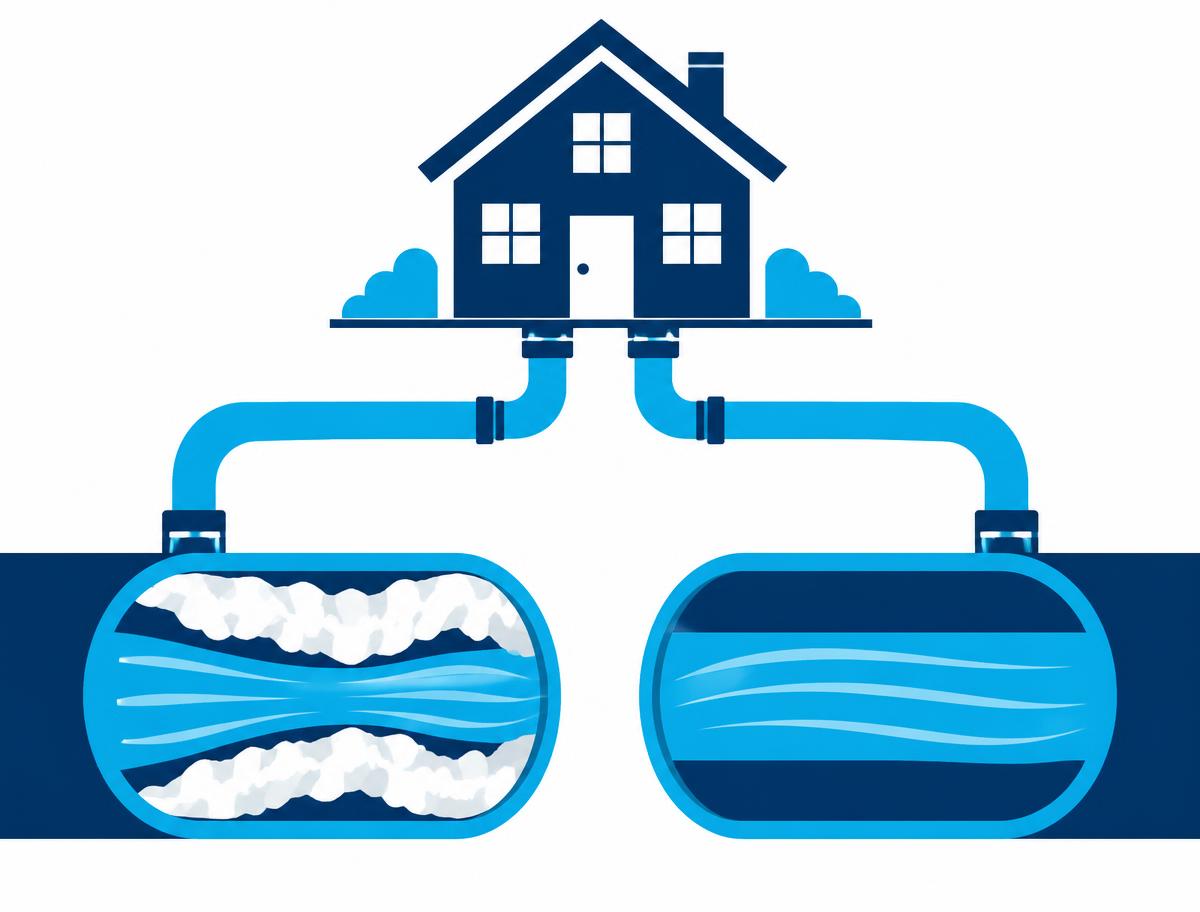
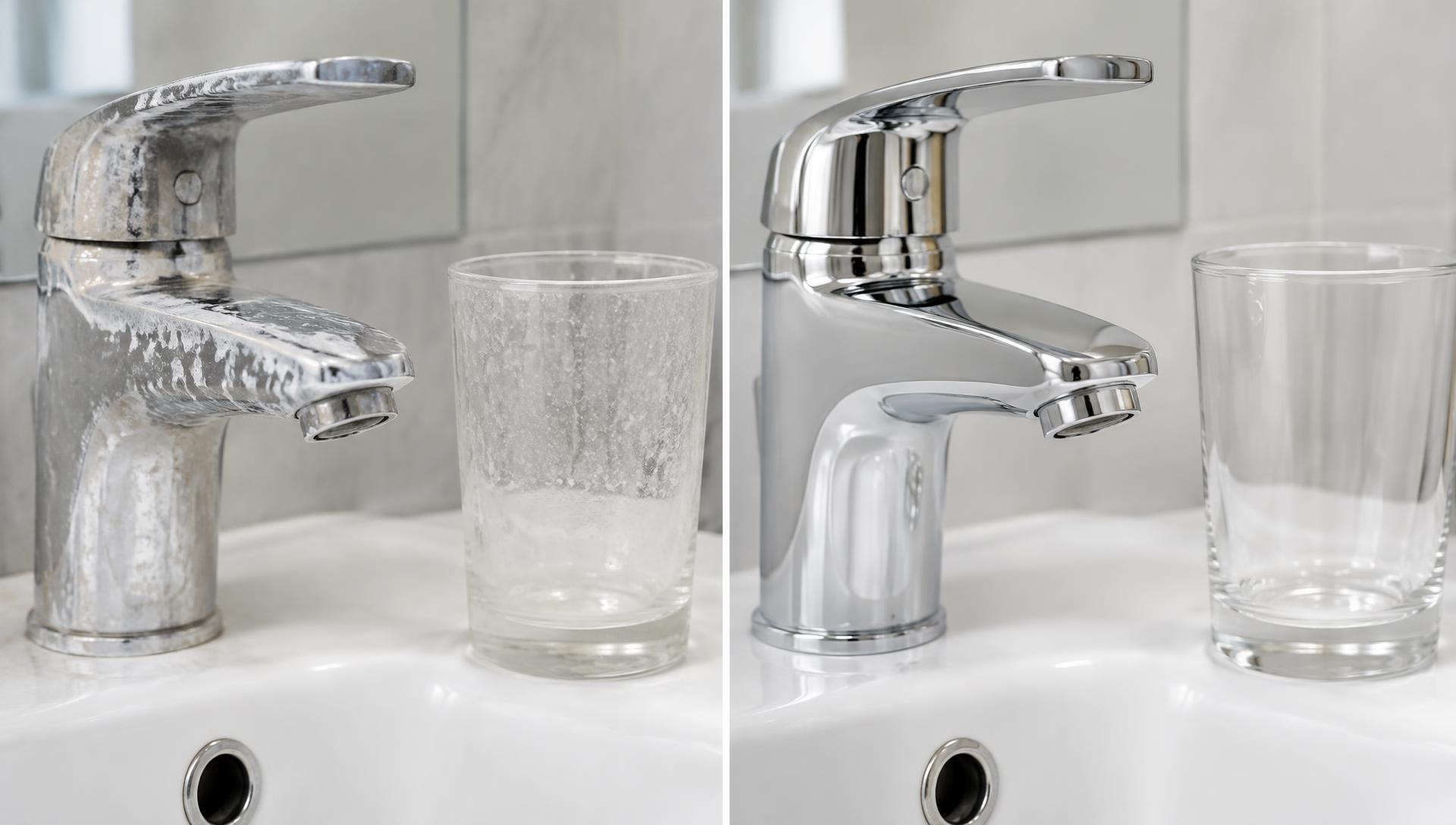
The signature problem is scale. When hard water is heated or evaporates, the dissolved minerals come out of solution and solidify as limescale, the white, crusty deposit you see on faucets and showerheads. Inside your home, the same process coats the inside of pipes, the heating element of your water heater, and the working parts of your dishwasher and washing machine. Scale on a heating element acts like insulation: the element must heat through the crust before it heats the water, wasting energy every single day and shortening the appliance's life.
The second problem is soap. Hardness minerals react with soap to form a curd, the familiar soap scum, instead of lather. You use more soap, more shampoo, and more detergent to get the same result, and the residue left behind is what makes skin feel dry and itchy, hair feel dull, and laundry come out stiff and faded. The third problem is spotting: when hard water dries on glass, dishes, and fixtures, it leaves its minerals behind as white spots and film. Our guide to the signs of hard water walks through all ten tells in detail, including a soap test you can do in thirty seconds.
What Soft Water Does Differently
Soft water is the same water with the hardness minerals removed. Every hard-water problem reverses. Soap lathers fully with a fraction of the product, and rinses away completely instead of leaving curd. Skin and hair keep their natural oils, which is why the first thing most households notice after softening is the shower. Glassware dries spotless. Appliances run on clean elements at full efficiency and last longer. Pipes stay clear, and existing scale gradually dissolves as soft water flows through, which is why some homes notice aerators shedding small flakes for a few weeks after a softener is installed.
One honest note: soft water feels different, and the difference takes a day or two to get used to. Because soap rinses completely, skin feels slippery rather than squeaky. That squeak people associate with clean is actually soap residue; the slippery feel is what genuinely rinsed skin feels like. Nearly everyone prefers it within a week. Softened water also carries a modest amount of sodium, proportional to the hardness removed, which is small compared to dietary sources. Households that prefer can drink from a reverse osmosis tap, which is why every whole-home package we install includes one at the kitchen sink.
How to Tell Which One You Have
You probably already suspect the answer from the signs: crusty faucets, spotted glasses, soap that will not lather, stiff laundry. To confirm it, city homes can look up the hardness figure in their utility's annual water quality report, published every year and available online. Well homes should test through an accredited laboratory, since no one else monitors a private well. For a quick answer in either case, an inexpensive hardness test strip from any hardware store gives a reading in under a minute. The strip will not replace a lab test, but it will tell you definitively which side of the line your water is on.
If you want the fun version, try the soap test: fill a clean bottle halfway with tap water, add a few drops of pure liquid soap, and shake hard. A tall, lasting head of fluffy lather means soft water. Thin, quickly collapsing suds over cloudy water means the hardness minerals consumed the soap before it could lather. It is not a measurement, but it makes the invisible visible, and it is oddly satisfying.
Hard Water, Soft Water, and Your Water Heater
If one appliance deserves its own mention in this comparison, it is the water heater. Heating is what drives hardness minerals out of solution, so the water heater is where scale forms fastest and does the most damage. In a hard-water home, scale coats the heating element or the bottom of the tank, and the burner or element must heat through that crust before it heats the water. Efficiency drops, recovery times stretch, and the unit runs hotter and harder than it was designed to, which is why water heaters in hard-water homes so often fail years before their expected lifespan.
In a soft-water home, none of that happens. The element stays clean, the tank stays clear, and the heater runs at its rated efficiency for its full working life. Tankless water heaters, which push water through narrow heat-exchanger passages, are even more sensitive: many manufacturers' warranties address scale directly, and some require softened water above certain hardness levels. If you have invested in a tankless unit, or plan to, soft water is less a luxury than a protection plan for the appliance.
Common Myths, Cleared Up
A few myths follow this topic everywhere. Soft water does not corrode pipes; the minerals it removes were never protecting anything, and softening does not make water acidic. Soft water is not salty; the sodium added is modest and proportional to the hardness removed, and a reverse osmosis tap removes it for drinking if you prefer. Hard water is not healthier in any meaningful way; the calcium and magnesium it carries are trivial next to what food provides. And boiling does not soften water; it actually concentrates the minerals as water evaporates, leaving the pot crusted with scale, as anyone with a well-used kettle already knows.
Hard Water Through the Seasons in Minnesota
Minnesota's seasons change how hard water shows up, and winter is when it speaks loudest. Cold, dry air already strips moisture from skin, and hard water compounds it: soap residue that rinsed away tolerably in July becomes a daily irritation in January. Water heaters work their hardest in winter, which is exactly when scale insulation costs the most energy. Humidifiers, the small comfort appliances many Twin Cities homes run all season, clog with mineral dust fast on hard water, which is why their manufacturers so often recommend distilled water.
Summer brings its own version. More showers, more laundry, more watering, and more guests all mean more water moving through scaled pipes and appliances. If you have ever wondered why your skin feels worse at home than at the gym or a hotel, or why the humidifier needs cleaning every week, the seasons are when hard water stops being abstract. Many homeowners first decide to act during the cold months, when the signs are impossible to ignore, and that timing is fine. A softener installed in February works exactly as well as one installed in June.
A Quick Self-Audit You Can Do Tonight
Before you buy anything, walk your home with fresh eyes. Check the showerhead for white crust. Look inside the kettle or coffee maker. Hold a drinking glass up to the light after the next dishwasher cycle. Feel a towel fresh from the dryer. Look at the base of your faucets and the floor of the shower. Each check takes seconds, and together they give you an honest picture of how hard water is showing up in your specific home. Bring that list to any consultation, ours or anyone's, and the conversation gets specific fast, because you will be describing evidence rather than impressions.
The Fix, and What It Costs
Hard water is fixed by removing the minerals, and the proven technology is ion exchange softening: resin beads trade sodium for the calcium and magnesium as water flows through, and the minerals go down the drain during regeneration. We explain the whole process in how a water softener works, and we compare it honestly against salt-free conditioning, which reduces scale but does not soften, in our salt-free comparison. For the hardness levels common across the Twin Cities, true softening is what delivers the full difference.
On cost, we publish our installed prices so you can decide with real numbers: whole-home filtration and softening packages start at $2,999 installed, dual-tank city systems are $3,999, and every whole-home package includes professional installation, a full walkthrough, and a kitchen reverse osmosis system at no additional cost. Every system carries a lifetime warranty, and our best-price guarantee means we beat lower written quotes for comparable equipment and installation. Our savings calculator estimates what hard water is currently costing you in detergent, energy, and appliance wear, using your own numbers.
One more perspective worth having: hard water is not a character flaw in your home or your utility. It is geology. The same limestone formations that make Minnesota's groundwater hard also make it abundant and reliable, and municipal treatment handles safety well. Hardness is simply the one job the utility does not do, because removing minerals at city scale would be enormously expensive and most of the water never touches a person or an appliance. The last step of refinement, the step that matters in your shower and your water heater, belongs to the home. If you are ready to find out where your water stands, a free phone consultation starts with your water source and what you are noticing, and our Find Your Solution tool narrows the options in about two minutes. We serve Minneapolis, St. Paul, and surrounding communities across the metro. Hard and soft water look the same in a glass. Everywhere else in your home, the difference is enormous. It shows up in the shower within a week, in the dishwasher within a load, and in the water heater every single day whether you watch it or not. The minerals are patient, but so is the fix, and the fix only has to happen once. Test your water, name the signs you are living with, and make the decision with real numbers in hand.
Frequently asked questions
Is hard water bad for your health?
No. Hardness minerals, calcium and magnesium, are not a health concern, and both are essential nutrients. Hard water's effects are practical rather than medical: scale in pipes and appliances, poor soap performance, spots on glassware, and dry-feeling skin and hair. It is a quality-of-life and home-maintenance issue, not a safety one.
How do I know if I have hard or soft water?
Check your utility's annual water quality report if you are on city water, use an inexpensive hardness test strip from a hardware store, or try the soap test: shake tap water with a few drops of pure liquid soap and see whether it lathers. Crusty faucets, spotted glasses, and stiff laundry are reliable everyday signs of hardness.
Is Twin Cities water hard?
Yes. Municipal supplies across the Twin Cities metro commonly test in the moderately hard to very hard range because the region's water picks up minerals from limestone and dolomite geology. Private wells often run harder still. Your utility's annual report lists the exact figure for your address.
Does soft water taste different?
Most people notice little difference, though some describe soft water as slightly smoother. Softening adds a modest amount of sodium proportional to the hardness removed, which is small compared to dietary sources. If you prefer, a reverse osmosis tap at the kitchen sink removes sodium and a broad range of dissolved solids for drinking and cooking.
Why does soft water feel slippery in the shower?
Because soap rinses completely off soft water instead of leaving residue. The squeaky feeling people associate with clean skin is actually soap curd left behind by hard water. The slippery feel is what genuinely rinsed skin feels like, and nearly everyone comes to prefer it within the first week.
What does it cost to fix hard water in the Twin Cities?
With Minnesota Water Pros, whole-home filtration and softening packages start at $2,999 installed and dual-tank city systems are $3,999. Every whole-home package includes professional installation, a walkthrough, and a kitchen reverse osmosis system at no extra cost, backed by a lifetime warranty and a best-price guarantee.
More from the blog
Does a City-Softened Minneapolis Home Need Extra Water Treatment?
Minneapolis already softens its municipal water. Here is how to decide whether additional household treatment serves a real purpose.
Saint Paul Drinking-Water Taste: Kitchen Filter or Main-Line Treatment?
A kitchen taste preference and a whole-home treatment goal are different projects. Learn how to compare them in an existing Saint Paul home.
Bloomington Water Treatment for Houses and Condos: Know Your Plumbing
Bloomington's combined municipal supply is only part of the decision. Your plumbing boundary and maintenance authority determine which options fit.
Edina or Morningside? Plan the Right Water Treatment for Your Remodel
Edina's two water systems make address-level planning important. Learn how to connect your supply, household measurements, and kitchen remodel decisions without assuming every home needs the same equipment.
Talk through your water with a local pro
A free phone consultation starts with your water source and your goals. Published installed pricing, kitchen reverse osmosis included with every whole-home package, and a best-price guarantee.