
Minnesota Water Pros blog
Burnsville, Minnesota · Local service informationBurnsville Water Treatment: Put Your Budget Toward the Right Improvement
Published October 22, 2026 · 13 min read · Educational content only, not a water quality diagnosis.
In this guide
- Burnsville's supply includes groundwater and Kraemer Quarry surface water, so its own utility information is the appropriate local starting point.
- An existing softener or filter deserves identification, basic performance checks, and a service-history review before a replacement recommendation.
- Rank the actual household goal, such as hardness management or drinking-tap preferences, rather than assuming every treatment category belongs in the budget.
- Compare repair and replacement using the fault, parts availability, warranty, installation work, and uncertainty, not age alone or promised payback.
- Use current pricing and written maintenance assumptions to build a staged plan that fits the home without claiming guaranteed utility, detergent, or appliance savings.
What EWG's Tap Water Database Shows for Burnsville
The Environmental Working Group (EWG) compiles utility testing results supplied by the Minnesota Department of Health. Its listing for the Burnsville water system, which EWG shows serving about 61,747 people from surface water with data from 2014 to 2024, reports 25 contaminants detected, 14 of them at levels above EWG's health guidelines. The largest gaps EWG lists are Perfluorohexane sulfonate (PFHXS) (about 339 times the guideline), Haloacetic acids (HAA9) (about 194 times the guideline), and Total trihalomethanes (TTHMs) (about 157 times the guideline). Several of the listed items are disinfection byproducts, which form when the chlorine that keeps water safe in the pipes reacts with natural organic matter. We reviewed this listing on October 22, 2026, and you can read the full breakdown on [EWG's Burnsville page](https://www.ewg.org/tapwater/system.php?pws=MN1190002).
Context matters. EWG's guidelines are its own health benchmarks and are often far stricter than federal legal limits, and many of the listed substances have no legal limit at all. For the most recent quarter EWG reports from the U.S. EPA (April to June 2024), this system was in compliance with federal health-based drinking water standards. Utility data describes the public supply, not the water at your tap, so it is a starting point for a conversation rather than a verdict on your home. If any listed item matters to your household, match it to equipment certified to reduce that specific substance, and compare the Minneapolis and St. Paul snapshots on our water quality page.
Understand Burnsville's mixed source before shopping
Burnsville describes a municipal supply that includes groundwater wells and surface water from Kraemer Quarry. That mixed source is an important distinction from a community supplied only by groundwater wells. It does not, by itself, establish that your home needs more treatment or a particular filter medium. Use Burnsville's official drinking-water information and the applicable annual report as the public-supply starting point. Keep the report's sampling period with any result you discuss. A source description is not a current measurement of hardness, taste, or a named substance at your faucet, and this guide does not assume a particular blend percentage at an individual address.
Budget pressure can make a broad package sound reassuring: replace the old equipment, add another stage, and supposedly solve everything at once. A better approach begins by defining the problem and checking what is already installed. If the kitchen taste is the only concern, a main-line replacement may not address the priority. If measured hardness remains high after a softener, a kitchen filter will not repair that softener's function. The Burnsville service-area overview offers local planning context, but the recommendation should depend on your home's evidence. Mixed-source context makes careful assessment useful; it is not a reason to presume that every household needs a complex treatment train.
Inventory existing equipment before replacing it
Start with photographs and labels. Identify the manufacturer, model, serial number if readable, approximate installation date, and any service records. Determine whether each tank or housing is a softener, sediment filter, carbon system, or something else. Homeowners sometimes inherit equipment without instructions, and appearance alone is not a reliable guide to purpose. Note the bypass position, visible leaks, unusual noises, error messages, and whether the system has been deliberately taken out of service. Do not open pressurized housings or dismantle controls to investigate. The first goal is to establish what the equipment was designed to do and what can be checked safely.
A service assessment should distinguish a failed component from an unsuitable overall system. An accessible valve part, a programming issue, or overdue consumables can call for a different decision than a damaged vessel, unavailable parts, or equipment that no longer matches household demand. Age is relevant, but age alone does not prove that repair is wasteful or replacement is necessary. Ask the technician to describe the observed fault, the proposed remedy, and what remains uncertain after repair. If a problem cannot be confirmed, that uncertainty should appear in the discussion instead of being converted into a confident recommendation for a more expensive package.
- Identify every existing treatment stage and the fixtures it serves before discussing what should be added or removed.
- Collect model labels, approximate age, repair history, consumable records, and any transferable warranty information.
- Record symptoms with dates and locations, including whether they occur at all fixtures or only one appliance or faucet.
- Request a diagnosis that separates a confirmed fault, an installation limitation, overdue maintenance, and an unverified possibility.
Measure performance instead of judging by appearances
For a softener, hardness measurements before and after treatment can answer a useful question: is the equipment reducing hardness under the conditions tested? Record the sampling points, units, bypass position, and recent operating history. Ask the installer to identify appropriate taps, because an outdoor faucet may be bypassed and a kitchen line may have a different route. White residue can suggest a reason to investigate, but it does not quantify hardness or establish that the softener has failed. The guide to signs of hard water can help organize observations, while a measurement is needed to connect those observations to the hardness discussion.
Do not use one type of measurement to answer an unrelated question. A hardness test evaluates hardness, not every possible contaminant. A dissolved-solids meter does not establish whether a specific substance is present at an important concentration. A change in taste does not demonstrate safety or identify the responsible compound. If a particular water-quality concern needs laboratory testing, choose the test and sampling procedure for that question. For routine equipment assessment, the installer should explain which checks are appropriate and what their limits are. This avoids spending money on a replacement justified by a test that never evaluated the equipment's actual intended function.
Compare repair and replacement as separate written options
Consider a hypothetical Burnsville household with an older softener that no longer reduces hardness consistently. One proposal repairs a confirmed valve fault; another replaces the system. This example is not a diagnosis or a prediction of repair cost. The comparison should identify the specific fault, parts availability, labor, warranty on the work, remaining component uncertainty, and whether the existing equipment is appropriately sized. A lower initial repair price may be appealing, but it does not guarantee a longer remaining service life. A replacement may offer a new warranty, but it does not automatically create financial payback or eliminate every plumbing issue.
Ask what would make the technician change the recommendation. If the repair exposes another major fault, is there a stop-and-approve point before additional work proceeds? If replacement reuses existing plumbing, has that plumbing been inspected for suitability? Does the new proposal include removal of old equipment, startup settings, a drain connection, and homeowner instruction? A useful repair-versus-replace comparison contains these practical details rather than only two totals. It also gives you permission to decline optional additions. A functioning softener does not need a companion filter merely to make the project look complete, and a new drinking-tap system does not require replacing unrelated equipment that is operating acceptably.
Give the drinking tap its own decision
A dedicated drinking-water system may be the most relevant project when the household's main goal is kitchen taste or a documented reduction at the water used for drinking and cooking. That does not mean it is always the cheapest option or that every home needs one. It means the treatment location can match the goal. Identify whether the desired outlet includes only a dedicated faucet, the refrigerator, or another connection. An under-sink system generally will not alter shower, laundry, or bathroom water. Keeping this scope explicit prevents a focused kitchen purchase from being misunderstood as a whole-home solution.
Carbon filtration and reverse osmosis are different processes with model-specific capabilities. Generic carbon is not an automatic PFAS-reduction claim, and the words reverse osmosis do not establish every possible reduction. Request the exact system's performance documentation, applicable certification listing when claimed, rated capacity, and replacement requirements. For reverse osmosis, also review pressure requirements, production rate, storage design, and reject-water information under stated test conditions. A household that fills several large containers together may value different dispensing characteristics than one that fills an occasional glass. The appropriate comparison is documented performance and practical use, not the number of stages printed on a box.

Decide what whole-home treatment would actually add
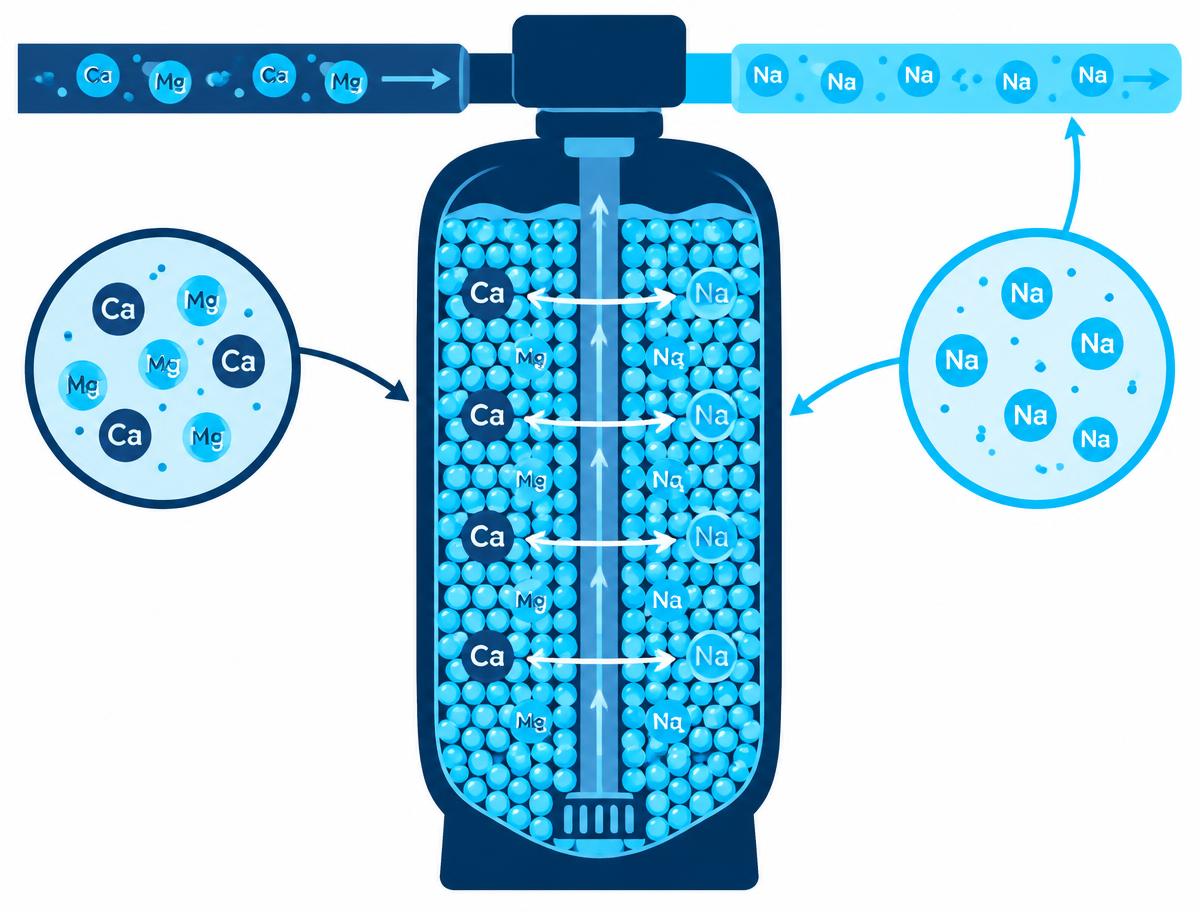
Main-line treatment can be appropriate when the established goal involves multiple connected fixtures, but broader scope should have a specific justification. A softener addresses hardness minerals. A sediment stage addresses particles within its stated rating and capacity. Carbon equipment must be selected for its documented purpose and suitable flow conditions. None of those descriptions should be stretched into a claim that one tank makes all water problems disappear. Ask the installer to identify the goal for each stage and explain why treatment at the main line is preferable to a focused outlet for that goal. If the explanation is vague, pause the comparison.
Flow and pressure matter for whole-home equipment, particularly when several fixtures operate together. Describe your actual overlap rather than choosing by tank size or household count alone. Ask about pressure loss, service flow, bypassed outdoor branches, and the condition of existing plumbing. If the home has a persistent pressure complaint, investigate the cause rather than assuming another treatment device will solve it. A clogged cartridge may be relevant, but so may plumbing restrictions or supply conditions. An appropriate installation should not hide those distinctions behind a larger package. This is especially important when the budget needs to prioritize a functional repair over an optional convenience.
Build a budget with visible assumptions
Use the pricing page for current published options rather than relying on copied figures or an assumed standard installation. Request a written scope that distinguishes equipment, labor, plumbing modifications, permits where applicable, removal, startup, and optional connections. Recurring costs belong beside the purchase price. Depending on the system, these can include salt, cartridges, membranes, media service, professional visits, and treatment-related water use. Ask what quantities or intervals the estimate assumes. A single annual operating-cost number without its assumptions may appear precise while being poorly matched to the household's water use or the manufacturer's actual maintenance conditions.
Do not build the budget around promised savings on appliances, detergent, bottled water, or energy. A household might change some purchases after installing treatment, but those changes depend on behavior, equipment, maintenance, and many other factors. They are not a guaranteed return. Likewise, avoiding replacement today does not guarantee that a repair will remain sufficient indefinitely. Compare what each option reliably includes and what remains uncertain. The softener cost planning article can help identify relevant cost categories, while current pricing and the actual site assessment should govern the proposal. The goal is an affordable, justified plan, not a sales calculation that assumes the best possible outcome.
Use a staged plan when the goals are different
A staged approach can keep optional work from crowding out an important repair. In a hypothetical home, the first step might be repairing a confirmed leak or restoring an existing softener's operation, then revisiting a kitchen preference later. In another hypothetical home, existing whole-home equipment may work adequately while the household chooses a documented drinking-tap system as its only new project. These examples describe possible decision sequences, not recommended treatment for a particular Burnsville address. Staging is useful only if each stage makes sense on its own and the future layout remains practical. Ask how today's work would affect access and plumbing for a later project.
Review the product catalog after ranking the goals, not before. A catalog is easier to use when you already know whether you are comparing softener replacement, a kitchen system, or a specific main-line stage. Avoid comparing unrelated products as though the least expensive one meets every need. Also consider doing less: an inspection, corrected settings, a properly replaced consumable, or no immediate purchase can be reasonable outcomes when supported by the evidence. The installer should be able to explain why an optional stage can wait. A budget-conscious decision is not simply the lowest initial price; it is a clear match between the problem, the scope, and the household's maintenance capacity.
Make upkeep and warranty terms concrete
Ask who is responsible for checking salt, changing cartridges, sanitizing housings, monitoring leaks, and arranging periodic service. Find out whether maintenance is homeowner-friendly or requires a technician, and confirm the availability of exact replacement parts. Cartridge life should follow the manufacturer's rated conditions rather than a vague rule that all filters last the same amount of time. For a softener, review salt guidance, regeneration settings, and what to do after a power interruption. For a kitchen system, review shutoff access and any startup flushing procedure. A system that cannot be maintained within the household's routine may be a poor fit even if its purchase price looks attractive.
Read warranties as written documents, not as a general promise of trouble-free ownership. Ask which components are covered, whether labor is included, what maintenance is required, and how service is requested. If a repair carries a shorter or narrower warranty than replacement, compare that explicitly without assuming either choice guarantees a particular life span. Keep invoices, model numbers, test results, and maintenance records together. At handover, have the installer demonstrate bypass operation and explain which symptoms require prompt attention. These details are especially valuable when the purpose of the project is to regain dependable function without taking on an unnecessarily complicated service commitment.
Choose the next expense deliberately
- Confirm Burnsville's applicable utility information and document the household concern without assuming a particular source blend at the address.
- Identify existing equipment, verify relevant performance, and obtain a fault-specific repair option when repair is reasonably available.
- Compare replacement and kitchen-only alternatives using the same written scope categories, documented claims, and recurring maintenance assumptions.
- Prioritize the next justified expense, keep optional stages separate, and avoid treating possible household savings as guaranteed project payback.
The most useful next step may be a service assessment rather than a shopping decision. Gather equipment photographs, recent results, utility documents, and a ranked list of goals, then use the contact page to start a discussion with Minnesota Water Pros. A conversation does not establish that a repair is possible or that a replacement is required. It creates an opportunity to examine those questions with the relevant evidence. For a Burnsville home, a sound plan respects the mixed-source context while keeping the household decision practical: understand what exists, measure what matters, define the treatment purpose, and spend only on a scope you can justify and maintain.
Sources and further reading
Reviewed October 22, 2026. Utility reports describe the public supply, not an individual household sample. Check the utility for current reports and notices. Images are illustrative, not photographs of a customer installation.
Frequently asked questions
Does Burnsville use only groundwater?
No. The city describes a supply that includes groundwater wells and surface water from Kraemer Quarry. Use Burnsville's own applicable utility information rather than a neighboring city's report. That source context does not establish a particular household blend, hardness value, or filter requirement. The equipment decision still needs household goals and relevant measurements.
Should an older softener automatically be replaced?
No. Identify the model, evaluate the fault, review parts availability, and check relevant performance first. Age is one factor, not a diagnosis. A repair may be reasonable when the problem is specific and the remaining equipment is suitable. Replacement may be appropriate for other findings, but the recommendation should explain those findings and the remaining uncertainty.
Can a drinking-tap system wait until after a softener repair?
It can, if kitchen treatment is optional for your stated goals and no official instruction requires a different response. Softener function and drinking-water filtration are separate questions. A staged plan should preserve access and avoid redundant plumbing work where practical. Do not delay action required by an active utility notice while treating it as an optional project.
Will new treatment pay for itself through household savings?
That should not be promised. Changes in detergent purchases, bottled-water use, maintenance, energy use, or appliance life vary and cannot establish guaranteed payback. Compare the installed scope, documented function, consumables, and service requirements. A treatment decision can be worthwhile for a household preference without being represented as a certain financial return.
Does mixed-source water require both carbon and reverse osmosis?
Not automatically. Source description alone does not establish a need for either product, much less both. Define the household goal and match it to exact documented performance. Carbon products and reverse osmosis systems differ by model, capacity, and claim. Generic carbon should not be assumed to provide PFAS reduction or any other unspecified treatment result.
What should a repair-versus-replace proposal include?
Ask for the confirmed fault, parts and labor, warranty, remaining uncertainty, installation changes, removal if applicable, startup checks, and recurring maintenance. The replacement option should identify the exact model and why it fits. The repair option should state what it does not address. Comparable written scopes are more useful than two unexplained totals.
More from the blog
Does a City-Softened Minneapolis Home Need Extra Water Treatment?
Minneapolis already softens its municipal water. Here is how to decide whether additional household treatment serves a real purpose.
Saint Paul Drinking-Water Taste: Kitchen Filter or Main-Line Treatment?
A kitchen taste preference and a whole-home treatment goal are different projects. Learn how to compare them in an existing Saint Paul home.
Bloomington Water Treatment for Houses and Condos: Know Your Plumbing
Bloomington's combined municipal supply is only part of the decision. Your plumbing boundary and maintenance authority determine which options fit.
Edina or Morningside? Plan the Right Water Treatment for Your Remodel
Edina's two water systems make address-level planning important. Learn how to connect your supply, household measurements, and kitchen remodel decisions without assuming every home needs the same equipment.
Talk through your water with a local pro
A free phone consultation starts with your water source and your goals. Published installed pricing, kitchen reverse osmosis included with every whole-home package, and a best-price guarantee.