
Minnesota Water Pros blog
Why Twin Cities Homeowners Choose Professional Water Treatment
Published October 22, 2026 · 12 min read · Educational content only, not a water quality diagnosis.

In this guide
- What Minneapolis and St. Paul utility testing and EWG's tap water database actually show, with reporting periods and the difference between legal limits and health guidelines.
- How hard water affects Minnesota homes: scale buildup, appliance wear, soap and detergent use, and energy costs.
- How water softeners, whole-home filtration, and reverse osmosis each solve a different problem, and why they are often installed together.
- The difference between city water and private wells, and why well owners should test through an accredited laboratory before buying equipment.
- Why professional sizing, installation, and warranty support matter more than the hardware alone.
If you own a home in Minneapolis, St. Paul, or one of the surrounding communities like Edina, Plymouth, Maple Grove, or Woodbury, you have probably thought about your water. Maybe you noticed white spots on your glassware, a chlorine smell when you run the tap, or scale building up around your fixtures. Maybe you simply wondered what is actually in the water your family drinks every day. Those questions are reasonable, and they are the reason more Twin Cities homeowners are looking into professional water treatment.
This guide explains what local water reports actually show, how hard water affects a Minnesota home over time, and how the three most common treatment categories (water softeners, whole-home filtration, and reverse osmosis) each solve a different problem. The goal is not to alarm you. Municipal water in the Twin Cities is treated and tested, and utilities publish their results every year. The goal is to help you understand your options so you can make a confident, informed decision about your own home.
One note before we start: nothing in this article is a diagnosis of your water. Every home is different, and the right starting point is always your water source, your utility's published data, and, when needed, a current water test. With that said, here is what we know.
What Twin Cities Water Reports Actually Show
Minneapolis and St. Paul both draw much of their municipal water from the Mississippi River, and both cities treat and test that water before it reaches your tap. The utilities meet federal drinking water standards, and they publish annual Consumer Confidence Reports that list what was detected and at what levels. Those reports are public, and they are worth reading for your specific address.
The Environmental Working Group, a nonprofit research organization, also maintains a national tap water database that compiles utility testing data. According to EWG's compilation of utility reports, Minneapolis water testing between 2015 and 2024 detected 19 contaminants, with 10 exceeding EWG's own health guidelines. Saint Paul Regional Water Services testing between 2013 and 2024 detected 25 contaminants, with 13 above EWG guidelines. We reviewed these listings on October 18, 2026, and you can explore the full breakdown on our local water quality page.
Context matters here. EWG's guidelines are often far stricter than federal legal limits, and many of the detected substances have no legal limit at all. For example, EWG's Minneapolis listing shows total trihalomethanes at 16.7 parts per billion against a legal limit of 80 parts per billion, while EWG's own guideline is 0.15 parts per billion. Trihalomethanes and haloacetic acids are disinfection byproducts, meaning they form when the chlorine used to keep water safe reacts with natural organic matter. Their presence does not mean your water failed a legal standard. It does mean there is a measurable difference between water that meets federal minimums and water that meets the strictest published health guidelines.
For many homeowners, that gap is the practical reason to consider treatment at home. Municipal treatment is designed to protect public health across an entire city. Home treatment is how you adjust the water at your own tap to your own standards and preferences.
Hard Water in Minnesota: The Quiet Expense
Hardness is the most common water complaint we hear about across the Twin Cities metro. Hard water contains dissolved calcium and magnesium picked up as water moves through soil and rock. It is not a health concern, but it is a real household expense, and in Minnesota it is widespread enough that the Minnesota Department of Health publishes guidance specifically about home water softening.
You can often spot hard water without a test. Common signs include white or chalky spots on dishes and glassware, scale crusted around faucets and showerheads, soap that does not lather well, laundry that feels stiff, and skin that feels dry after showering. Inside your walls, the same minerals build up as scale inside your water heater, dishwasher, washing machine, and pipes.
That scale is where the cost hides. A water heater coated in mineral scale has to heat through that layer before it heats your water, which means it works harder and uses more energy to do the same job. Scale narrows pipes and coats heating elements, and over years it shortens the working life of every appliance that touches water. Homeowners often replace a water heater or dishwasher without ever connecting the failure to their water.
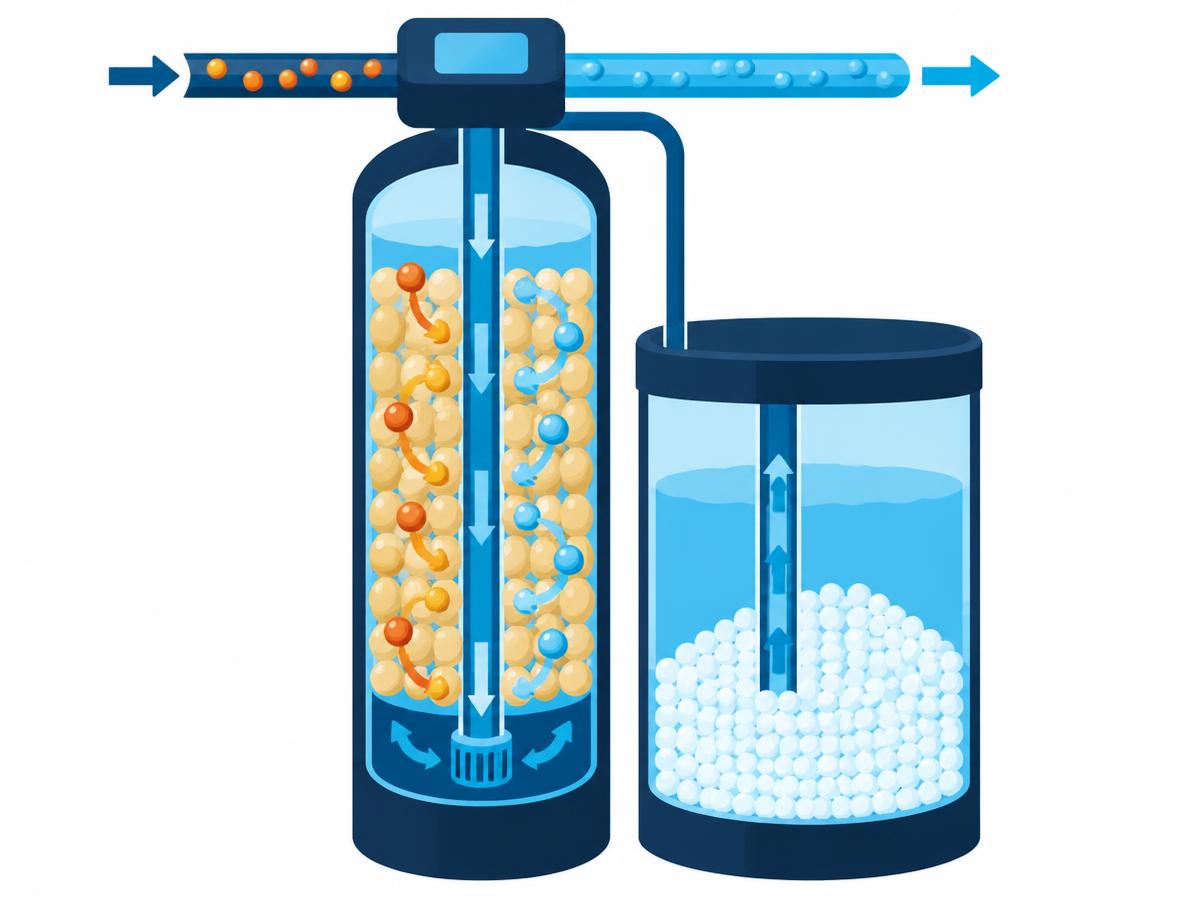
A water softener addresses hardness through a process called ion exchange. As water flows through a tank of resin beads, the beads capture calcium and magnesium and release a small amount of sodium in their place. The result is water that does not leave scale, spots, or soap scum. The Minnesota Department of Health describes softening as an optional, preference-based choice, which is exactly right: you soften water because of what hardness does to your home, your appliances, and your daily routines, not because hardness is dangerous.
What a Water Softener Does, and What It Does Not Do
This distinction matters, and it is one of the most common misunderstandings we encounter: a water softener is not a filter. Softening reduces hardness minerals. It does not remove chlorine, disinfection byproducts, lead, PFAS, sediment, or other contaminants. If your goal is broader than scale and spotting, softening alone is not the whole answer.
That is why many Twin Cities homes use more than one treatment stage. A typical whole-home setup pairs a softener with carbon filtration. The carbon addresses chlorine taste and odor along with a range of chemical compounds, while the softener handles hardness. Each piece of equipment does the job it was designed for, and together they cover the two most common categories of complaints about city water.
There are also salt-free alternatives worth knowing about. Salt-free systems condition water rather than soften it: they change how hardness minerals behave so scale is less likely to stick to surfaces, but they do not remove the minerals themselves. For homeowners who want to avoid salt bags, brine discharge, and regeneration cycles, conditioning can be a reasonable fit. For homeowners who want the minerals actually gone, traditional ion-exchange softening is the proven approach. Neither choice is universally right. It depends on your water, your plumbing, and your priorities.
Drinking Water: Why Reverse Osmosis Is Different
Whole-home systems treat every tap in the house, which is ideal for bathing, laundry, and protecting appliances. But the water you actually drink and cook with is a small fraction of what your home uses, and many families want a higher level of refinement at that one point of use. That is the job of reverse osmosis.
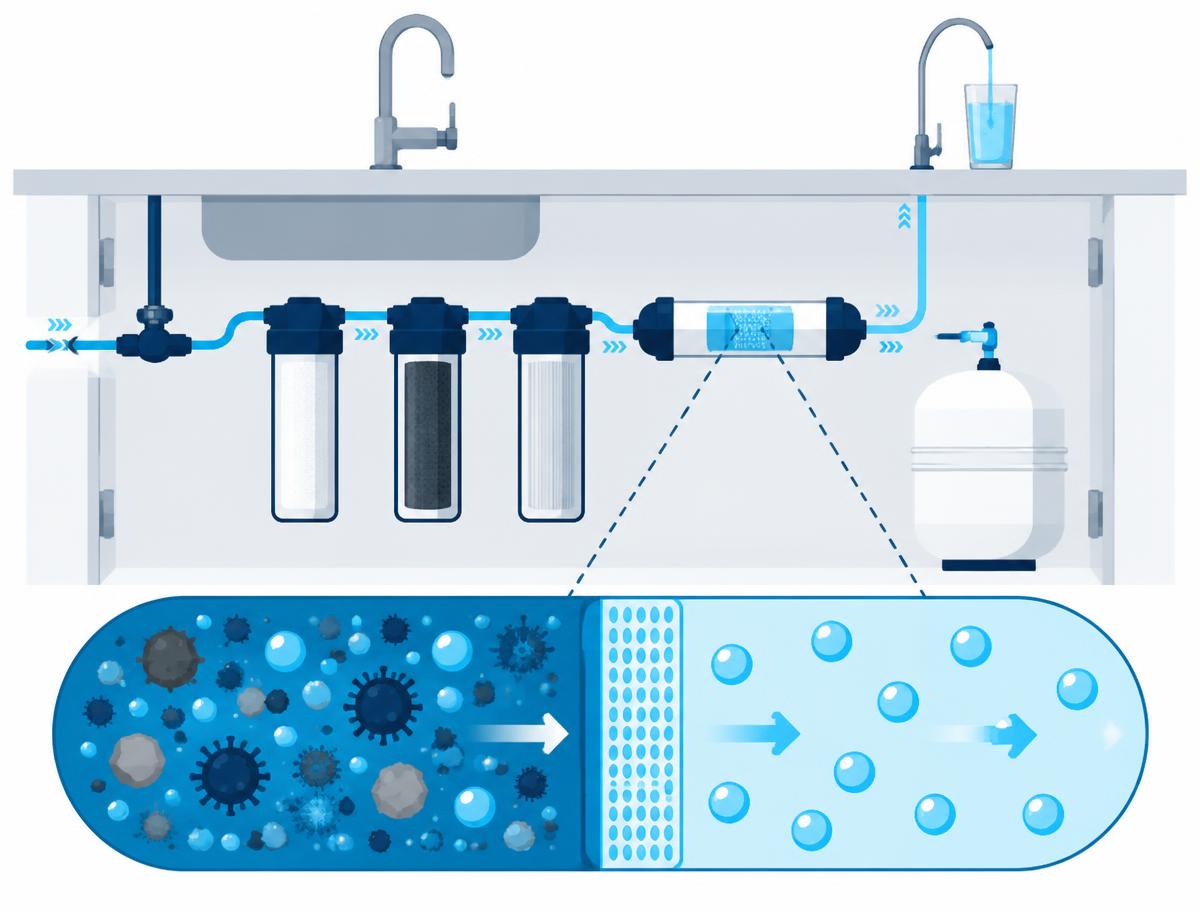
A reverse osmosis system installs under your kitchen sink and pushes water through a series of filters and a semipermeable membrane. The membrane's pores are small enough that water molecules pass through while most dissolved solids, including many of the disinfection byproducts, heavy metals, and PFAS compounds that show up in utility testing, are held back and flushed away. A dedicated faucet at your sink dispenses the treated water.
Reverse osmosis is the most thorough point-of-use treatment widely available for homes, which is why we include a traditional tank reverse osmosis system with every whole-home package we install. For homeowners who want the same treatment without the storage tank, the HW800 AlkaPro tankless system produces water on demand and adds a remineralization stage for taste. Either way, the principle is the same: the water your family drinks gets an extra level of treatment beyond what any whole-home system provides.
It is worth being precise about what reverse osmosis is for. It treats drinking and cooking water at one tap. It does not soften water, and it does not protect your water heater or your shower. That is what whole-home equipment is for. The two categories complement each other, which is why they are so often installed together.
City Water Versus Private Wells
Not every home in the Twin Cities area is on municipal water. Many homes in the surrounding communities and townships rely on private wells, and well water is a completely different situation. A municipal utility treats and tests water for thousands of households at once. A private well is your responsibility alone, and no one tests it unless you do.
Well water in Minnesota commonly involves hardness, iron, manganese, and sometimes hydrogen sulfide, the compound behind a rotten egg odor. Iron leaves reddish or brown stains on fixtures and laundry. Manganese leaves dark stains. These are treatable problems, but the right treatment depends entirely on what is actually in your water and at what levels, which is why the Minnesota Department of Health recommends that well owners test regularly through an accredited laboratory.
This is the one place where we will be direct: if you have a private well, test before you buy anything. Current lab results determine which treatment stages make sense, how equipment should be sized, and whether additional steps like disinfection are worth discussing. A system chosen without test results is a guess, and guesses are how homeowners end up paying for equipment that does not match their water.
Why Professional Installation and Testing Matter
Big box stores sell water treatment equipment, and some of it is perfectly decent hardware. What a retail box cannot give you is the part that actually determines whether treatment works: matching the equipment to your water, sizing it to your household, and installing it correctly.
Sizing alone is more involved than most people expect. A softener that is too small regenerates constantly and wears out early. One that is too large wastes salt and water. Flow rate matters too: a system that cannot keep up with your household's peak demand will restrict pressure exactly when you need it most, like when two showers and a washing machine run at once. Professional sizing accounts for your hardness level, your household size, your plumbing, and your usage patterns.
Installation quality matters just as much. Whole-home equipment ties into your main water line, needs a drain for regeneration, and sometimes needs electrical access. A professional installation includes the plumbing work, the startup configuration, and a walkthrough so you understand what was installed and how to maintain it. It also comes with accountability: a written warranty, a real company to call, and service support when filters or media eventually need replacement.
Finally, a professional should start from evidence, not a sales script. That means looking at your utility's published water quality report if you are on city water, or your lab results if you are on a well, and recommending only what your situation actually calls for. If a company recommends the same system to every household before asking about your water source, that tells you something.
The Cost Question: Transparent Pricing and Long-Term Value
Water treatment is a real investment, and homeowners deserve to know what it costs before a salesperson walks through the door. That is why we publish our installed prices. A whole-home filtration and softening system starts at $2,999 installed. Dual-tank whole-home filtration is $3,999. Salt-free and dual-tank well systems are $4,499. Iron and sulfur treatment for wells is $5,999. Standalone drinking-water systems start at $799 for a traditional tank reverse osmosis and $999 for the HW800 AlkaPro tankless. Every whole-home package includes professional installation, a system walkthrough, and a kitchen reverse osmosis system at no additional cost.
Those numbers are easier to evaluate when you consider the other side of the ledger. Hard water scale forces water heaters and appliances to work harder and fail sooner. Bottled water is an ongoing expense that never ends. Cleaning products, extra detergent, and descaling treatments add up month after month. None of these costs arrive as a single invoice, which is exactly why they are easy to overlook. Our savings calculator lets you enter your own household's bottled water and appliance spending to estimate what better water could save you, using your numbers rather than industry claims.
We also believe cleaner water should not be a luxury. Financing options are available, and our best-price guarantee means we will beat a lower written quote for comparable equipment and professional installation. Every system carries a lifetime warranty, with the system-specific written terms provided during your consultation. The goal is straightforward: professional water treatment that a normal household budget can actually reach.
How to Choose the Right System for Your Home

If you take one framework from this guide, make it this one. Start with your source. City water and well water need different approaches, and the first step for a well is always a current lab test. Then name your priorities. Spots and scale point toward softening. Chlorine taste and odor point toward carbon filtration. Drinking-water preferences point toward reverse osmosis. Many homes benefit from a combination, and just as many do not need everything.
From there, compare options on specifics: what each system is designed to reduce, what capacity and flow rate your household needs, what space and plumbing the installation requires, and what ongoing maintenance looks like. Ask for documentation. Ask what is included. Ask what the warranty actually covers, in writing.
And if you would rather talk it through, that is what we are here for. Minnesota Water Pros serves Minneapolis, St. Paul, and surrounding communities including Bloomington, Edina, Plymouth, Maple Grove, Eagan, Woodbury, Burnsville, and Minnetonka. A free phone consultation starts with your water source and your goals, and our Find Your Solution tool can point you toward the categories worth exploring before you ever pick up the phone. Everyone deserves cleaner water, and getting there should be clear, honest, and affordable.
Sources and further reading
Reviewed October 22, 2026. Utility reports describe the public supply, not an individual household sample. Check the utility for current reports and notices. Images are illustrative, not photographs of a customer installation.
Frequently asked questions
What is the difference between a water softener and a water filter?
A water softener reduces hardness minerals like calcium and magnesium through ion exchange, mainly to prevent scale, spots, and soap scum. A water filter uses media such as activated carbon to address other concerns like chlorine taste, odor, and certain chemical compounds. They do different jobs, and many homes use both.
How can I tell if my Twin Cities home has hard water?
Common signs include white spots on dishes and glassware, scale buildup around faucets and showerheads, soap that lathers poorly, stiff laundry, and dry skin after showering. A hardness test confirms the level, and your utility's annual water quality report often lists hardness for your area.
Do Minneapolis and St. Paul homes need a water softener?
Need is the wrong word. The Minnesota Department of Health describes softening as an optional, preference-based choice. Hardness is not a health risk, but it does cause scale that wears on water heaters, appliances, and fixtures. Whether softening is worth it depends on your hardness level and how much those effects matter to you.
What does a reverse osmosis system remove, and where is it installed?
A reverse osmosis system installs under the kitchen sink and pushes water through filters and a semipermeable membrane. The membrane reduces most dissolved solids, including many disinfection byproducts, heavy metals, and PFAS compounds. It treats drinking and cooking water at a dedicated faucet, not the whole house.
Should I choose whole-home filtration or an under-sink drinking-water filter?
It depends on your goal. Whole-home filtration treats every tap, which helps with bathing, laundry, and appliance protection. An under-sink reverse osmosis system focuses on the water you drink and cook with. Many homeowners combine both: whole-home equipment for the house, reverse osmosis for the glass.
How do I know which water treatment system is right for my home?
Start with your water source. City water homes can begin with their utility's published water quality report. Private well homes should start with a current test from an accredited laboratory. From there, match equipment to your specific concerns, household size, and plumbing, and ask for written warranty terms before you decide.
More from the blog
Does a City-Softened Minneapolis Home Need Extra Water Treatment?
Minneapolis already softens its municipal water. Here is how to decide whether additional household treatment serves a real purpose.
Saint Paul Drinking-Water Taste: Kitchen Filter or Main-Line Treatment?
A kitchen taste preference and a whole-home treatment goal are different projects. Learn how to compare them in an existing Saint Paul home.
Bloomington Water Treatment for Houses and Condos: Know Your Plumbing
Bloomington's combined municipal supply is only part of the decision. Your plumbing boundary and maintenance authority determine which options fit.
Edina or Morningside? Plan the Right Water Treatment for Your Remodel
Edina's two water systems make address-level planning important. Learn how to connect your supply, household measurements, and kitchen remodel decisions without assuming every home needs the same equipment.
Talk through your water with a local pro
A free phone consultation starts with your water source and your goals. Published installed pricing, kitchen reverse osmosis included with every whole-home package, and a best-price guarantee.